 Kitchen & Bath
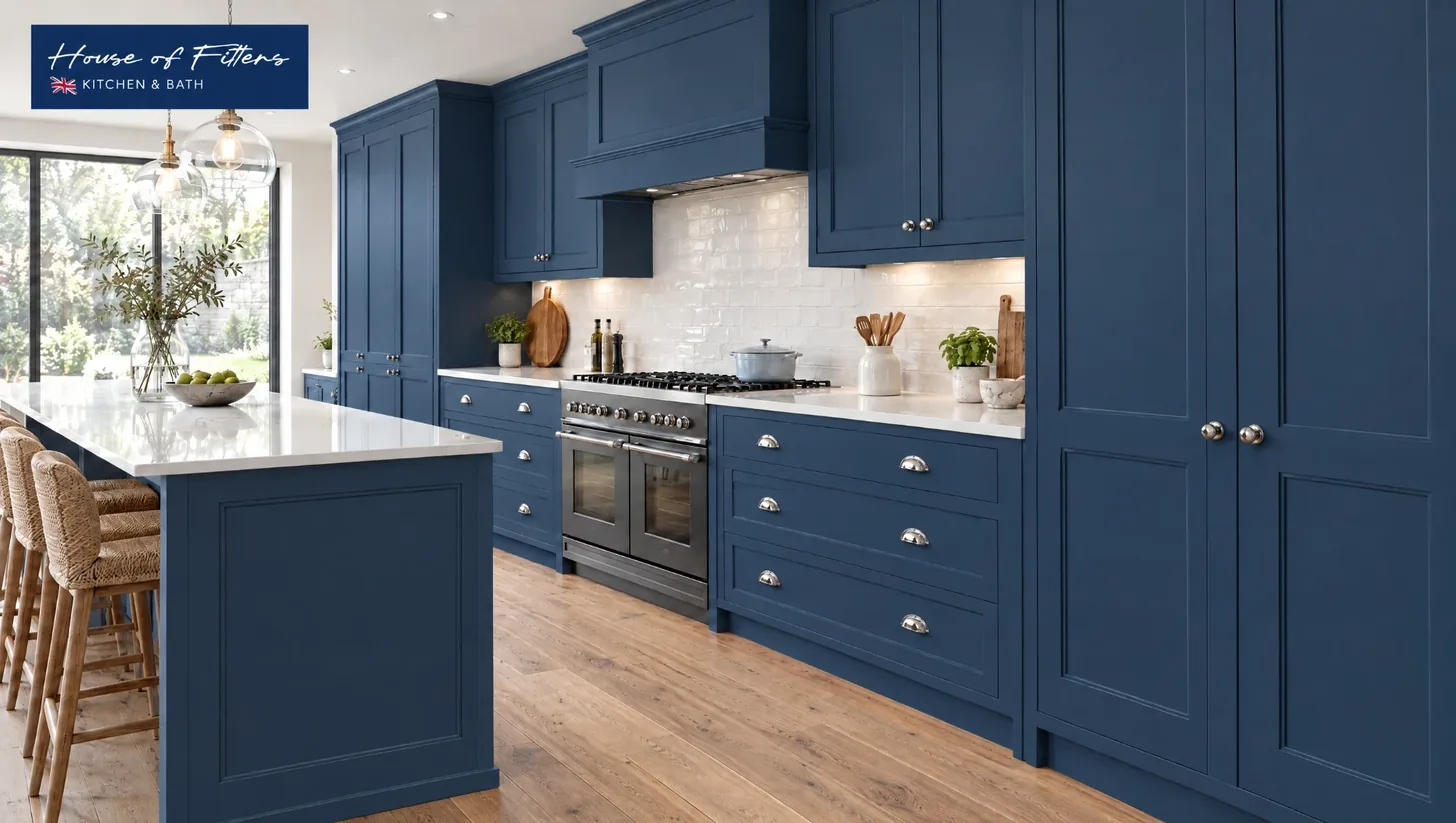
In-Frame Effect vs True In-Frame: The Difference Is Where The Door Sits
In-frame vs in-frame effect comes down to one thing: where the door sits when it’s closed. On a true in-frame (or inset) kitchen, a frame around 21mm thick is fixed to the front of each unit, and the door closes flush inside it.
In-frame effect works differently. The door sits on the face of the unit, like most kitchens, and a routered groove draws the line where a frame would stop.
Standard lay-on shaker (a framed door sitting on the unit’s face, with no in-frame detail) is the baseline.
True In-Frame | Mock In-Frame | Lay-On Shaker | |
Pros |
|
|
|
Cons |
|
|
|
Not Every In-Frame Effect Door Is Made The Same Way
The quality of an in-frame effect kitchen comes down to how the door is built, and the range is wider than most brochures let on. Three constructions cover most of what you’ll be shown:
Painted solid timber frame. A five-piece door (four frame pieces around a centre panel) in solid ash, with an ash veneer panel, painted so the grain shows faintly through. Of the three, it’s the closest in feel to traditional joinery.
Painted MDF. A single routered door in MDF plus, sprayed in a low-sheen paint. Smooth, very stable and crisp at the edges.
Foil-wrapped MDF. The same shape, with a vinyl film pressed over it. It’s hard-wearing and the most affordable, but the finish can’t be touched in or repainted later.
Door thickness is a quick tell. Painted timber and MDF doors in this style run 18–20mm, and the thicker the door, the deeper the line it casts at its edges.
In-Frame Effect Keeps Much Of What In-Frame Is Loved For
A well-made in-frame effect kitchen shares a lot of what draws people to in-frame in the first place. The proportions, the colours and the painted finish all carry over.
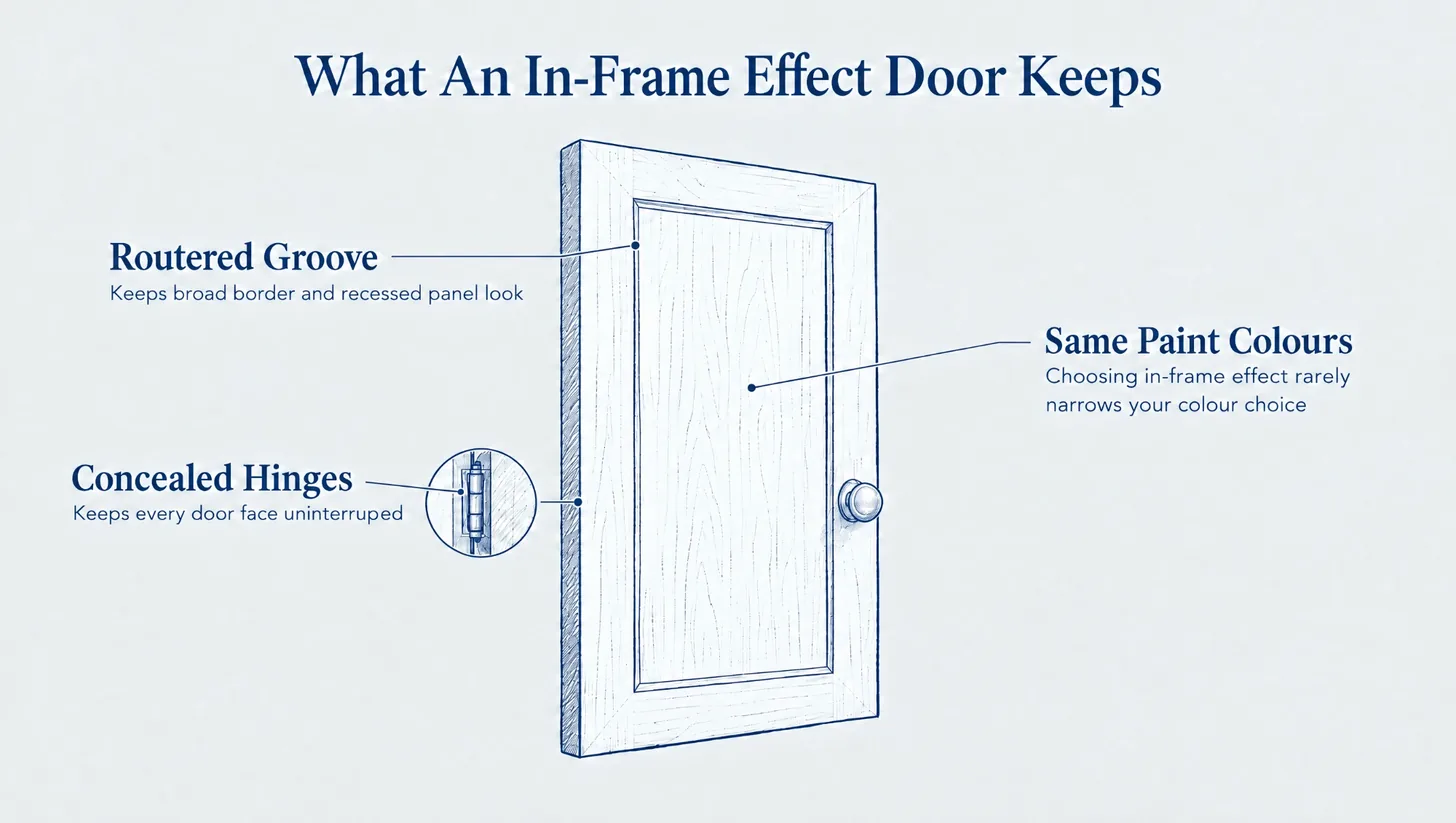
The same proportions. The routered groove sits where the inside edge of a real frame would. So the door keeps the broad border and recessed panel that define the in-frame look.
The same paint palette. Many painted in-frame effect ranges share their colour cards with true in-frame, from soft whites and stone greys to heritage greens and deep blues. Choosing in-frame effect rarely narrows your colour choice.
The same grain and texture. Painted ash frames have the gentle texture of hand-painted joinery.
Cleaner fronts. Concealed hinges keep every door face uninterrupted. Cup handles, knobs and bar pulls all suit the style.
Where true in-frame stays ahead is the shadow line. Sits a touch darker in low evening light. Most people only notice it with the two side by side.
See Which Door Style Suits Your Home Best?
Samples at home, then a price fixed after survey.
Living With It: The Practical Upsides Of In-Frame Effect
The frame that gives true in-frame its look also takes up room and adds edges to keep clean. In-frame effect avoids both.
In-Frame Effect Gives You The Full Width Of Every Unit
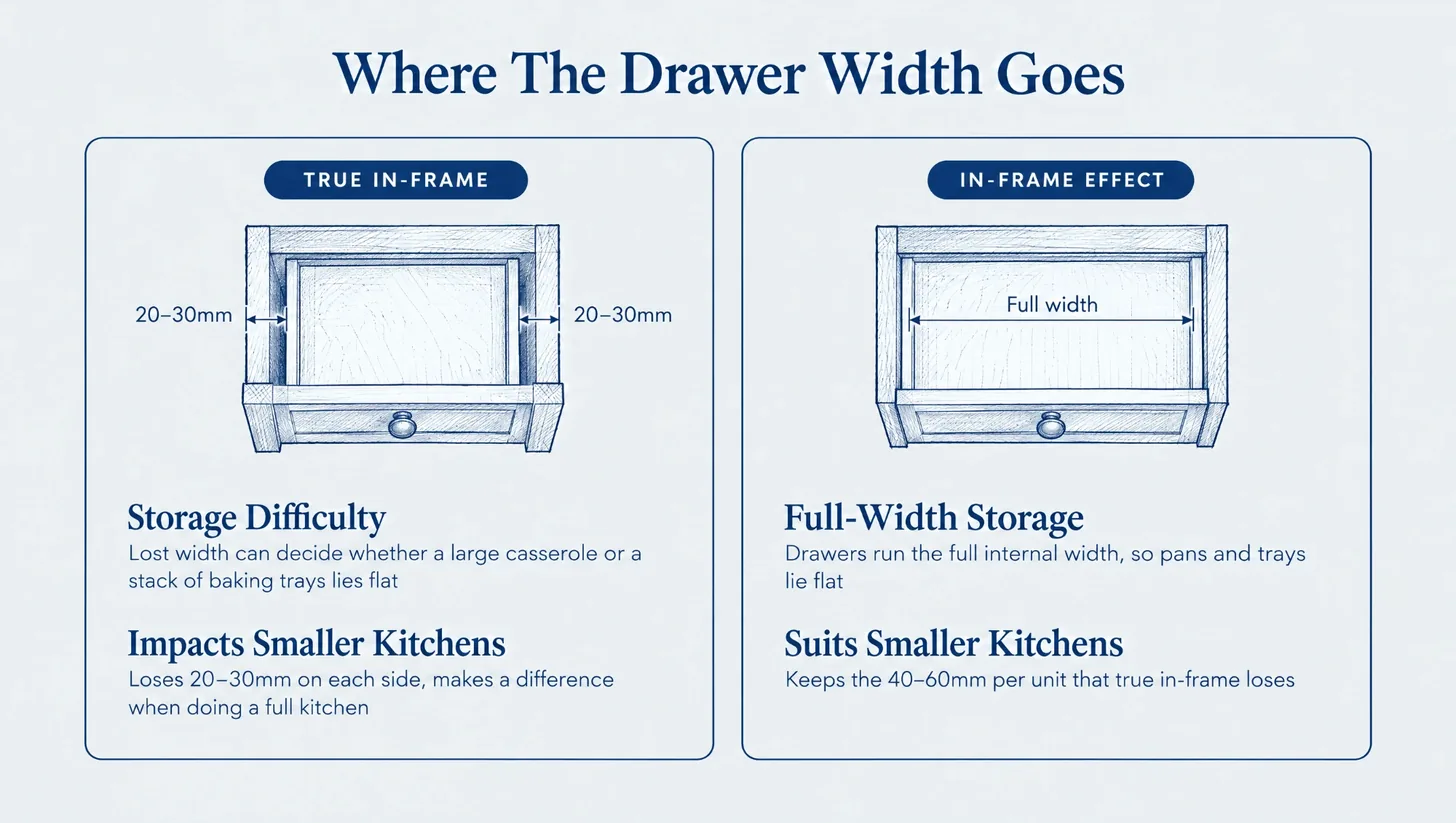
In an inset kitchen, the frame sits inside the footprint of each unit, so every drawer and cupboard opening loses roughly 20–30mm on each side. One drawer won’t be noticed. A full run of them will.
Pan drawers feel it most. On true in-frame, that lost width can decide whether a large casserole or a stack of baking trays lies flat.
In-frame effect keeps the whole unit. The door sits on the face, so drawers run the full internal width. That helps in smaller kitchens, where every centimetre is spoken for.
A Shallow Groove Is Quicker To Keep Clean
In-frame effect is simple to keep looking new. Its detail sits on the surface rather than around it.
One wipe reaches the bottom. The routered groove is shallow and closed at the back. Run a damp cloth along it and it’s clear.
No gap around the door. True in-frame has an open gap around each door. Crumbs and splashes settle there, mostly on base units near the hob and sink.
Painted MDF Holds Its Finish Through The Seasons
Painted MDF in-frame effect doors are made as one piece. There are no joints for those lines to show at. This is beneficial as certain materials get hairline lines at the joints over the first winter or two.
Read the guarantee. Most cabinetry guarantees exclude natural fading or cracking of certain materials. Ask exactly what is and isn’t covered before you choose.
Fitting: Why In-Frame Effect Is Quicker To Install
In-frame effect is simpler to install because the door overlaps the unit rather than sitting inside a frame. That saves time on site. It also makes small variations in the room easier to absorb.
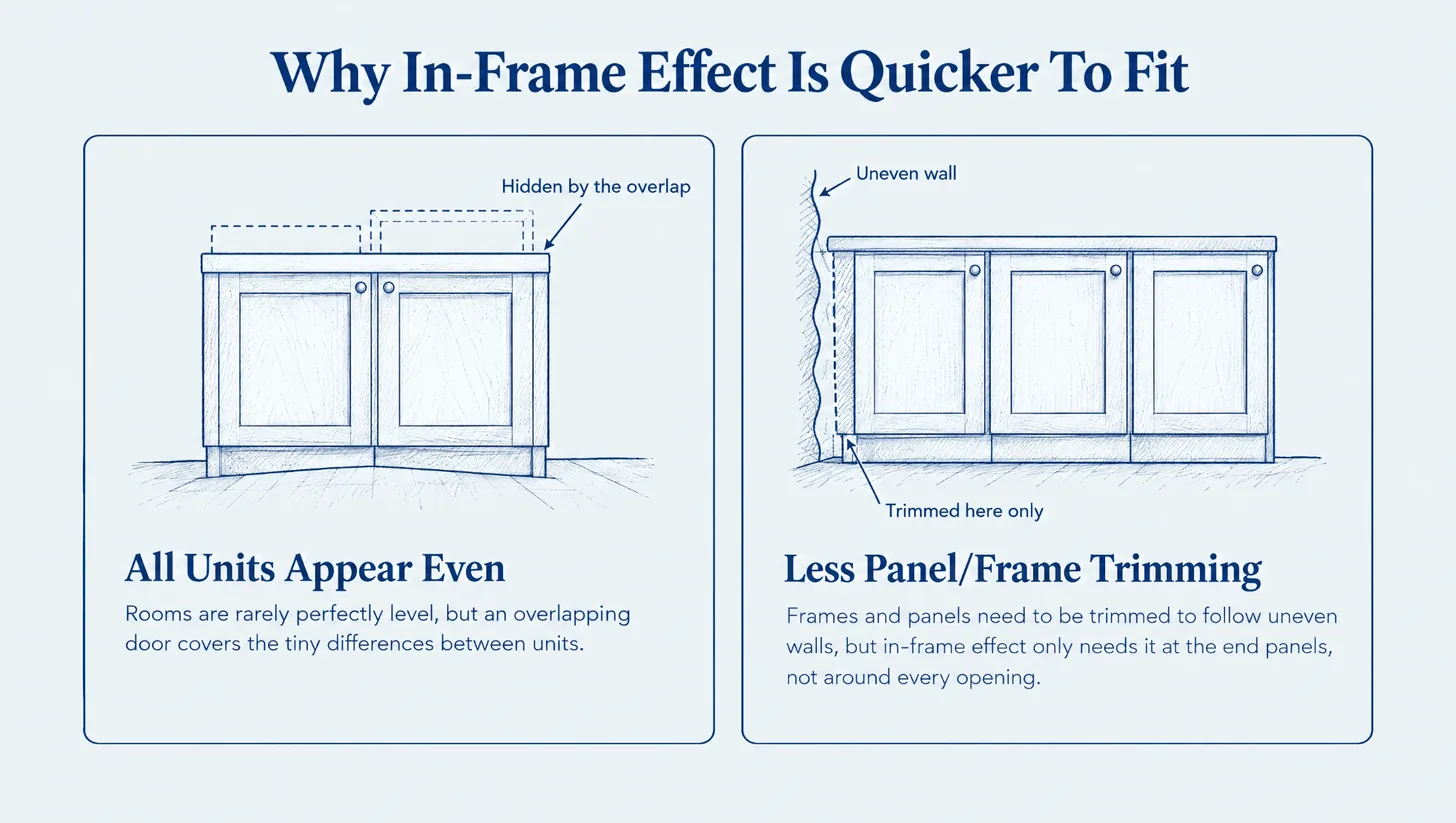
Small variations stay hidden. Rooms are rarely perfectly level, and an overlapping door covers the tiny differences between units. On true in-frame, a door that drops a millimetre shows straight away.
Less scribing at every door. Scribing means trimming a frame or panel to follow an uneven wall. In-frame effect still needs it at the end panels, just not around every opening.
Reno Tip
One question worth asking any installer, whichever style you choose: when is the stone templated? Templating (measuring for stone worktops) should only happen once the units are fitted. That way, the worktop fits the kitchen as built.
What The Difference Costs
True in-frame costs considerably more: typically 75–126% more than in-frame effect for the same set of units. That’s an extra frame on every unit, more timber, more joinery and more time on site.
Cost (medium kitchen, about 13 units, inc VAT) | Lay-On Shaker | In-Frame Effect | True In-Frame |
Units only | £6,000–£8,500 | £8,500–£12,000 | £15,000–£27,000 |
Fitting the units | £2,000–£2,700 | £2,000–£2,700 | Higher, confirmed at survey |
These figures are rounded and cover the units and their fitting only. Lay-on shaker comes in at roughly 28% less than in-frame effect. The wide range for true in-frame comes down to the door, from smooth painted at entry level to woodgrain or oak at the top.
The in-frame look can cost nothing extra. In some ranges, the in-frame effect door sits in the same price band as the plain slim shaker beside it, so you get the frame detail for the same money.
The saving sits in the units and their fitting. Worktops and appliances cost the same whichever door you choose, so the difference comes almost entirely from the cabinetry and the time it takes to fit.
A useful rule on a fixed budget. In-frame effect with better stone often gives a more visible result than true in-frame with a cheaper worktop.
Your own figure depends on the room, the specification and what sits behind the walls. That gets worked out properly through consultations (design visits + surveys), so the price reflects exactly the kitchen you want.
Which One Suits Your Home
Both suit a classic kitchen. The choice usually comes down to the house, the budget and where you’d rather spend.
In-frame effect is the better call when storage matters, you’d like the kitchen back sooner, or you’d rather put the difference into stone, lighting or a layout change.
True in-frame earns its cost when the house is a period property with a lot of furniture-style joinery elsewhere, or you’re set on exposed hinges and the deepest shadow line.
Getting The Choice Right
Door styles are easiest to judge in your own kitchen. Design consultations let you see samples brought to your home, in your own room and the light you cook in, so you can get the perspective you need to make the right decision.