Kitchen & Bath
What Defines A Modern Kitchen?
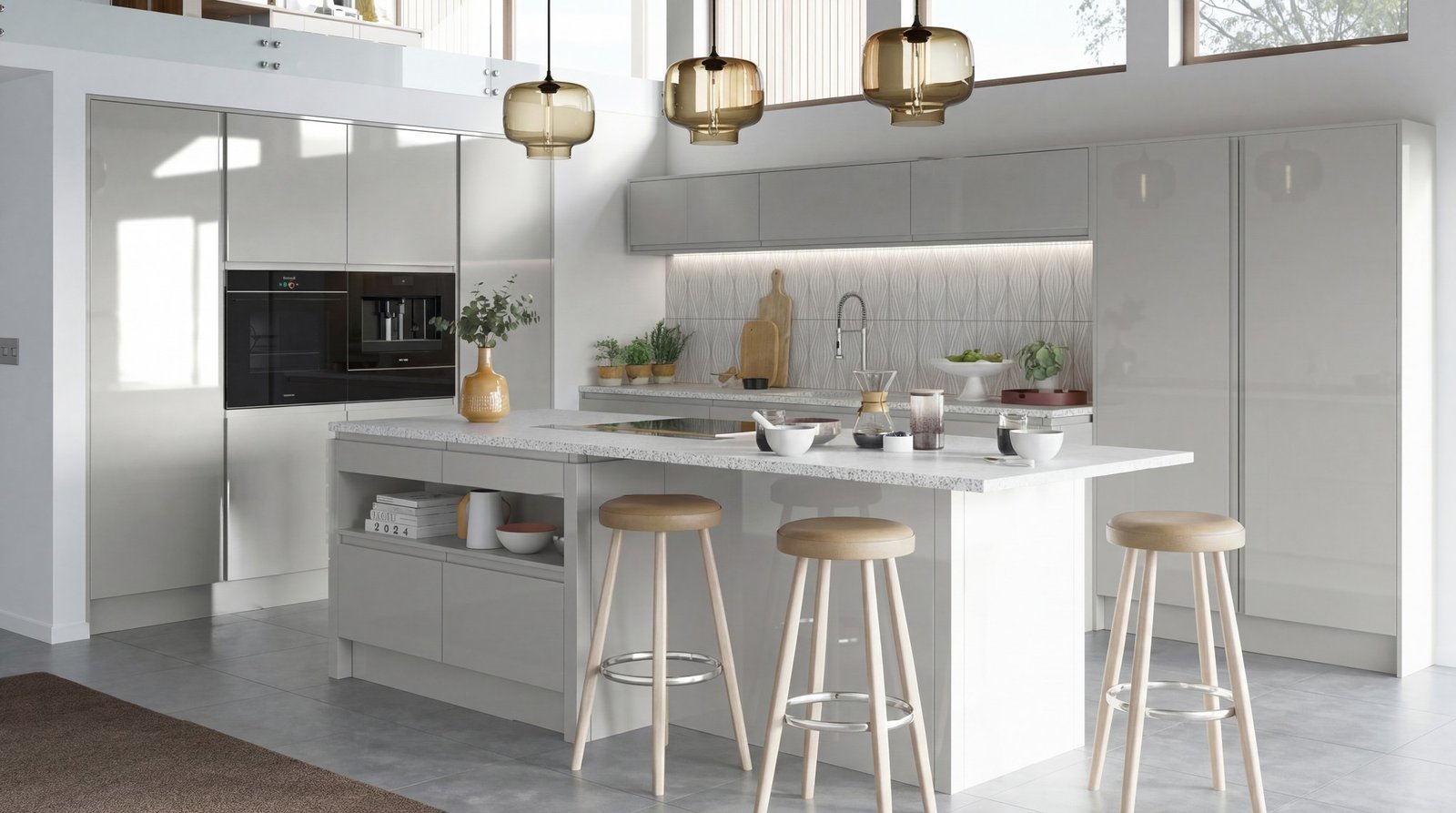
A modern kitchen is built around clean lines, hidden storage, and materials that feel real. The detailing is minimal, but the room should still feel warm and grounded – that balance is the whole point.
Five Principles Guide Every Modern Scheme We Design:
Clean lines, minimal detailing. Handleless runs, slab fronts, or slim Shaker with thin rails – surfaces kept calm and uninterrupted.
Integrated appliances. Fridge, dishwasher, and ovens hidden behind matching fronts for seamless transitions.
Natural materials and texture. Wood, stone-look porcelain, and fluted details that add depth without busy pattern.
Warm, earthy palettes. Greige, taupe, sage, and olive replacing cold greys.
Smart storage and zoning. Tall walls, pocket doors, and islands that define open-plan spaces.
These aren't trends that date quickly. They're the foundations of modern design, and they adapt to any property type rather than fighting it.
Layout
Modern layouts prioritise open-plan flow, clear sightlines and uncluttered surfaces, with storage worked in so the streamlined look survives daily use.
Functional flow. Sink, hob and fridge placed for efficient movement, with prep, cook and clean zones that keep the worktops clear.
Open, connected space. Where the kitchen joins a living or dining area, we keep sightlines clean and visual barriers to a minimum.
Seamless storage. Tall units and integrated organisers absorb the clutter, so the room reads as calm rather than busy.
An island that earns its place. In open-plan spaces an island defines the zone and adds prep and seating – sized with enough clearance to move and open appliances comfortably.
Cabinetry
Cabinet style sets the tone of a modern kitchen. It comes down to proportion, clean lines, and construction quality rather than decorative detail.
Slab Fronts
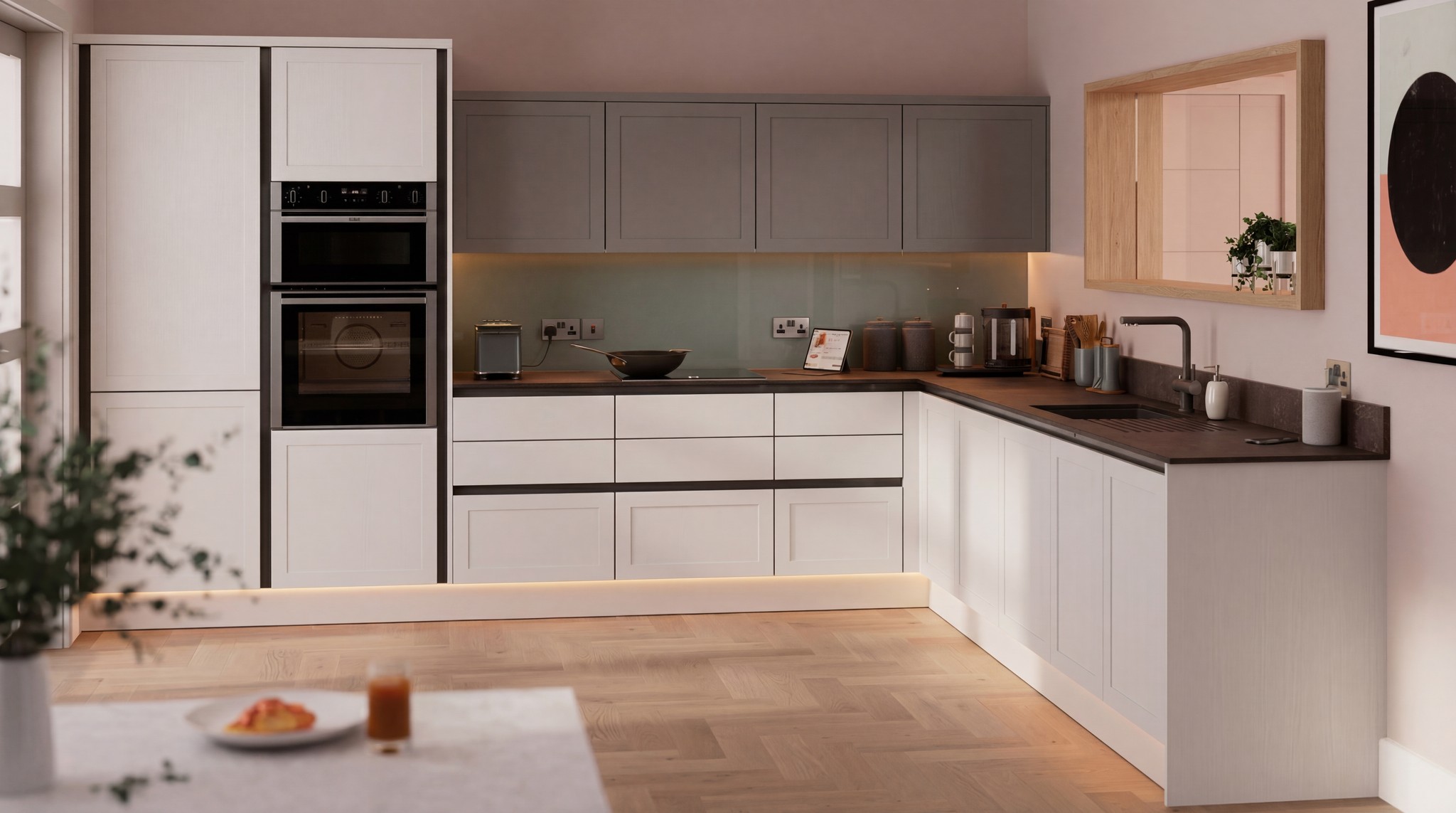
The most minimal option – completely flat doors in matte lacquer, wood veneer, or quality laminate, paired with handleless rails or J-pull grooves to keep surfaces uninterrupted.
They work especially well on tall units and islands.
Slim Shaker
Classic frame-and-panel proportions with much thinner rails (30–50mm rather than the traditional 70–80mm), so it reads lighter and more contemporary.
Particularly good in period properties where you want modern function without losing character.
Fluted & Ribbed Details
Vertical grooves in timber, MDF, or glass on island fronts or feature doors, to catch light and add texture without busy pattern.
Mixed Styles
Slab tall units with slim Shaker bases, or handleless runs with a fluted island – layering that stops the space feeling one-dimensional.
On Finishes…
Matte and soft-touch are preferred over high gloss. Earthy greens, deep blues, and warm neutrals dominate, often two-tone – a darker base or island grounding lighter tall units.
Underneath, quality construction shows in soft-close drawers, internal organisers, and consistent 2–3mm shadow gaps, with door breaks aligned to appliance heights so everything reads as an intentional grid.
Worktops
Modern worktops lean toward slim profiles, durable surfaces, and subtle warmth rather than stark white everywhere.
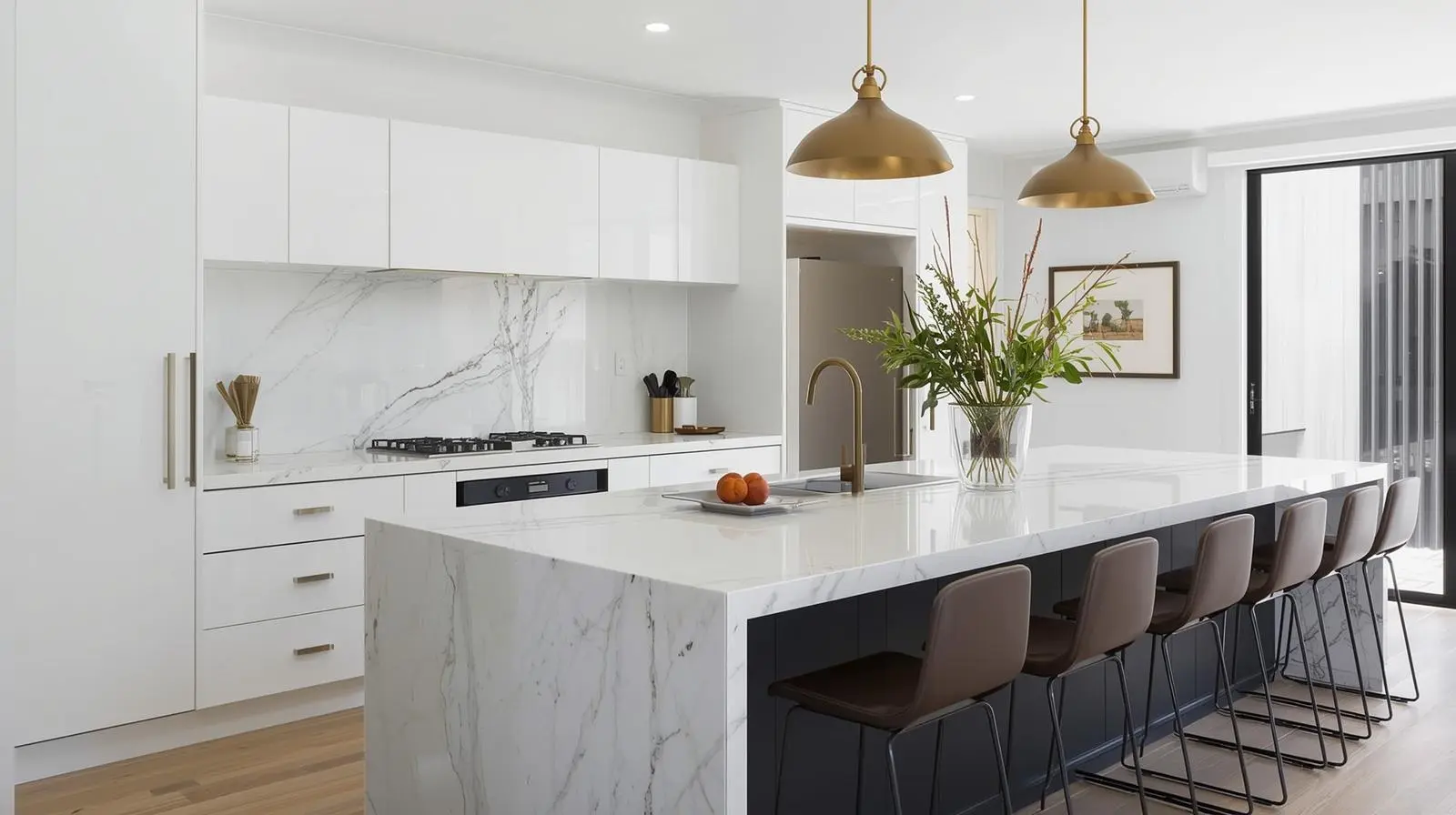
Quartz. The reliable all-rounder – non-porous, stain- and scratch-resistant, low-maintenance, and convincing in marble, concrete, or solid warm neutrals. Ideal for busy family kitchens.
Porcelain and ultra-compact. Very thin profiles (12–20mm), high heat resistance, and the option of a waterfall edge down the island for a continuous, sculptural look. Increasingly the choice for that architectural, minimal feel.
Natural stone. Granite and quartzite for durability, marble for those who embrace patina – chosen in quieter patterns with soft, warm veining, in a honed or matte finish that reads more contemporary than high polish.
A Few Details Set The Modern Tone:
Thickness. 20mm suits handleless, minimal kitchens and reads refined and continental; 30mm feels more substantial on large islands and heavy prep zones.
Edges. Simple square, micro-bevel, or small chamfer – never decorative ogee or bullnose.
Integration. Slim tops pair with matching upstands or full-height stone splashbacks; undermount sinks with machined drainer grooves keep the look seamless.
Colour. Warm whites, creams, soft greys and beiges with gentle veining; Carrara or Calacatta-effect quartz for classic luxury without the upkeep; charcoal or black on islands for moodier townhouse schemes.
Material Finishes
Modern kitchens favour smooth, calm surfaces (matte and soft-touch over high gloss) with warmth layered in through natural materials and texture so the room never reads as sterile.
Hero materials. Natural wood and stone, or convincing stone-look porcelain and quartz, for worktops, splashbacks, and accents.
Accent materials. Stainless steel, glass, and polished concrete used sparingly to sharpen the contemporary feel.
Texture over pattern. Fluted fronts, gentle stone veining, and 3D-relief tile add depth without visual noise.
Seamless integration. Appliances concealed behind matching panels, so nothing breaks the line.
Flooring
Flooring should feel warm underfoot and coherent with the rest of the home, which matters most where the kitchen opens onto living space.
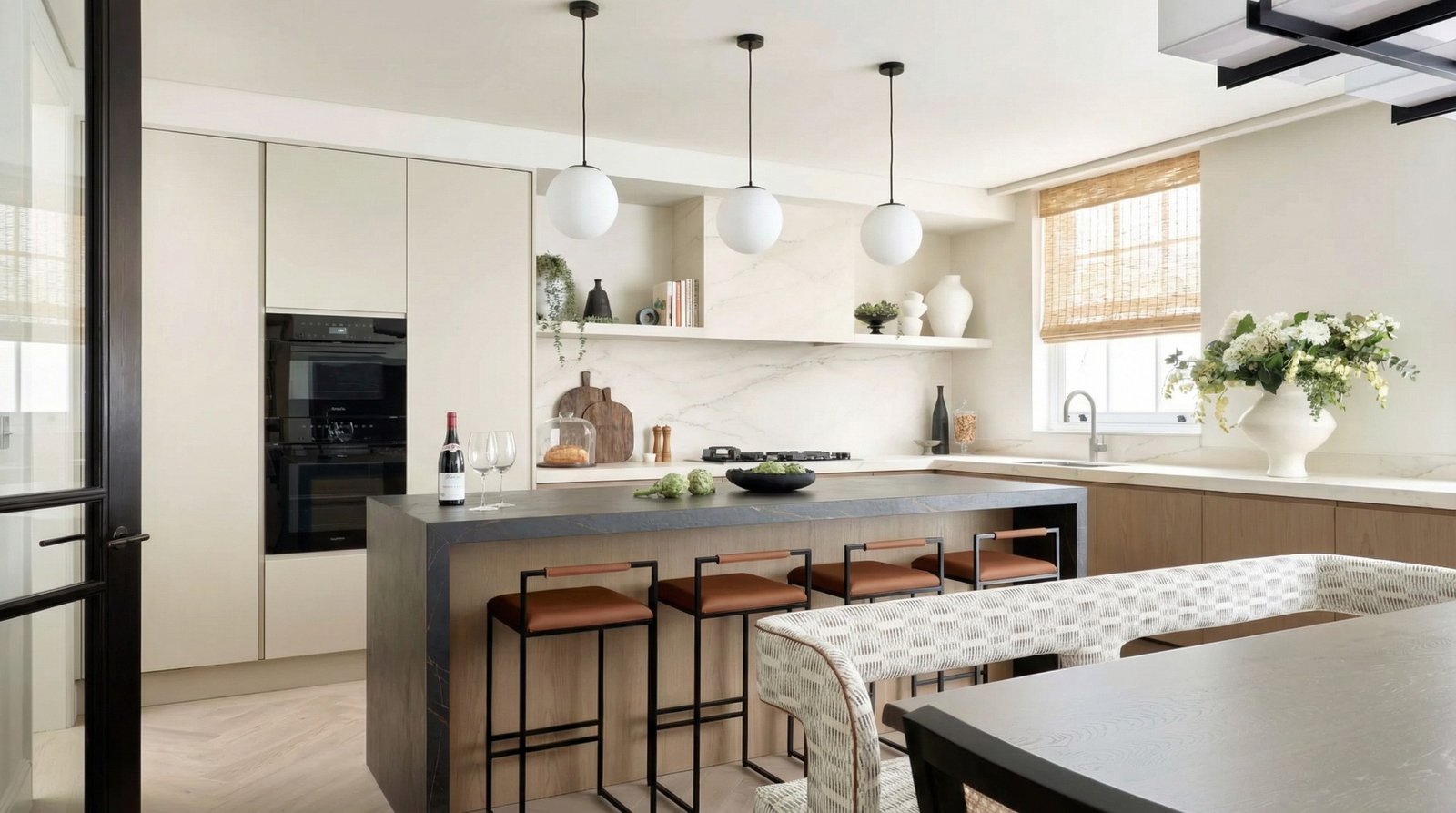
Wood and wood-look. Engineered oak boards or quality wood-look planks, plank or herringbone, for warmth and comfort during long stretches at the hob.
Large-format porcelain. Stone-, concrete- or wood-effect, with minimal grout for a sleek, continuous surface – durable, hygienic and near maintenance-free.
Textured and seamless options. Terrazzo-effect tile for tactile interest, or micro-cement and resin for an ultra-modern, monolithic look.
Most of these work beautifully with underfloor heating, which we'd plan in early since it affects floor build-up and sequencing.
Colour Palette
Modern palettes are warm, nature-inspired, and slightly moodier than the stark whites and greys of previous years.
The base stays calm; the personality comes through controlled accents.
Warm neutrals. Greige, taupe, mushroom, and warm off-white for calm, flexible backdrops.
Stone and clay. Natural earth tones that add warmth without reading as a trend colour.
Greens. Sage, olive, and forest – leading choices for cabinetry, especially with brass hardware and light stone.
Blues. Deep navies and inky blues for islands or full runs, often with marble-look worktops.
Charcoal and black. For sharper, graphic schemes or as a grounding element.
Three Schemes We Return To Often:
Warm minimal: Greige or taupe bases, warm white tall units, light stone worktops, brass hardware.
Green and neutral: Sage or olive cabinets, warm off-white walls, marble-effect quartz, brushed brass.
Dark and moody: Navy or charcoal bases, lighter tall units, warm stone worktops, mixed brass and black.
Hardware
Hardware is the jewellery of a modern kitchen – simple shapes, tactile finishes, and metals coordinated across handles, taps and lighting for a planned rather than random look.
Warm metals. Brushed and aged brass, bronze, and copper, especially against green, blue, or dark cabinetry. Matte black holds strong for graphic schemes, often mixed with brass rather than used alone.
Bar pulls. The main modern choice – straight or gently curved, sized to span a third to two-thirds of the drawer, with oversized pulls on tall pantry doors.
Minimal or handleless. Integrated aluminium rails, J-pull grooves, or recessed finger pulls for completely clean fronts.
Quality and feel. Heavier, solid pieces with smooth edges and a good grip – and textured finishes (knurled, hammered, hand-cast) for subtle crafted character.
A key modern move is matching the cabinet hardware to the kitchen tap – same finish, same design language – so the whole room feels deliberate.
How We Deliver Modern Kitchens
Everything above is design intent.
The reason it survives contact with a building site is that the same team designs and installs it. There's no handover where the vision gets reinterpreted by a contractor who wasn't in the room.
With us:
One project manager runs your project from the first call to the final walkthrough.
Every trade (fitters, plumbers, electricians, tilers, decorators) is vetted and sequenced in the right order.
Pricing is agreed before any work begins.
And what we design together is what gets delivered.