Kitchen & Bath
What Defines A Shaker Kitchen?
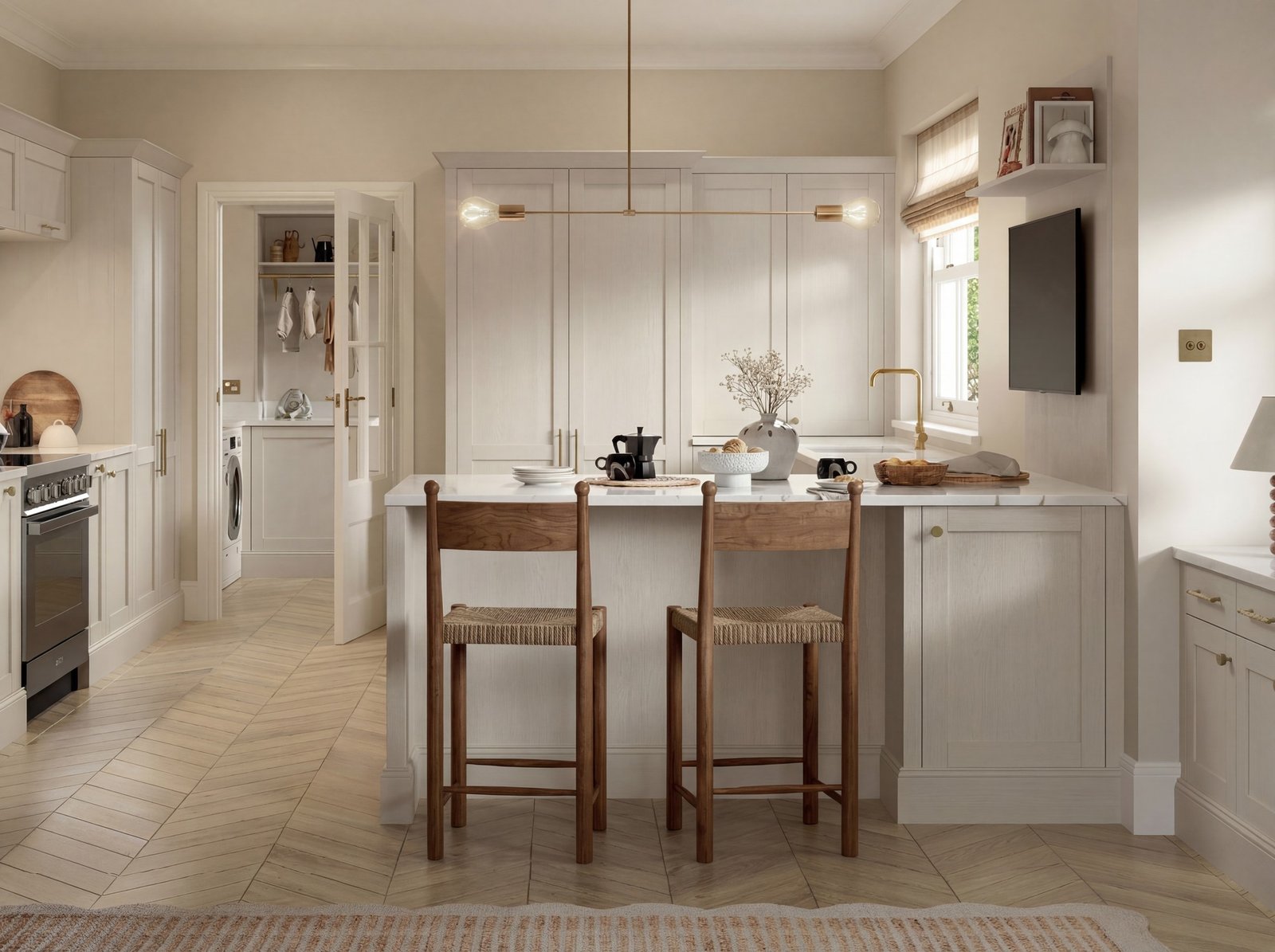
A Shaker kitchen is built on simple framed doors, honest materials and functional layouts.
The original Shaker movement valued utility and restraint so the style avoids carved detail, fussy glazing bars, and decorative corbels – everything is sized and placed to work hard day to day.
5 Principles Guide Every Shaker Scheme:
Five-piece framed doors. A square frame around a flat recessed centre panel – no mouldings, no beading.
Clean lines, minimal ornament. Straight edges, simple or no cornice, restraint in the detailing.
Subdued, calm palettes. Whites, greys, stone, navy and muted greens that stay calm in low light.
Honest, natural materials. Painted timber or quality MDF, paired with wood or stone worktops.
Functional hardware. Classic knobs or cup pulls in brass, chrome, nickel or black.
The Real Strength Is Versatility:
Because the detailing is restrained, you can push the look traditional (butler's sink, range cooker, tongue-and-groove) or contemporary (handleless appliances, quartz, slab splashbacks) without losing its Shaker character.
Layout
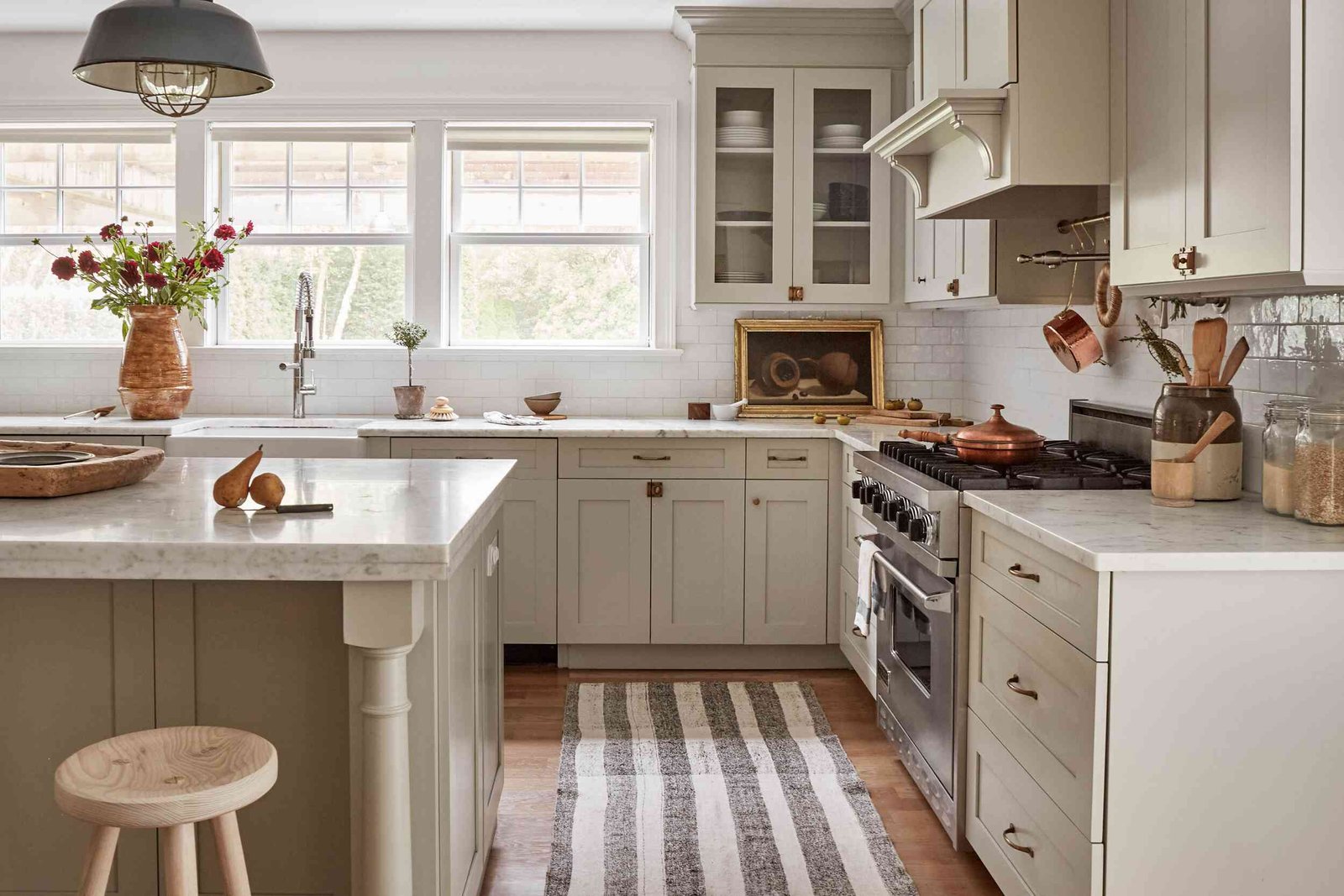
Shaker kitchens balance classic proportions with very efficient storage, which suits homes where space is at a premium. The calm lines carry tall storage banks well, so a full-height run can do the heavy lifting on one wall and leave the rest of the room open.
Zones and flow. A clear path between fridge, sink and hob, organised into prep, cook, clean and serve.
Period footprints. Galley or L-shape in terraces and maisonettes, with one or two tall larders to make up for a limited footprint; U-shape or L-shape-plus-island in larger extensions, the island carrying a hob or prep sink and doubling as informal dining.
Symmetry and rhythm. Shaker looks best when doors and drawers line up, so we group appliances to keep runs of similarly sized fronts rather than mixing random widths.
Closed with a few open moments. A primarily closed-front kitchen with one or two areas of open shelving or glazed Shaker doors – room for display while keeping the overall feel calm.
Cabinetry
This is the heart of the style. A Shaker kitchen is judged on the door – its construction, its proportions, and how it's hung.
Five-Piece Construction:
Two vertical stiles, two horizontal rails, and a flat panel sitting about 6mm back from the frame for the characteristic shallow step – joined cope-and-stick rather than mitred, keeping the profile crisp and robust.
Proportion Sets The Mood:
Slimmer frames (55–60mm) read more modern.
Chunkier frames (75mm+) look traditional or farmhouse.
Keep the frame width consistent across doors and drawer fronts so the runs feel ordered.
Door Variations:
Standard Shaker, wide-rail for a contemporary high-end look, or beaded Shaker with a fine bead around the panel for a more period feel.
Inset vs Overlay:
Inset doors sit flush within the face frame for a furniture-like, crafted look – tighter tolerances, higher cost.
Overlay sits on top of the frame for a cleaner, more contemporary feel – more forgiving to fit and often more budget-friendly.
On Construction…
Solid timber or quality MDF for painted doors, with a floating centre panel so the wood can move and stays stable through heating and moisture changes.
Storage Is Where The Style Earns Its Keep Day To Day…
Deep pan drawers under the hob, internal drawers behind a single door, tall larders with pull-outs, and integrated bins –with dishwashers and fridges fully integrated so the elevation reads as a continuous run of framed fronts, the range or hob the one intentional focal point.
Worktops
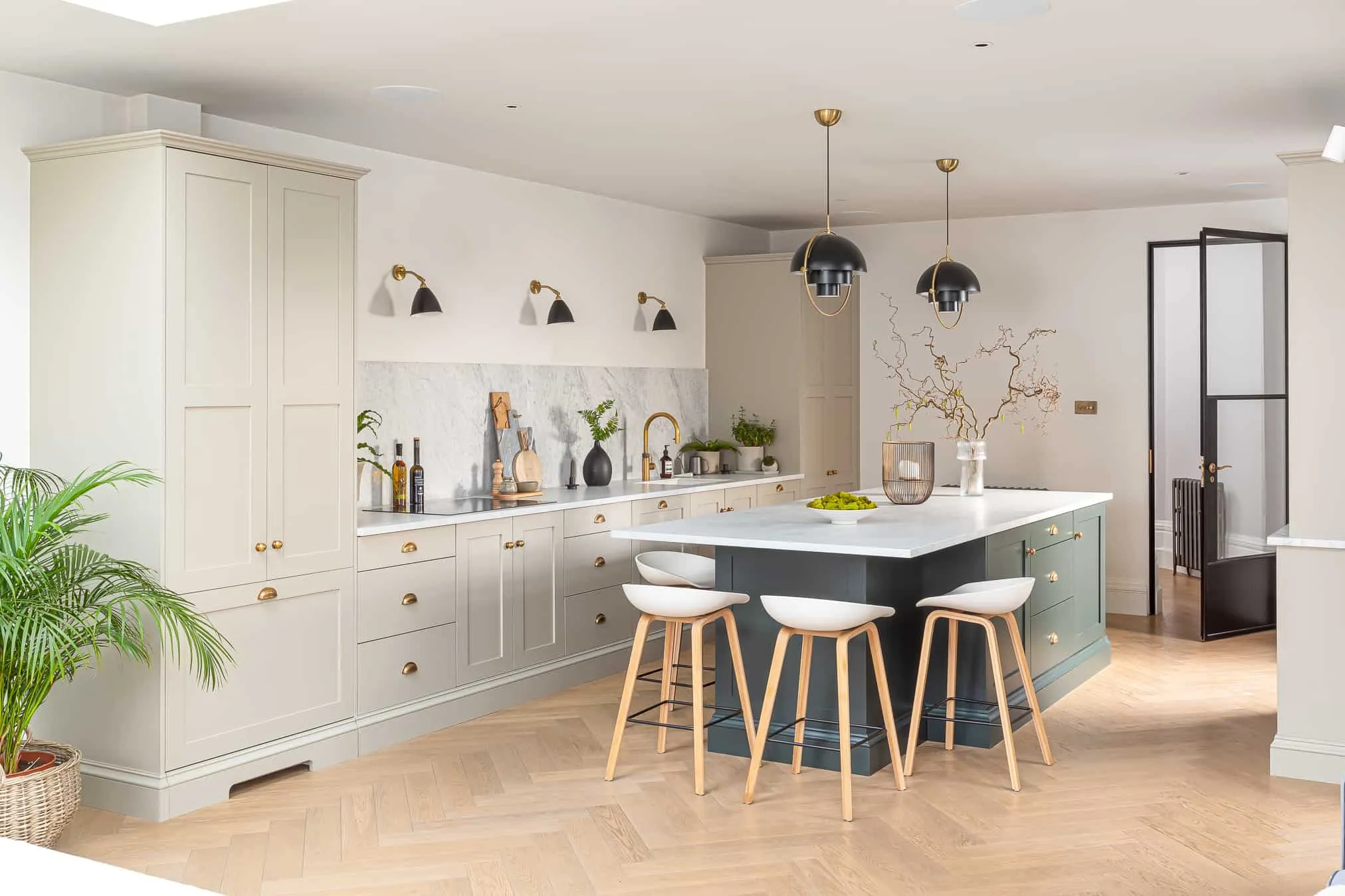
The worktop is the punctuation mark that sets the mood – calm and classic, or more modern and punchy.
Quartz. The most balanced choice – durable, non-porous and stain-resistant, in marble-look whites and creams for classic Shaker or concrete and stone tones for modern takes.
Natural stone. Honed marble or quartzite for period homes that want historic character; darker honed granites for a robust, traditional feel against cream or green.
Solid wood. Oak or iroko, warm and Shaker-authentic, often used on an island so you can be more relaxed about maintenance.
A Few Details Keep It True To The Style:
A 20–30mm top with a simple square or micro-bevel edge ties into Shaker's straight lines – ornate ogees fight the simplicity.
On colour:
light Shaker pairs with soft marble-effect quartz or pale stone
dark Shaker (navy, green, charcoal) with crisp white or very light quartz for a high-end look
sage or greige with mid-tone taupe or a darker textured top
Material Finishes
Shaker finishes favour honest, durable materials over anything synthetic-looking – the emphasis is on quality you can feel.
Cabinet Materials
Oak, birch or other robust timbers, or quality MDF for painted doors, with oak-veneer or melamine interiors.
Paint
Spray- or hand-painted in a durable eggshell or satin for a soft sheen that feels more authentic than gloss. On-site hand-painting in higher-end projects means colour can be refreshed without replacing doors.
Hardware Metals
Brushed or aged brass, antique bronze, matte black, or polished nickel – the choice nudging the look traditional (aged brass) or contemporary (brushed nickel, black).
Sinks & Taps
Ceramic butler or Belfast sinks, strongly associated with Shaker, paired with bridge or single-lever mixers. Stainless undermount sinks to modernise while keeping the cabinetry classic.
Flooring
Flooring softens all the straight lines of the cabinetry and grounds the room.
Timber and timber-look. Real oak boards or quality engineered and LVT options, often herringbone or chevron for an understated but crafted feel.
Stone and stone-effect. Flagstone, limestone or stone-look porcelain, especially in ground-floor extensions – practical, characterful in a matt finish, and UFH-friendly.
Mid-tone colour. Medium tones hide dust and footprints better than very dark or very light floors, and give enough contrast for the cabinetry to read clearly – mid-oak under off-white or pale green doors.
In Smaller Kitchens…
Run boards lengthways and keep thresholds flush to make the space feel longer and more cohesive.
Colour Palette
Shaker colour is calm, layered and slightly chalky, with contrast coming through worktops and hardware rather than loud cabinet colours – which suits variable light and period architecture.
Soft whites and creams. Classic white, off-white and cream to keep rooms bright and open.
Light greys and greige. Pale grey and grey-beige for a soft, elegant, less clinical backdrop.
Natural wood. Clear-finished oak on all cabinets or an island for warmth.
Greens. Sage, olive, eucalyptus and forest, with brass or black hardware and light stone.
Blues. Navy and deep moody blues for depth and a tailored feel.
Warm earthy tones. Taupe, warm greys, terracotta-inspired shades and dusky pinks.
Three Schemes We Return To Often:
One-colour calm: All cabinets in a soft neutral, contrast from a darker floor and medium-tone worktop.
Two-tone classic: Light uppers over a darker base or island in navy, green or charcoal, light stone worktops, brass or black hardware.
Warm and grounded: Sage or olive cabinets, warm white trim, wood worktops, cream metro tile, brass hardware.
Wall colour usually sits a step lighter than the cabinetry to avoid visual heaviness.
Hardware
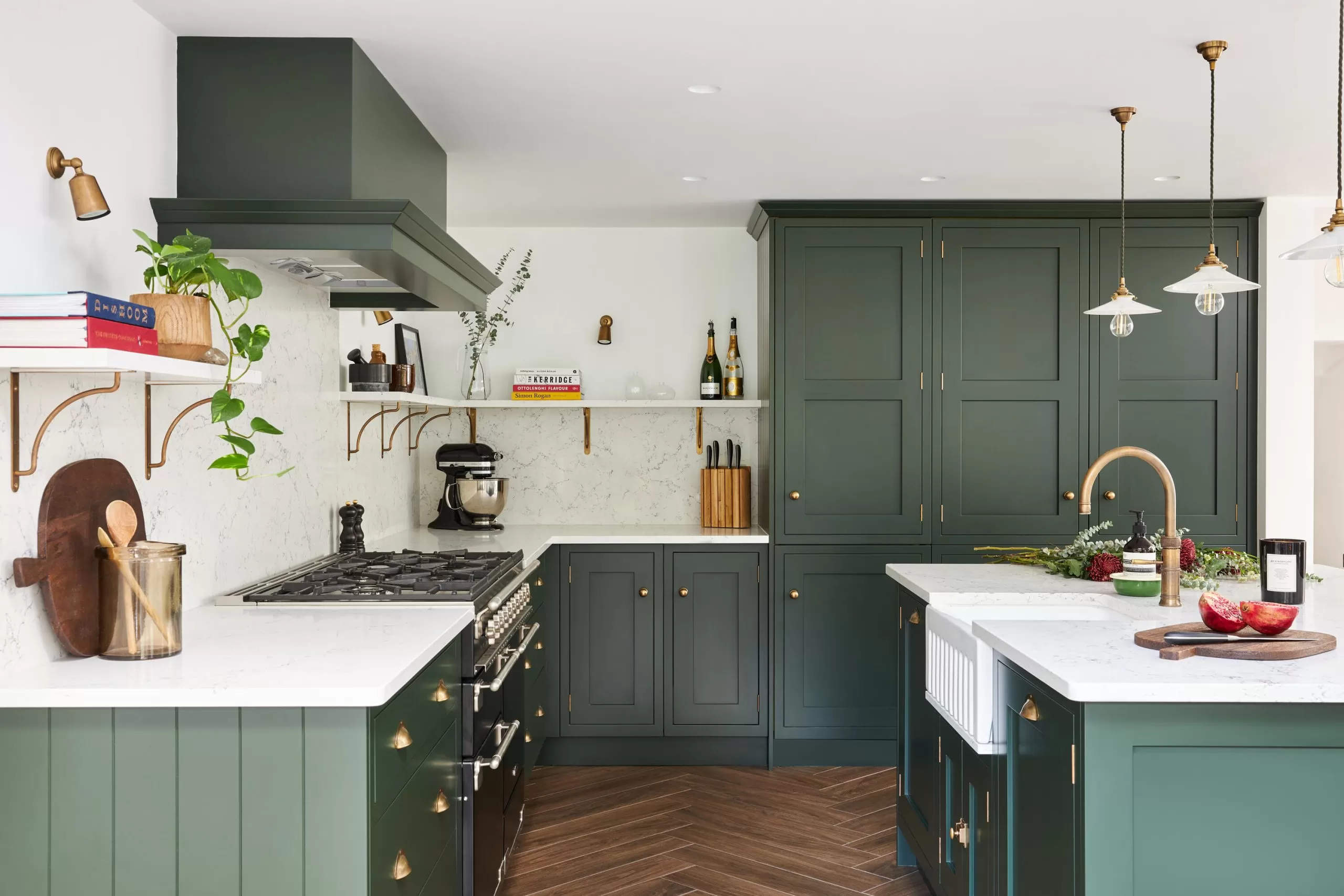
Hardware is the detail that tips Shaker traditional, modern, or somewhere in between.
Round knobs. The most authentic Shaker choice.
Cup or bin pulls. Half-moon pulls on drawers with knobs on doors – the classic kitchen combination, especially in period-leaning schemes.
Bar pulls. Horizontal on drawers, vertical on doors, for a cleaner, more contemporary look.
On Finishes:
polished or brushed nickel and chrome are timeless and bright
brass and bronze add warmth and a townhouse feel
matte black gives strong, current contrast against white or pale Shaker
Placement matters more than usual here – with simple frames and straight lines, any misalignment shows, so line hardware up carefully across every bank and keep to one finish family throughout.
How We Deliver Shaker Kitchens
Everything above is design intent. The reason it survives contact with a building site is that the same team designs and installs it.
There's no handover where the vision gets reinterpreted by a contractor who wasn't in the room – which matters with Shaker more than most styles, because the look depends entirely on precision.
With us:
One project manager runs your project from the first call to the final walkthrough.
Every trade (fitters, plumbers, electricians, tilers, decorators) is vetted and sequenced in the right order.
Pricing is agreed before any work begins.
And the design you want is what gets delivered.