Kitchen & Bath
What Defines A Timeless Kitchen?
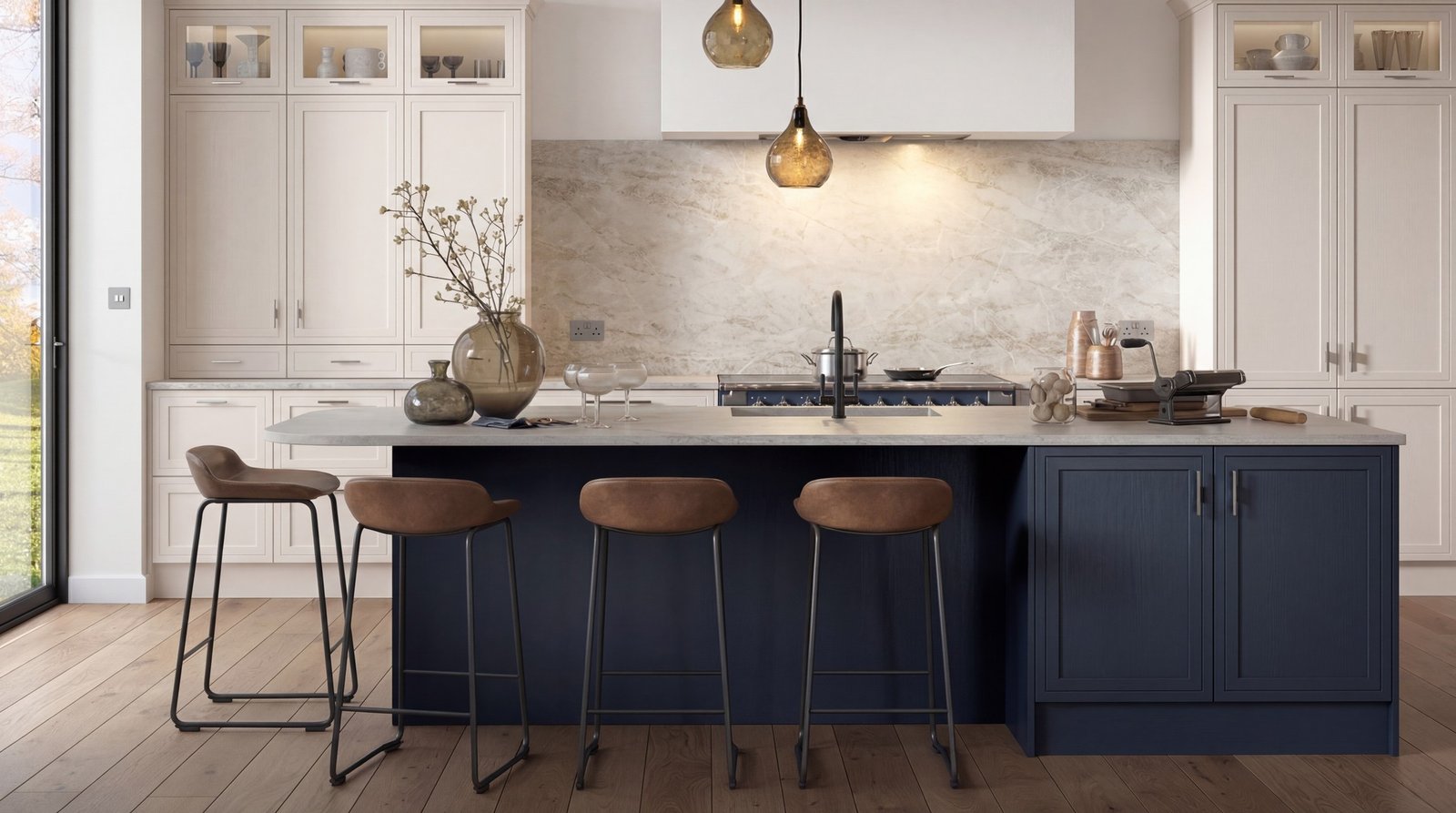
A timeless kitchen puts function first (clear workflow, proper storage, good light) then layers in restrained, characterful detail rather than statement trends. The bones are classic and built to last. The personality comes from things you can swap out later.
3 Principles Guide Every Timeless Scheme We Design:
Quality over novelty. Solid or high-quality cabinetry, robust hinges, and finishes that can be repainted or refinished rather than ripped out – paired with stone or good engineered-stone worktops and appliances in classic finishes.
Classic, not theme-y. Shaker or in-frame doors and simple mouldings that sit comfortably in a period home without shouting a decade. We edit down to one or two special moments (a beautiful range, a classic tap) instead of competing focal points.
A neutral, flexible base. Cabinets, worktops, and flooring in whites, creams, greys, and natural wood that work with any future wall colour. The bolder personality goes into the things that are cheap to change – art, textiles, stools.
Layout
A timeless layout feels intuitive, respects the architecture, and makes everyday cooking effortless. A lot of our work is shaping that around the realities of London and Home Counties homes – long galley rooms, knock-through kitchen-diners, side-return extensions.
The Work Triangle, Kept Honest
Sink, hob, and fridge arranged so no leg is too long or too short, which stops you criss-crossing the room as you cook. In larger spaces we think in zones (prep, cook, clean, pantry, breakfast) but keep the core three within easy reach.
Circulation That Makes Sense
Clear routes from door to garden to dining area, without forcing traffic through the prep zone. In a narrow room, tall units go on one wall and lighter base units on the other, so it doesn't read like a tunnel.
A Right-Sized Island
An island is only timeless when it fits – roughly 900–1000mm of clear space around it to move and open appliances. In a modest period room, a slim prep island or peninsula often beats an oversized one. We'll tell you which before you commit.
Connection To Light & Character
Where we can, the sink or main prep run goes near a window. In period homes, we align cabinet runs with fireplaces, chimney breasts, and window symmetry so the kitchen feels built in rather than bolted on.
Cabinetry
Cabinet style is the strongest single signal of whether a kitchen reads as timeless.
Shaker and in-frame designs have been in use for over a century, which is exactly why they still look right today.
Door Style:
Classic Shaker (narrow frame, flat centre panel) is the gold standard. For a higher-end, traditional feel in a period property, we use in-frame cabinetry, with doors set within the frame.
We'd steer you away from ornate raised panels or ultra-flat high-gloss slabs – both date faster.
Construction:
Solid wood or quality MDF with proper joinery, soft-close hinges, and dovetailed drawers where budget allows. Limited, well-proportioned trim and clean shadow gaps rather than fussy detailing – the difference between built-in furniture and boxes.
Proportion:
Door and drawer splits aligned with appliance heights and window lines for a calm, grid-like look, with a mix of drawers and cupboards so you're not facing a wall of identical doors.
Character Without Clutter:
A few glazed uppers or a dresser-style unit to show glassware, with open shelving kept restrained – one run by the range. Full shelf walls collect dust and date quickly.
Hardware:
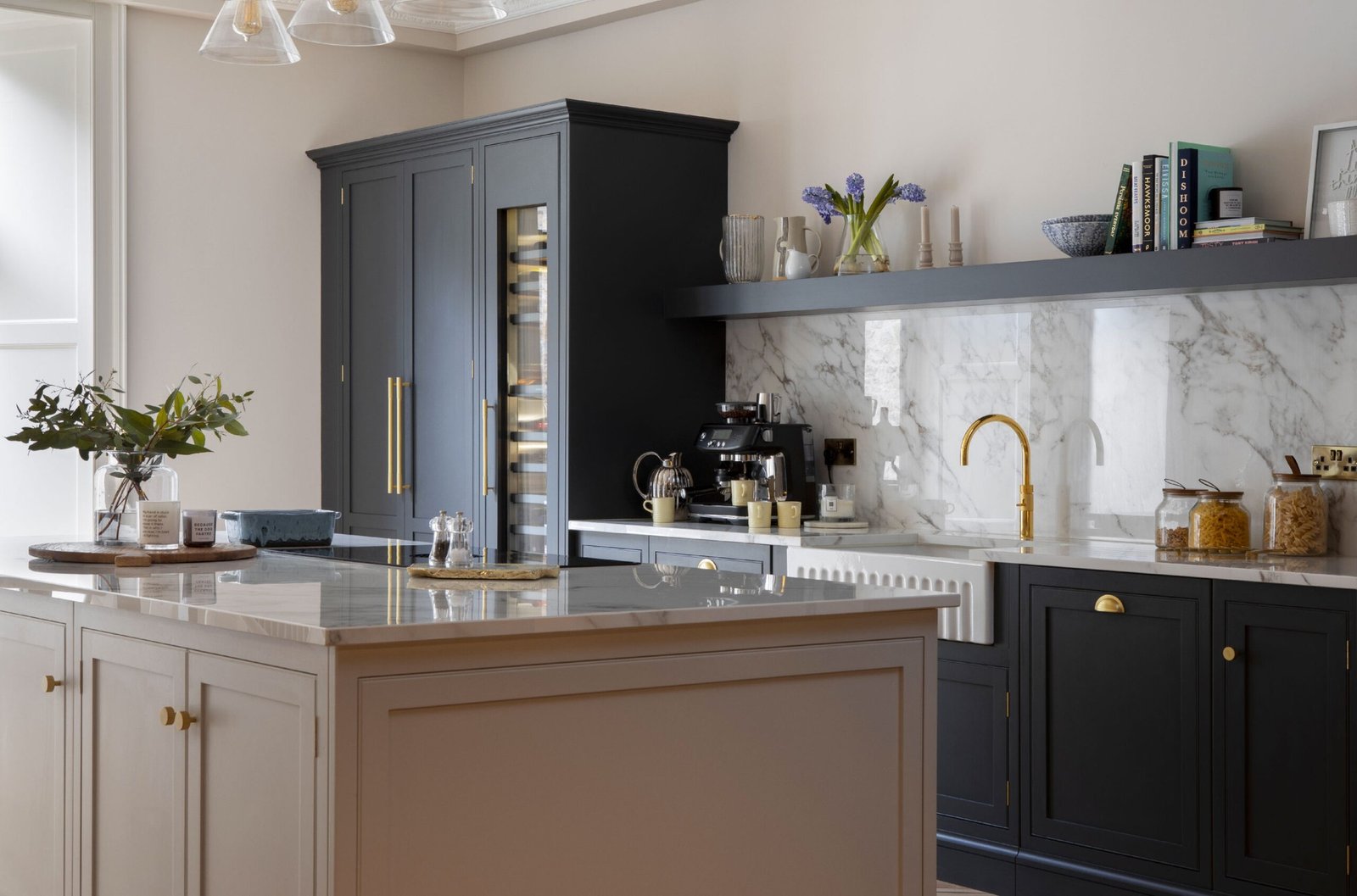
Simple knobs and bar pulls in unlacquered brass, brushed nickel, or blackened metal age gracefully and are easy to change later.
On in-frame doors, matching visible hinges add to the classic feel.
Worktops
Worktops cover a large surface area, so the material and colour go a long way to deciding whether a kitchen feels classic or "of an era."
Natural Stone:
Light marbles, quartzites, and honed granites feel inherently classic.
We tend to specify a honed rather than high-gloss finish – softer to look at, and better at hiding etching and scratches.
Engineered Stone (Quartz):
High-quality quartz with subtle veining gives the look of stone with better stain and scratch resistance. We avoid the heavily speckled, artificial-looking patterns that tie a kitchen to a trend.
Timber Accents:
A solid wood or butcher-block section on an island or breakfast bar adds warmth and is easy to refinish. We keep timber away from the main sink and hob runs, where stone needs far less maintenance.
A Few Details Decide Whether The Surface Dates:
Edges. Simple square, eased or small pencil-round edges feel contemporary-classic. Ornate ogee or bullnose profiles age faster unless the whole scheme is genuinely classical.
Splashbacks. A low stone upstand with a tiled or painted wall above is a reliable approach; a subtle full-height stone splashback behind the range can be a quiet focal point.
Colour. Off-white, soft grey, and warm beige stones are the most flexible. Very dark worktops can be beautiful, but only with the lighting properly planned – which is part of what we design in.
Material Finishes
Timeless kitchens rely on a restrained mix of natural-feeling materials and gently matte or satin finishes, rather than high-gloss, plastic-like surfaces.
Wood and stone develop a patina that reads as appropriate over time rather than worn out.
Sheen:
Eggshell or matt on painted doors
A very soft sheen on wood so the grain shows without glare
Brushed or unlacquered metal that wears gracefully rather than mirror-polished
Metals:
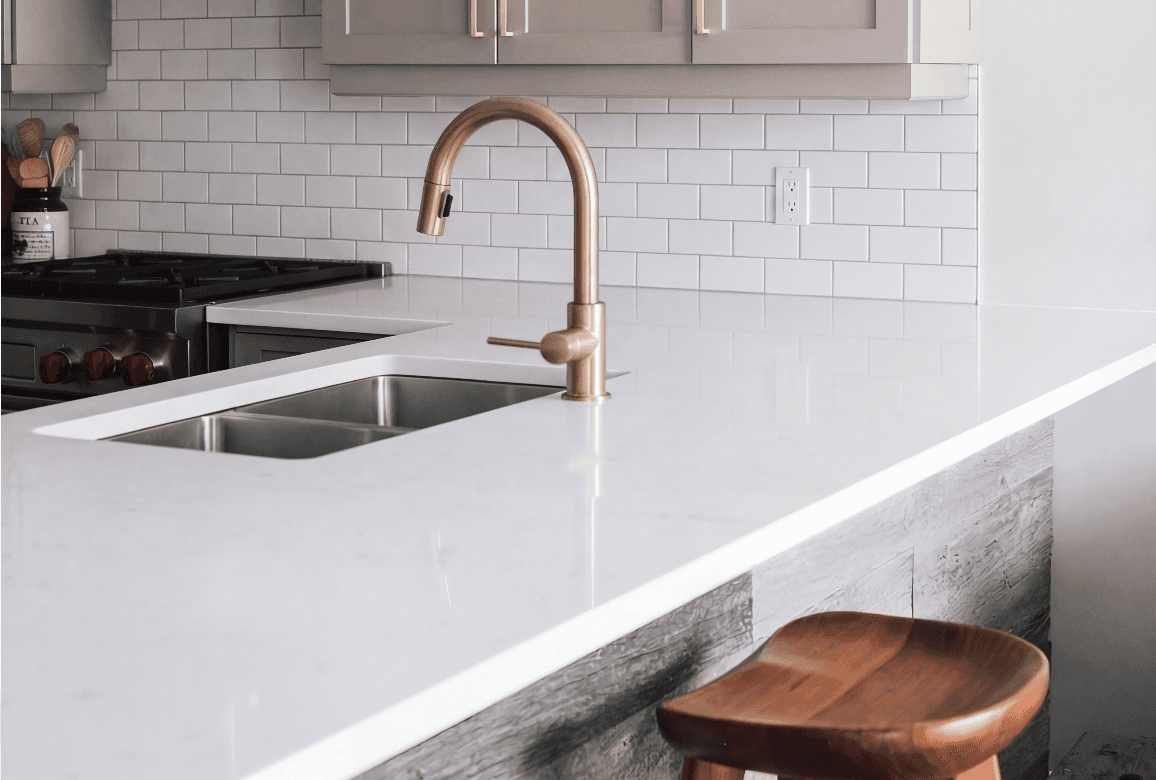
One dominant finish – brushed brass on handles and tap, say – with at most one supporting metal. Three or four competing finishes start to look busy and very "of the moment."
Backsplash:
Plain or subtly patterned tile – metro in a simple layout, square zellige-style, or a minimal stone splashback. In a small kitchen we avoid busy patterned feature walls (they're harder to live with long-term).
Flooring
Flooring should feel coherent with the rest of the home – which matters especially where there's already original timber, herringbone parquet, or Victorian tile nearby.
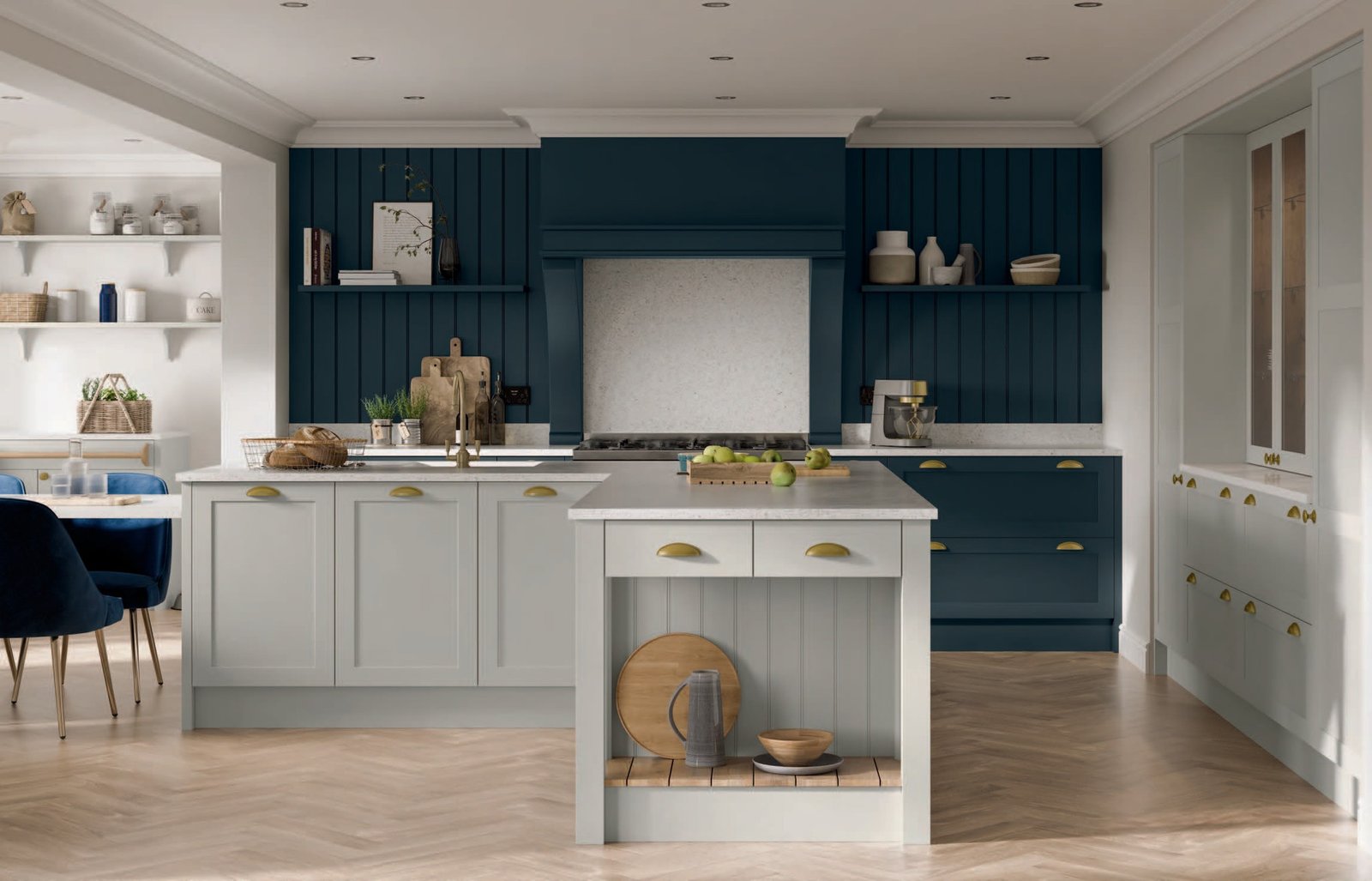
Wood and wood-look. Engineered oak boards, plank or herringbone, in a matte or oiled finish. We usually recommend a mid-tone – very dark and very pale floors both show marks more readily.
Stone and stone-effect. Natural limestone, sandstone and slate, or high-quality porcelain that mimics them, are classic and practical. Larger-format tiles in a simple layout feel calmer and make a room read bigger.
Continuity. When the kitchen opens onto a living or dining space, carrying the same flooring through (or a compatible tone) keeps the whole home cohesive.
Underfloor Heating…
Is a smart, invisible investment in a lot of renovations and works particularly well under stone or tile.
Colour Palette
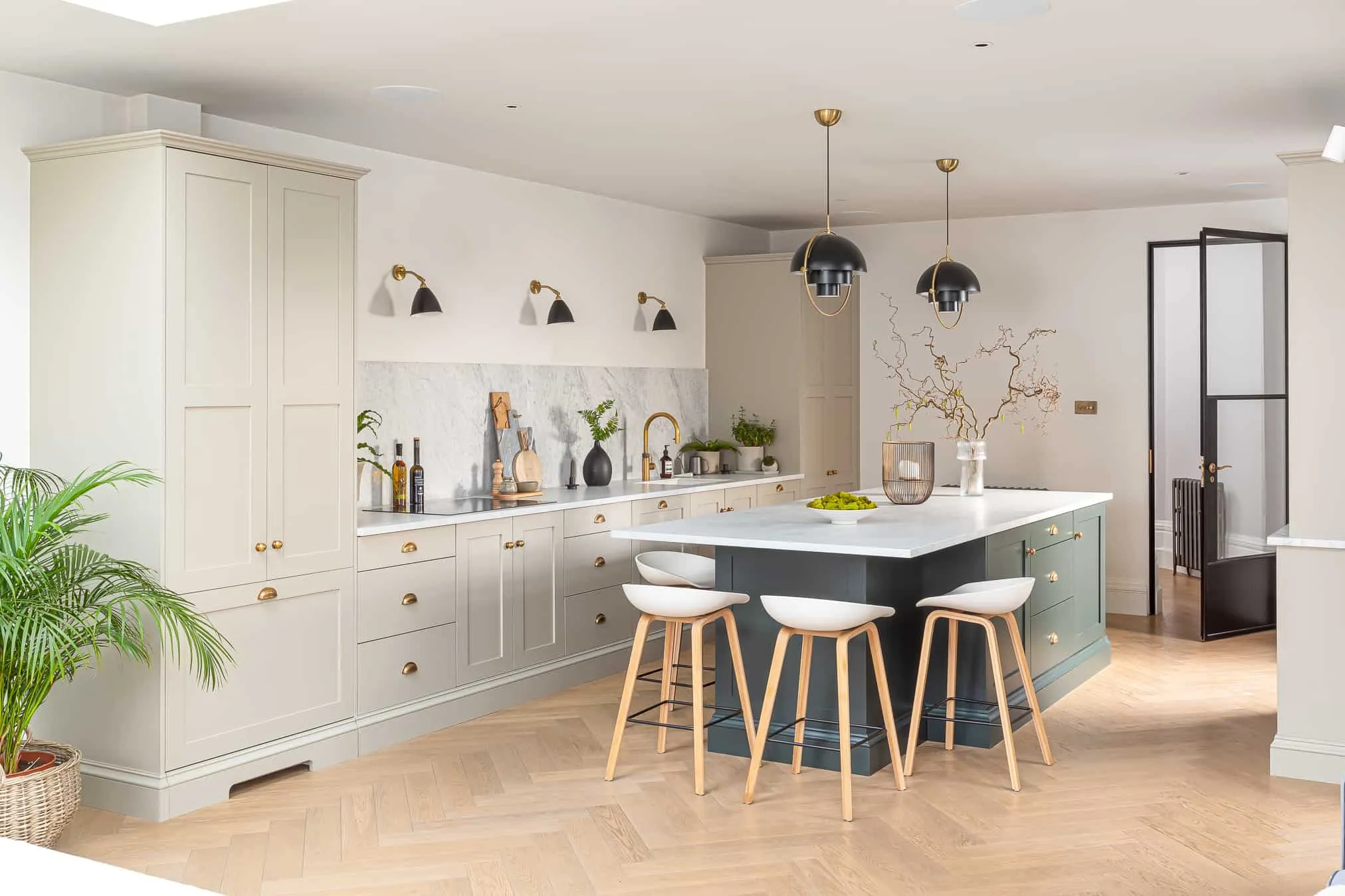
A timeless palette is calm, layered, and forgiving – usually built around warm neutrals that can flex as lighting, hardware, and textiles change.
Cabinets:
Warm whites, bone, soft greys, greige, and gentle taupes for the main colour.
For something richer, deep slate blue, muddy navy, olive or off-black – balanced with light worktops and good lighting.
Walls & Ceilings:
Off-whites and soft neutrals, not stark brilliant white, flatter older plaster and lower light. A ceiling a touch lighter than the walls keeps a room airy.
Depth:
Light perimeter cabinetry with a darker island, or the reverse – depth without noise. Contrast can also come from a darker floor under pale cabinets.
Accents:
Sages, dusty greens, and complex blues feel grounded because they reference nature rather than a synthetic trend. Anything very "now" (terracotta, blush, burgundy) stays on walls, art, or textiles that you can swap.

How We Deliver Timeless Kitchens
Everything above is design intent.
The reason it survives contact with a building site is that the same team designs and installs it. There's no handover where the vision gets reinterpreted by a contractor who wasn't in the room.
With us:
One project manager runs your project from the first call to the final walkthrough.
Every trade (fitters, plumbers, electricians, tilers, decorators) is vetted and sequenced in the right order.
Pricing is agreed before any work begins.
And the timeless kitchen you dream of is what gets delivered.