Kitchen & Bath
What Defines A Traditional Kitchen?
A traditional kitchen is built around framed construction, panelled doors and period detailing that respects the architecture – cornices, pilasters, furniture-like proportions, and natural materials that give the room weight and a sense of permanence.
The mood is warm and inviting, with display crockery and classic hardware doing the work that minimalism deliberately avoids.
Five Principles Guide Every Traditional Scheme:
Framed cabinetry and visible detailing. Shaker or in-frame doors, cornice, pilasters and furniture-like proportions.
Natural materials with character. Solid or painted timber, natural stone or wood worktops, ceramic tile.
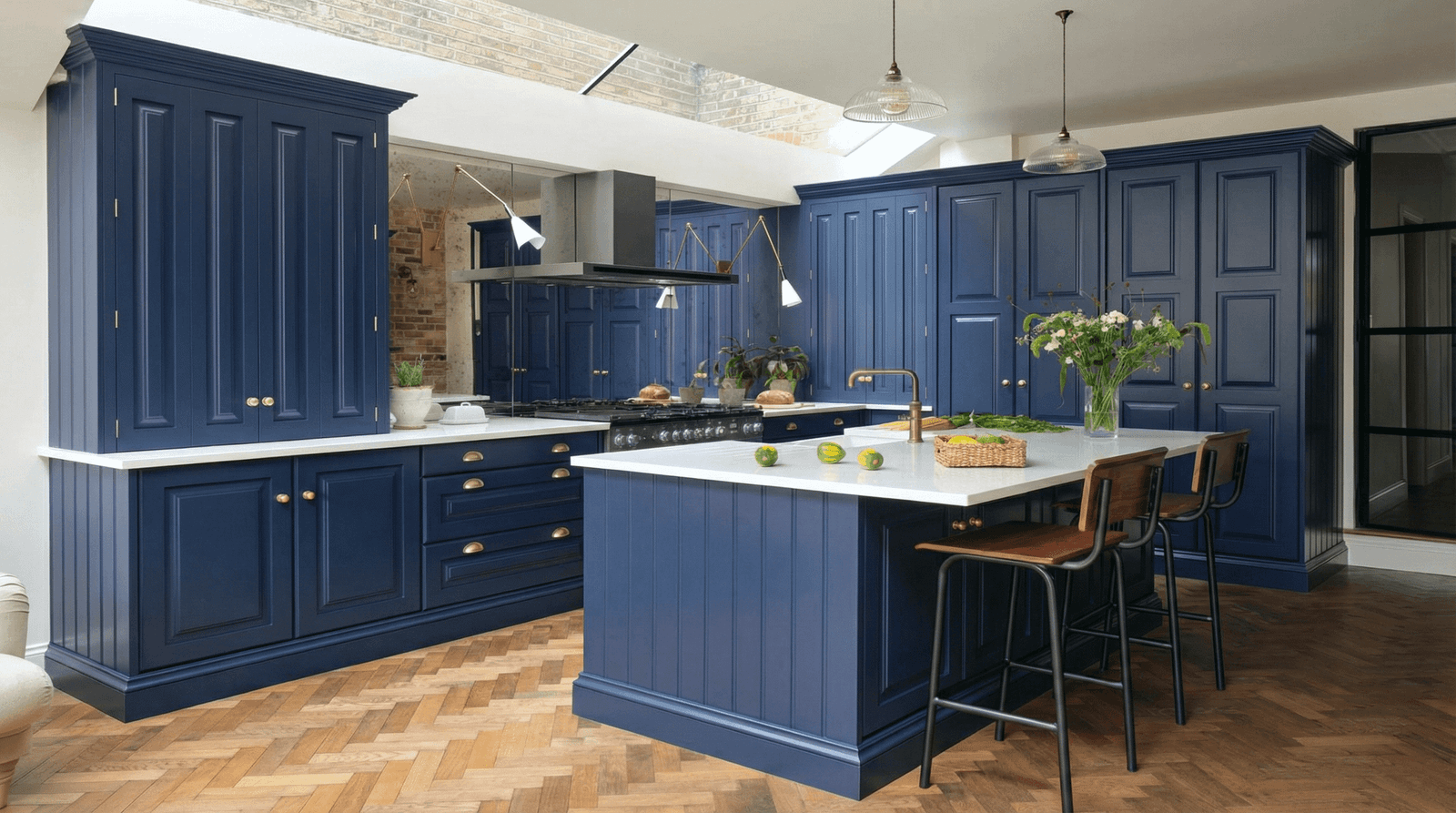
Heritage colour. Soft neutrals, sage and heritage greens, with deep navy or forest green as accents.
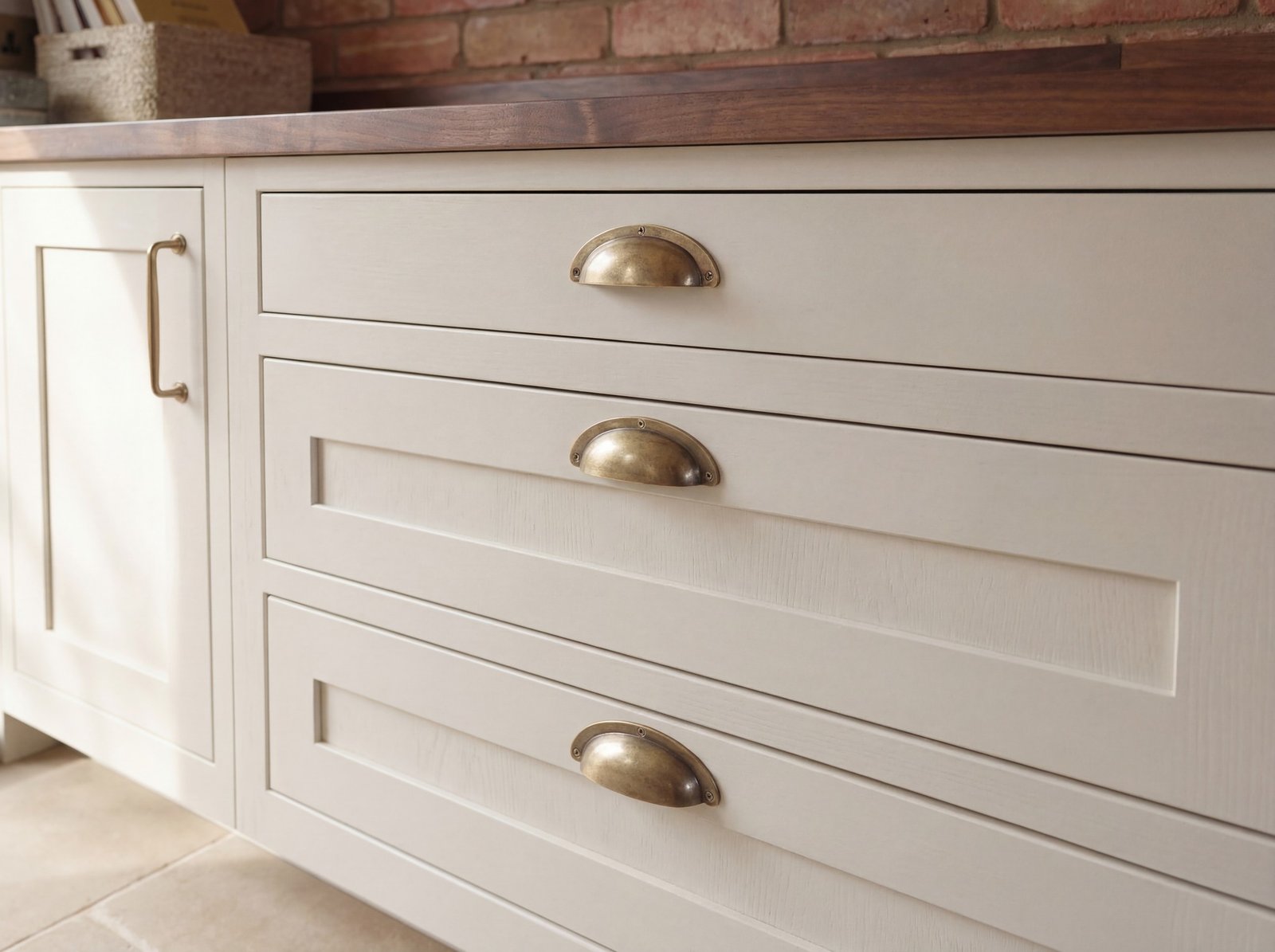
Classic hardware. Antique brass, pewter and bronze in knobs and cup pulls.
Architectural detailing. Cornicing, glazed doors, plate racks, turned legs on islands.
Done well, these are authentic period details executed with quality materials and proper proportions.
Layout
Traditional kitchens still follow the classic working triangle (sink, cooker, fridge arranged for efficient movement) but organised into zones rather than one open, ultra-minimal space, which reinforces the furniture-like feel.
Zoned, not open-plan-minimal. Distinct areas for cooking, prep, and storage, often with a separate dresser or larder, so the room reads as furnished over time.
Period-appropriate footprints. Galley and L-shapes suit older terraces; extended rear kitchens take an island or peninsula as a soft divide to the dining area.
Classic focal points. A range cooker centred on a chimney or false chimney breast, and a farmhouse or Belfast sink, with prep space on either side to keep it practical.
Working with the architecture. Chimney breasts, fireplace alcoves, and original proportions guide cabinet runs, so the kitchen feels built into the house.
Cabinetry
Cabinetry is where a traditional kitchen earns its character – framed construction, panelled doors, visible detailing, and furniture-like proportions, usually in painted timber with classic hardware.
In-frame construction. Doors set within a surrounding frame fixed to the carcass, giving visible structure, tighter gaps, and the shadow lines that modern overlay cabinets can't replicate. This is the foundation of the look.
Shaker doors. Five-piece fronts with a flat recessed panel – the backbone of most traditional English kitchens, equally at home in a country cottage or a Georgian townhouse.
Raised and fielded panels. More formal, Georgian or Victorian-influenced doors with raised centres and bevelled mouldings for period-correct schemes.
Furniture moments. Dressers with open plate racks, islands with turned legs, glazed display cabinets, and chunky end panels that read as standalone pieces.
The Detailing Ties It All Into The Architecture:
Cornice on full-height runs, pelmets, fluted pilasters at island corners, cock-beading on drawer edges, profiled plinths.
On materials, solid wood or veneered doors at the higher end, durable MDF with timber frames for movement control – finished in matt or eggshell paint, with deeper tones like navy, bottle green, or charcoal reserved for islands and base cabinets.
Worktops
Traditional worktops look natural and classic rather than ultra-sleek, with wood and stone anchoring the aesthetic, usually in substantial 30mm-plus profiles.
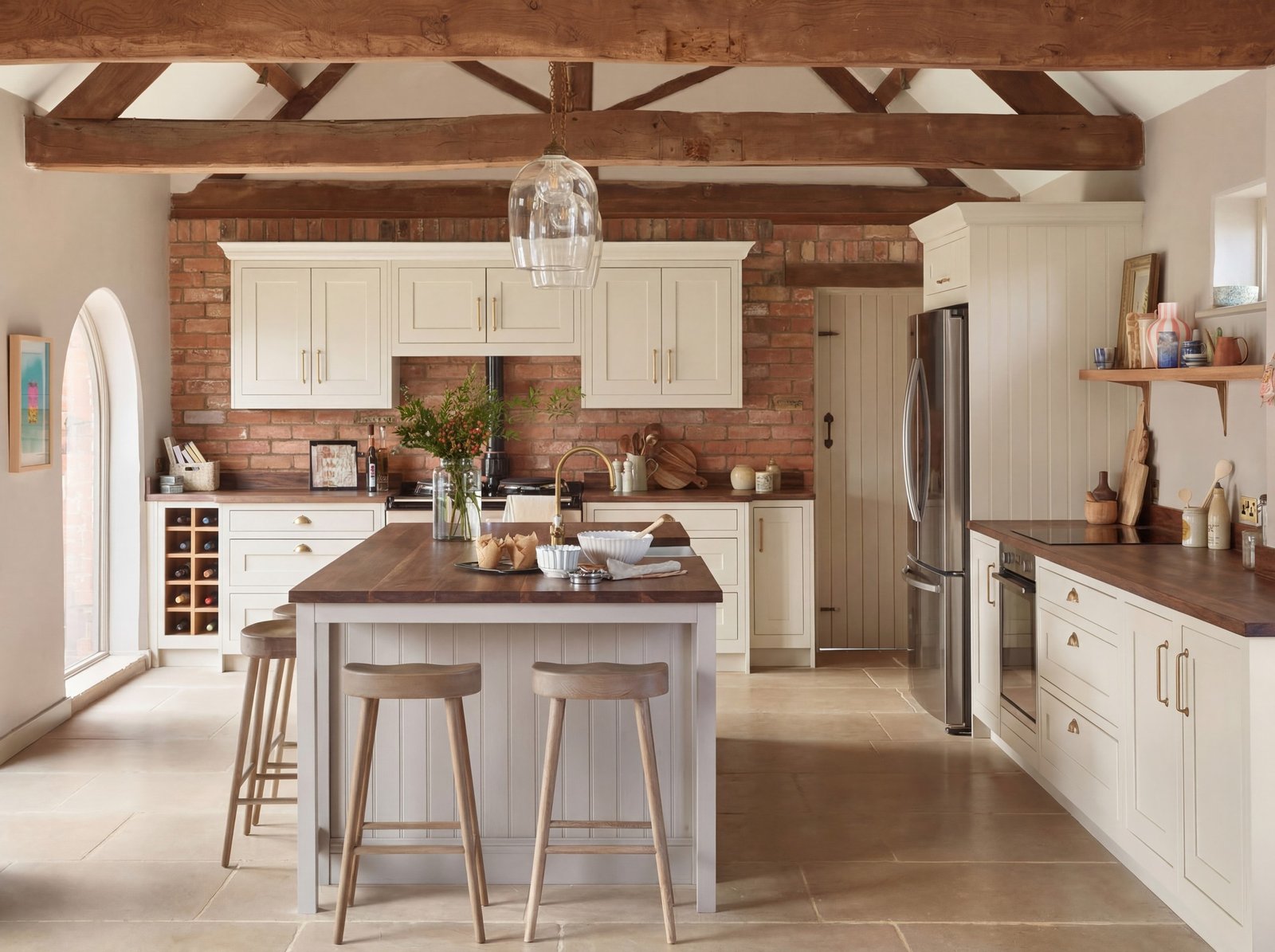
Solid wood. Oak, walnut, maple, or iroko for warmth, visible grain, and a heritage feel. It develops patina, which traditional schemes embrace as character – repairable and authentically period, in return for regular oiling.
Natural stone. Marble for old-world patina and classic luxury (best on islands rather than hard-working prep zones, given it's softer and porous). Granite for a tougher, more practical surface in busy family kitchens.
Quartz and composite. Practical stand-ins that read traditional in veined or subtly speckled patterns, with none of the sealing or maintenance.
A Few Details Keep It Period-Correct:
Classic edge profiles (pencil, ogee, or bullnose) rather than sharp modern squares, and colour pairings like cream Shaker with mid-tone wood or soft marble, or deep green and navy units against lighter stone. A timber island top against a stone perimeter is a reliable way to warm the room.
Material Finishes
Traditional finishes highlight natural texture and patina rather than hiding it – the opposite instinct to a sleek modern kitchen.
Timber. Lightly distressed, stained, or painted so the grain shows through.
Stone. Honed, satin, or gently polished rather than ultra-high gloss.
Metalwork. Warm tones (antique brass, aged bronze, pewter, brushed nickel) to complement cream and wood and suggest age.
Tile and paint. Simple metro, crackle-glaze or small-scale patterns with minimal, tone-on-tone grout. Walls and joinery in soft eggshell or matt rather than high-gloss lacquer.
Flooring
Traditional kitchens use natural or natural-look floors that tie the room to the rest of a period home.
Wood. Stained or engineered oak boards, wide-plank or parquet, linking through to adjoining rooms.
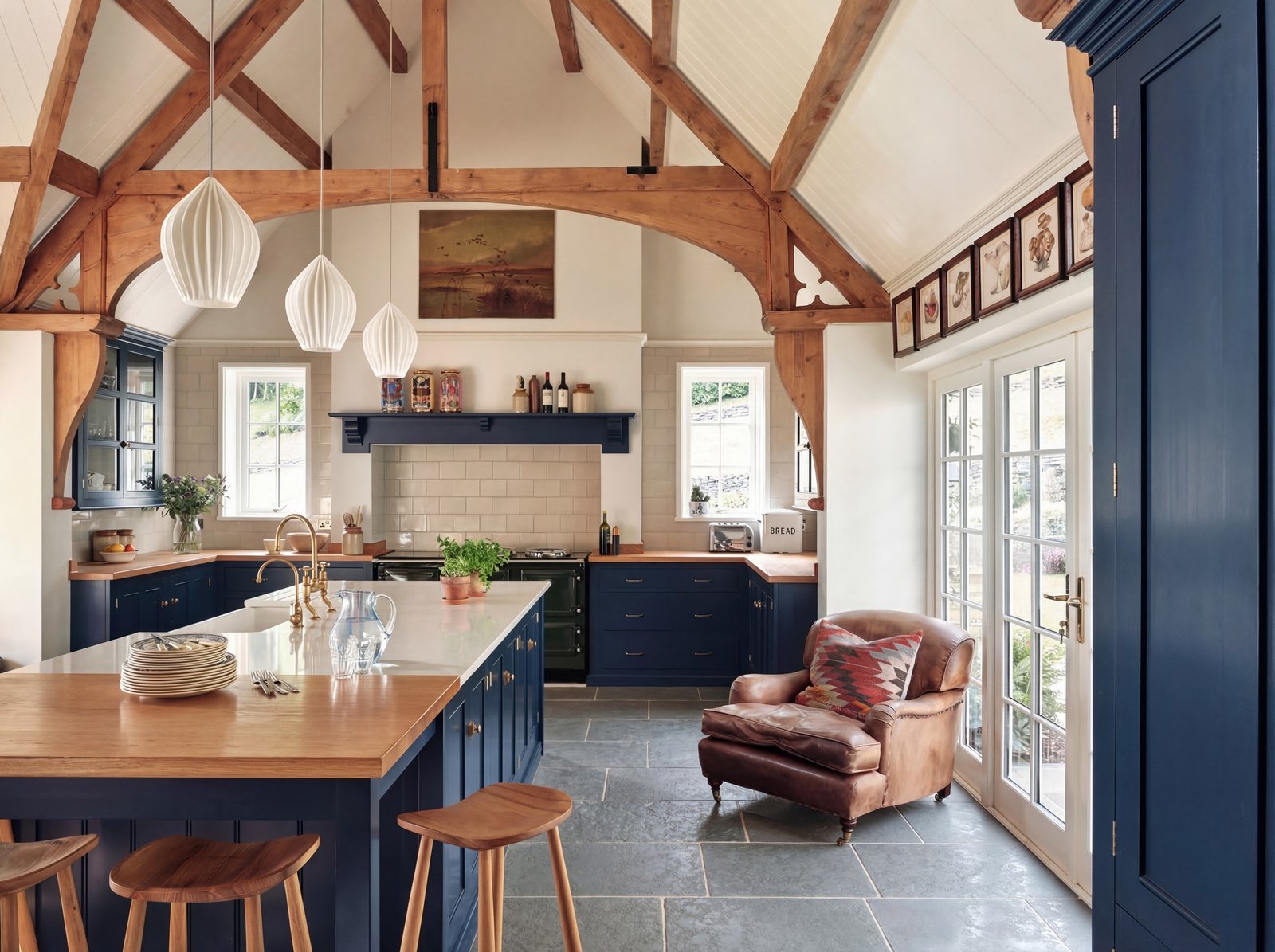
Stone and stone-effect. Limestone, travertine, slate or convincing porcelain for a grounded, country-classic feel that still works in the city.
Heritage tile. Patterned Victorian-style or quarry tiles, particularly good in smaller kitchens and side returns.
Colours Stay Fairly Neutral…
Mid-to-dark wood, buff stone, soft greys – so the cabinetry and worktops lead.
Where Underfloor Heating Is Used…
We'd specify a UFH-compatible porcelain or engineered wood, planned in early since it affects build-up and sequencing.
Colour Palette
Traditional palettes are warm and neutral with gentle contrast, designed to age gracefully and suit the varied natural light of older homes.
Soft neutrals. Warm whites, creams, cashmere, pale greige and light grey for a calm, timeless backdrop.
Heritage greens. Sage, olive, eucalyptus and softer yellow-greens that feel very English.
Deep blues and greens. Navy, inky blue, forest or emerald for drama, especially on islands and lower runs.
Two-tone. Light uppers with darker bases or island – off-white with navy, cashmere with deep green.
Accents come through metals, greenery, textiles, and crockery rather than high-gloss colour pops, which keeps the room enduring rather than trend-led.
Three Schemes We Return To Often:
Classic Shaker: Soft white or pale grey cabinets, navy or deep green island, brass hardware, light stone worktop.
Warm country: Sage or olive cabinets, warm white trim, wood tops and floor, cream metro tile.
Two-tone heritage: Off-white uppers grounding a deep green or navy base, with aged brass throughout.
How We Deliver Traditional Kitchens
Everything above is design intent. The reason it survives contact with a building site is that the same team designs and installs it.
There's no handover where the vision gets reinterpreted by a contractor who wasn't in the room – which matters even more with traditional detailing, where the cornice, in-frame gaps, and mouldings have to be executed properly to read as authentic.
With us:
One project manager runs your project from the first call to the final walkthrough.
Every trade (fitters, plumbers, electricians, tilers, decorators) is vetted and sequenced in the right order.
Pricing is agreed before any work begins.
And what you envision is what gets delivered.