Kitchen & Bath
What Defines A Contemporary Kitchen?
A contemporary kitchen is built on clean, geometric lines and a calm, mostly neutral palette – then layered with texture, a few bold accents, and design-led detailing that make it feel current.
The discipline is in the balance: strong choices used in controlled doses, not everywhere at once.
5 Principles Guide Every Contemporary Scheme:
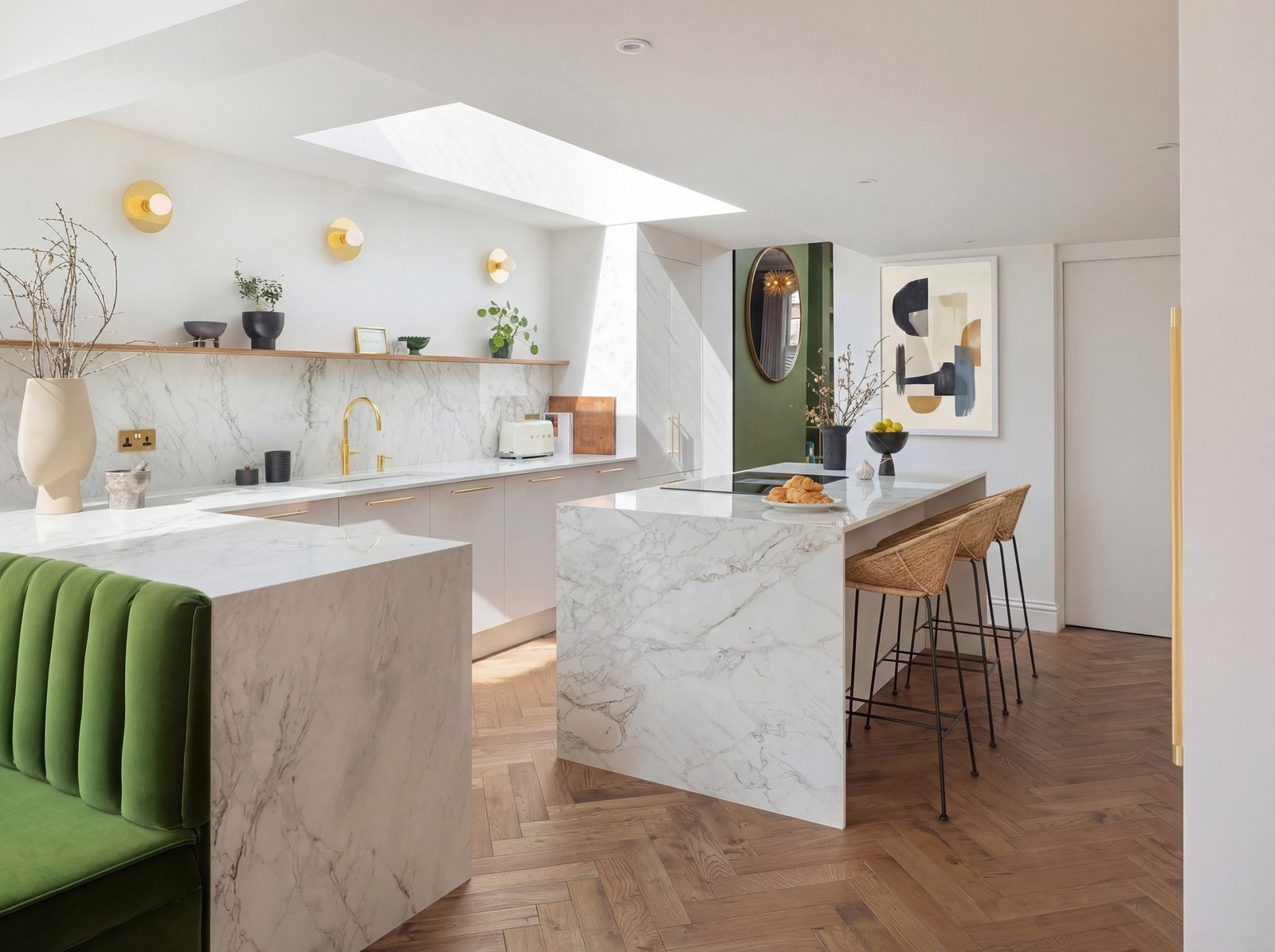
Statement features and focal points. A dramatic island, bold splashback, or mixed materials used deliberately as design elements.
Texture over plain minimalism. Fluted panels, artisanal tiles, natural stone with character – depth without busy pattern.
Warm metals and mixed finishes. Brushed brass, black steel, and bronze as considered visual accents.
Confident colour and contrast. Deep greens, navy, charcoal, and rich earth tones, grounded by warm neutrals.
Design-led detailing. Waterfall edges, slab splashbacks, elongated hardware, feature lighting.
These are deliberate decisions that give a kitchen personality and presence – suited to homes where the kitchen is the centrepiece of open-plan living.
Layout
Contemporary layouts prioritise efficient zones – prep, cook, clean, store – over the strict working triangle, since integrated appliances and multi-use islands change how the room works.
Zones over the triangle. Islands that combine seating, storage, and cooking. Peninsulas where a narrow terrace or flat won't take a full island.
Common plans. Galley or parallel runs with a slim island in period terraces. L-shape with island in open-plan rear extensions facing garden glazing. U-shape in compact apartments to maximise vertical storage.
Strong horizontal lines. Long unbroken runs of base units, stacked drawer banks, and aligned tall housings for a calm backdrop, with integrated appliances keeping the sightline continuous.
Sculptural moments, used sparingly. A curved island or peninsula to soften circulation in a tight space, and open shelving as an occasional accent rather than the default.
Cabinetry
Contemporary cabinetry uses clean geometry as the foundation, then layers in texture, bold colour, and refined detail to create visual interest.
Slab fronts as the base. Flat-panel doors creating uninterrupted planes – but lifted with colour, texture, or mixed materials rather than kept strictly neutral.
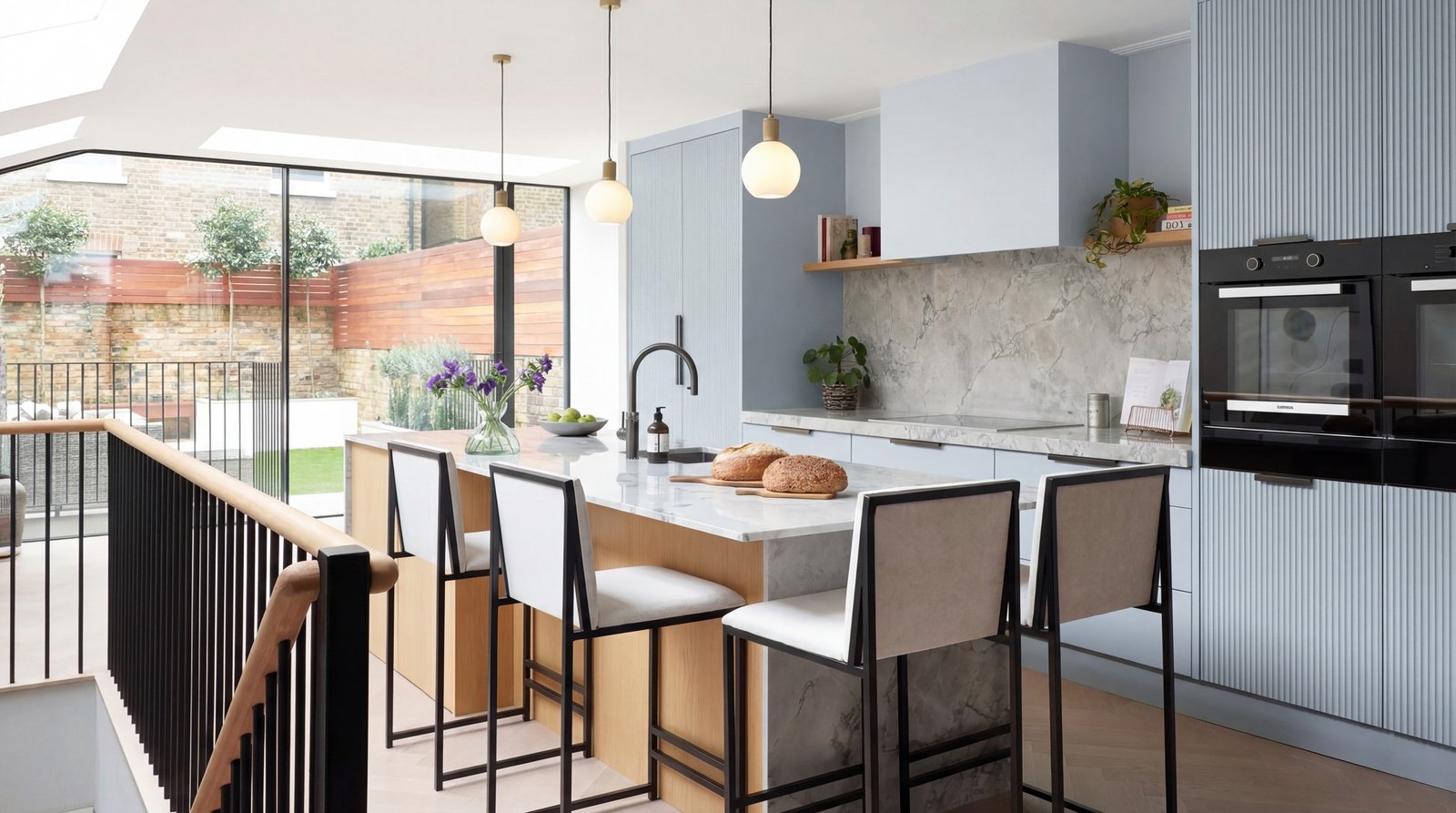
Fluted and ribbed panels. Vertical fluting in timber, painted MDF or glass for architectural depth and shadow without pattern – especially on island fronts and tall units.
Refined Shaker-lite. Frame-and-panel with very slim rails, crisp lines, and modern finishes, for period properties that want contemporary function without losing all character.
Mixed cabinet styles. Slab tall units with fluted island fronts, or smooth painted runs against a wood-veneer feature bank – layering that allows bolder choices in controlled doses.
Handles:
On handles – true handleless rails, J-pull grooves, or push-to-open keep fronts clean.
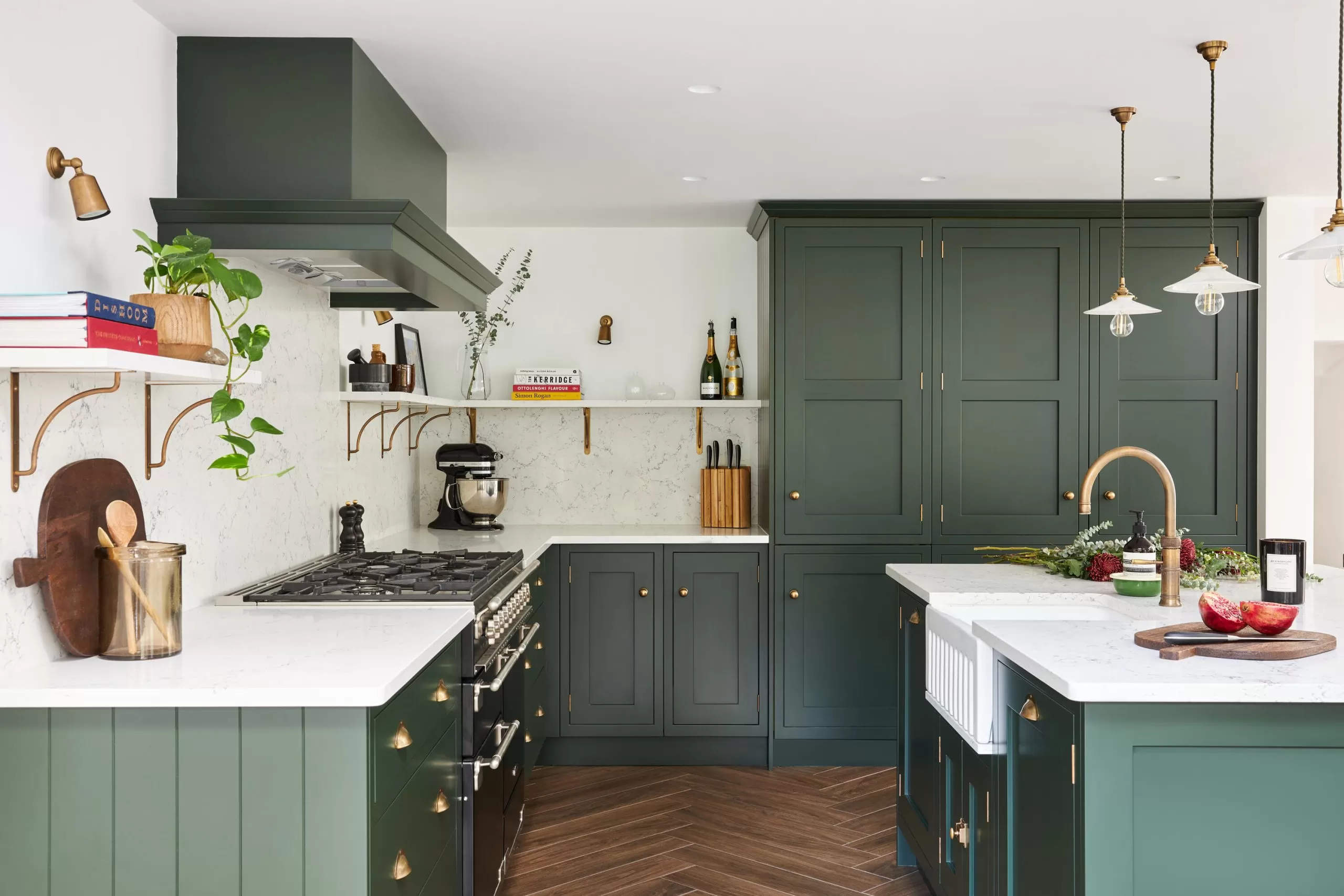
Where handles appear – they're treated as jewellery (elongated brass or black-steel pulls placed to emphasise the lines).
Finishes Lean…
Matt and soft-touch over gloss, in earthy greens, deep blues, charcoal, and natural wood veneers, balanced by warm whites and stone – typically two-tone, with a darker island grounding lighter tall units.
Worktops
Contemporary worktops are treated as visual anchors – bold veining, dramatic colour or sculptural details making them statement elements rather than neutral backgrounds.
Quartz. The workhorse, chosen with character – dramatic veining, bold colour, or refined concrete-look texture. Marble-effect quartz with strong, organic veining is popular for islands and feature runs.
Porcelain and sintered stone. Very thin profiles (12–20mm) in large slabs with stone, metal, or concrete looks – ultra-hard, heat-resistant, and ideal for waterfall edges.
Natural stone. Marble with dramatic veining, darker granite, characterful quartzite – used deliberately as a luxury feature surface, in honed or leathered finishes that read more architectural than high polish.
A Few Signature Moves Define The Look:
Mixed surfaces. A light, durable quartz on the main run with a darker, more veined statement slab on the island – visual hierarchy without overwhelming the space.
Waterfall edges. The slab extended down the island sides for a sculptural, continuous block of stone.
Edges and integration. Slim 20mm profiles with simple square or micro-chamfer edges. Full-height slab splashbacks in the same material to minimise grout and clutter.
Colour. Light bases (warm whites, soft greys, beiges) balanced by a darker, more dramatic island or feature run.
Material Finishes
Contemporary kitchens consciously layer natural materials – timber, stone, sometimes concrete – with engineered ones like quartz and lacquered MDF, for both warmth and practicality.
Restraint is the key: two or three finishes repeated, so a compact room never feels busy.
Cabinets. Predominantly matt or super-matt, occasionally soft satin. Gloss used sparingly to avoid a clinical look.
Worktops and splashbacks. Honed or lightly polished stone and quartz for a refined, not flashy, sheen.
Metals and appliances. Stainless or black steel, integrated fronts, with taps and lighting in brushed or satin metals.
Subtle industrial accents. Exposed brick, slimline steel-framed doors, or microcement introduced sparingly, in keeping with the contemporary taste for an industrial note.
Architectural Detailing Stays Minimal…
Skirting and cornice reduced or omitted, plinths set back for a floating effect, and lighting integrated into cabinetry and ceilings as linear LED.
Flooring
Flooring reinforces the horizontal lines and ties an open-plan kitchen into the living space around it.
Engineered wood and wood-effect. Oak tones especially, to warm a streamlined scheme and connect through to adjoining rooms.
Large-format porcelain. 600×600 or 900×900 tiles to minimise grout for a cleaner, more expansive feel – durable and UFH-compatible.
Restrained pattern. Herringbone or chevron where you want more character, kept tonal so it stays contemporary rather than busy.
Colours Tend To Mid-Tone Oak, Light Grey Or Warm Neutral
We're cautious with very dark floors in smaller rooms, since they can shrink the space.
Where it works, run the same floor continuously from kitchen into dining and living to enhance the open-plan feel. Underfloor heating is common in our renovations and gets planned in early.
Colour Palette
Contemporary palettes are warm, nature-inspired, and bold in controlled doses – deeper tones for impact, balanced by calm neutrals so the architecture and materials lead.
Warm whites and creams. Off-white, clotted cream, and soft ivory as more inviting bases than stark white.
Greige, stone, mushroom. Warm grey-beige "new neutrals" that work with wood, brass, and most materials.
Natural wood. Oak, walnut, and mid-tone timbers acting almost as a colour, adding warmth and texture.
Earthy greens. Sage, olive, moss, and forest on cabinets, islands, or feature runs.
Deep blues, charcoal, and black. Navy and blue-black for islands. Charcoal and black as framing and accents rather than the dominant colour.
Rich earth tones. Terracotta, oxblood, and warm brown for bolder statements, with dusky pink as an alternative neutral.
Three Schemes We Return To Often:
Contrast and warmth – sage or olive island, warm white perimeter, light stone worktops, brushed brass.
Bold and balanced – navy or charcoal bases, lighter tall units, marble-effect quartz with veining, mixed brass and black.
Earthy and textured – natural oak cabinets, stone-tone walls, a terracotta or geometric tile feature, bronze hardware.
A Reliable Approach:
Keep the fixed elements fairly neutral and bring the boldest tones in through stools, art, and small appliances – so the kitchen has impact now and flexibility if tastes change.
Hardware
Contemporary hardware is either extremely minimal or treated as refined jewellery – warm metals, slim shapes, and placement that emphasises the cabinetry's lines.
Elongated pulls as statement. Extra-long bar pulls on tall doors and large drawers, spanning two-thirds of the width, placed to create strong geometry.
Slim bars and edge pulls. Clean metal bars with softened edges, slim D-pulls, or top-mounted edge pulls for slab fronts that keep the look linear.
Warm metals leading. Brushed brass, champagne gold, bronze, and aged brass for a soft luxury note against greens, blues, and wood. Matte black for sharper, graphic contrast.
Mixed metals, deliberately. Coordinated rather than strictly matched – black pulls with brass taps, say – with one finish leading and the others supporting.
We favour substantial, solid pieces with a good grip and subtle texture (knurled, hammered or hand-cast) over lightweight, hollow handles.
How We Deliver Contemporary Kitchens
Everything above is design intent. The reason it survives contact with a building site is that the same team designs and installs it.
There's no handover where the vision gets reinterpreted by a contractor who wasn't in the room – which matters with contemporary work, where a mitred waterfall edge, a full-height slab splashback, or a fluted run only looks right if it's executed precisely.
With us:
One project manager runs your project from the first call to the final walkthrough.
Every trade (fitters, plumbers, electricians, tilers, decorators) is vetted and sequenced in the right order.
Pricing is agreed before any work begins.
And what the kitchen you envision is the kitchen that’s delivered.