Kitchen & Bath
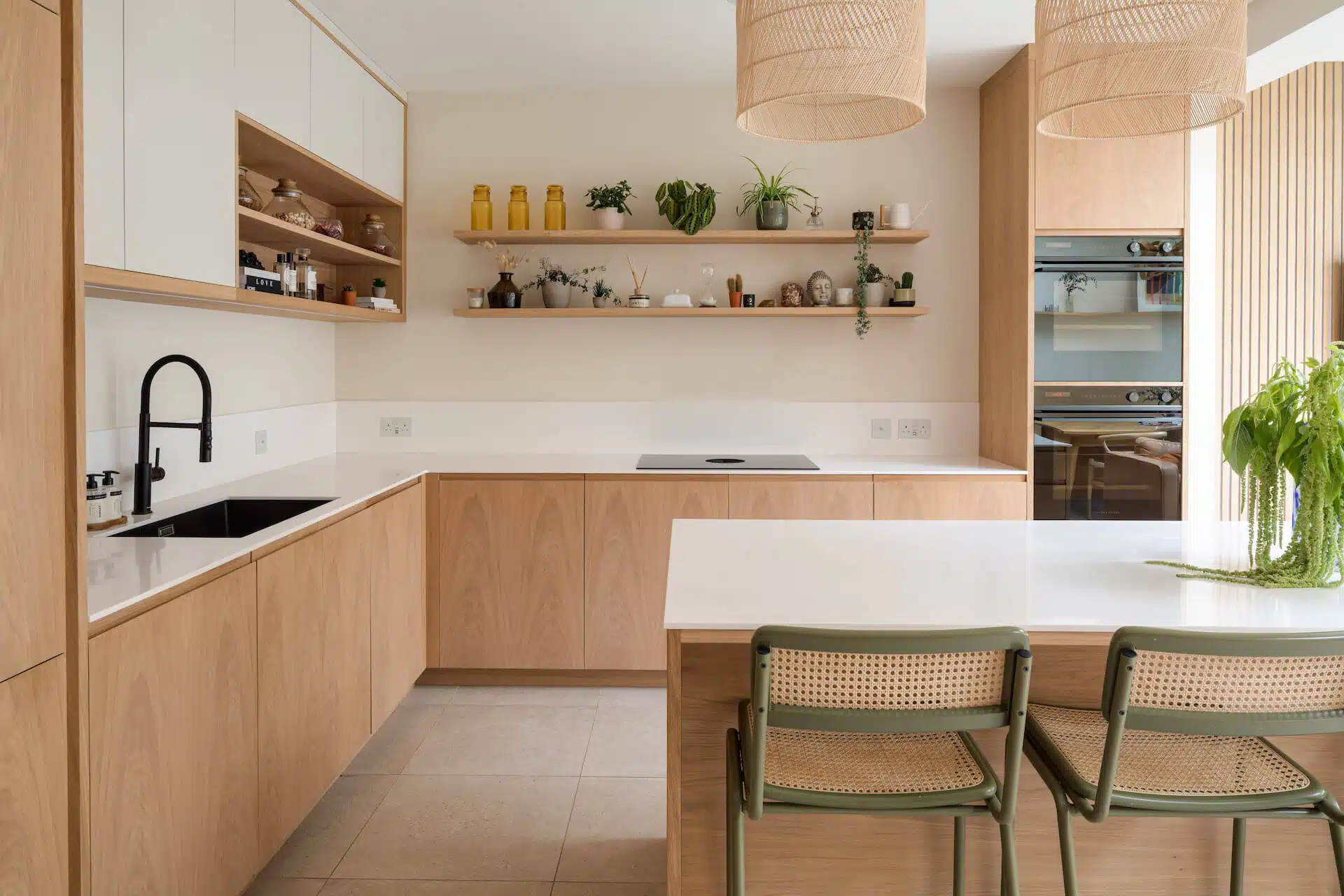
What Defines A Scandinavian Kitchen?
A Scandinavian kitchen is defined by light materials, natural textures, minimal ornamentation, and highly functional layouts that maximise brightness.
The look is clean and uncluttered, but warmth is the point – that's what separates it from cooler, stricter styles.
Five Principles Guide Every Scandinavian Scheme:
Simplicity first. Clean lines, flat-front or simple Shaker joinery, minimal ornament, very little visible clutter.
A neutral, light palette. Whites, soft greys, beige, and greige, with black or dark accents for fine contrast.
Natural materials. Pale woods (oak, ash, birch), stone or concrete, linen textiles, woven baskets, greenery.
Light and air. Maximised daylight, minimal window dressing, volumes kept visually open.
Warm minimal. Warm wood tones, soft textures, and hygge touches that stop the look feeling clinical.
These aren't stark white rooms. They're deliberately light and calm to maximise brightness, with natural warmth woven through.
Layout
Scandinavian layouts prioritise flow, light, and a sense of spaciousness regardless of square footage – openness over bulk, with careful thought about how air and light move through the room.
Light and flow. Open-plan configurations where the property allows, with work zones clearly defined but seamlessly integrated and no unnecessary visual barriers.
A sociable island. Where there's room, a central island as both workspace and social hub, kept to a clean, simple silhouette.
Calm elevations. Long, uninterrupted runs and full-height tall cabinets to frame the space, with very few changes in depth.
Storage doing the work. Pull-out larders, deep drawers, and internal organisers absorbing the clutter so surfaces stay clear and the airy feel holds.
Cabinetry
Scandinavian cabinetry is about calm, simple fronts in natural pale materials, with very considered detailing that keeps everything visually quiet and highly functional.
Front Style
Mostly flat or slab doors for clean planes, with simple Shaker where you want a slightly softer, more traditional feel while staying minimal. Occasional fluted or ribbed fronts on an island add interest without pattern or colour.
Materials & Finishes
MDF or birch ply for painted and veneered fronts. Light hardwoods like birch and ash at the higher end. Real wood veneer in light-to-mid tones, clear-matt lacquered so the grain stays visible but low-sheen.
Painted fronts in whites, pale greys, mushroom, greige, or muted greens and blues – always matte or eggshell, never gloss.
Handles
Push-to-open, J-pulls or finger channels so elevations read as simple blocks. Where handles are used, slim bar pulls or small knobs in matt black, brushed steel, warm brass – or timber, to tie into wood fronts.
Construction Tends To Be Frameless Euro-Style…
For tighter gaps and a seamless façade with the fridge, dishwasher, and bins panelled to match so the run reads as one continuous volume.
Two-tone schemes (white or off-white perimeter with a natural wood-toned island) add depth without visual clutter, and glass-fronted uppers or restrained open shelving display only the essentials.
Worktops
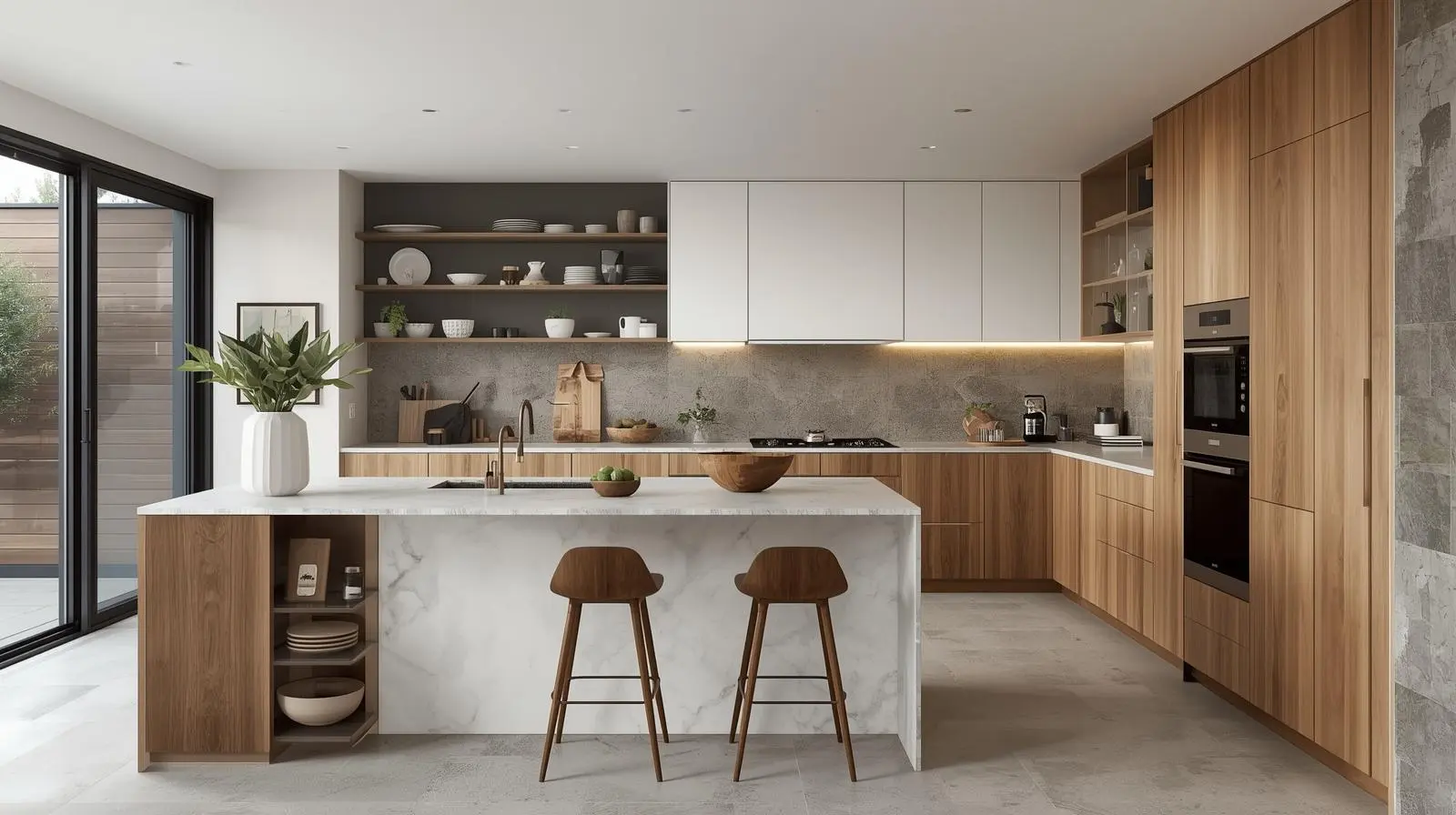
Worktops are pale, low-contrast and matte or low-sheen, chosen to bounce light and stay visually quiet against simple cabinetry.
Quartz and engineered stone. The most common choice – warm whites, beiges, greiges, and soft greys with minimal veining, in matte or satin. Concrete-style quartz suits the palette especially well.
Natural stone. Honed marble, quartzite, or light limestone where the veining is subtle and the finish honed rather than polished – real material character in return for more sealing and care.
Wood. Light oak, ash, or birch tops, authentically Nordic against white cabinets, best used on lower-risk zones like a peninsula or breakfast bar.
The Key Is Low Contrast
Warm white quartz on white or light-wood cabinets rather than stark black-and-white – with quiet movement only, since dramatic veining and speckled granites add visual noise.
Straight or very slightly eased edges, 20mm or less where viable, give the cleanest line.
Material Finishes
Scandinavian finishes emphasise natural texture in soft, matte, non-reflective surfaces – the calm visual field is the whole point.
Pale woods. Oak, birch, ash, or pine with visible grain, for warmth and a connection to nature.
Soft surfaces. Matte across cabinets, counters, walls, and floors to keep the room calm and light-absorbing.
Natural texture. Stone, ceramic, linen, and handcrafted materials adding interest without busy pattern.
Glazed tile. Subtle ceramic finishes for backsplashes, in simple subway or minimalist geometric layouts.
Metals (brushed steel, black, or brass) appear sparingly as fine accents, never as a feature.
Flooring
Light wood flooring is the classic Scandinavian choice, and it does real work in bouncing daylight around a dim room.
Pale wood. Wide-plank oak, ash, or birch in natural or lightly whitewashed finishes, herringbone or chevron for textural interest.
Wood-look and stone-look porcelain. Pale wood-effect or light stone and concrete looks where real timber isn't practical – durable and UFH-friendly.
Light tones throughout. Dark floors can work, but pale options reflect light far better and hold the airy atmosphere.
The warm brown tones of natural wood let you pair light flooring with white or grey cabinetry without the room feeling cold. Underfloor heating gets planned in early, since it affects floor build-up and sequencing.
Colour Palette
Scandinavian palettes are built around light, quiet neutrals with very controlled muted accents, so the space feels bright, calm, and tied to nature.
Whites and off-whites. Soft white, ivory, and cream as the main wall colours, chosen to maximise light rather than feel stark.
Warm neutrals. Taupe, sand, beige, and greige to add warmth and stop white schemes from feeling clinical.
Soft greys. Light-to-mid greys layered with white and beige for depth, on cabinetry or textiles.
Muted greens and blues. Sage, eucalyptus, dusty olive, and grey-blue – the classic Scandi accents, echoing forest and sea.
Black as a fine accent. Thin lines only (hardware, frames, lamp bases) to sharpen the scheme, never as a large field.
Three Schemes We Return To Often:
Light and warm: Soft white walls, pale oak or birch cabinets, warm white quartz, matt black hardware, a sage accent.
White with contrast: White cabinets and walls, light grey or beige worktop, dark bronze hardware, a soft blue or dusty olive island.
Natural warmth: Light grey walls, white cabinets, light oak worktop and floors, brushed brass, muted green or terracotta in the textiles.
The balance is always light-dominant with soft gradient shifts (white to warm beige to light grey) rather than high contrast.
Hardware
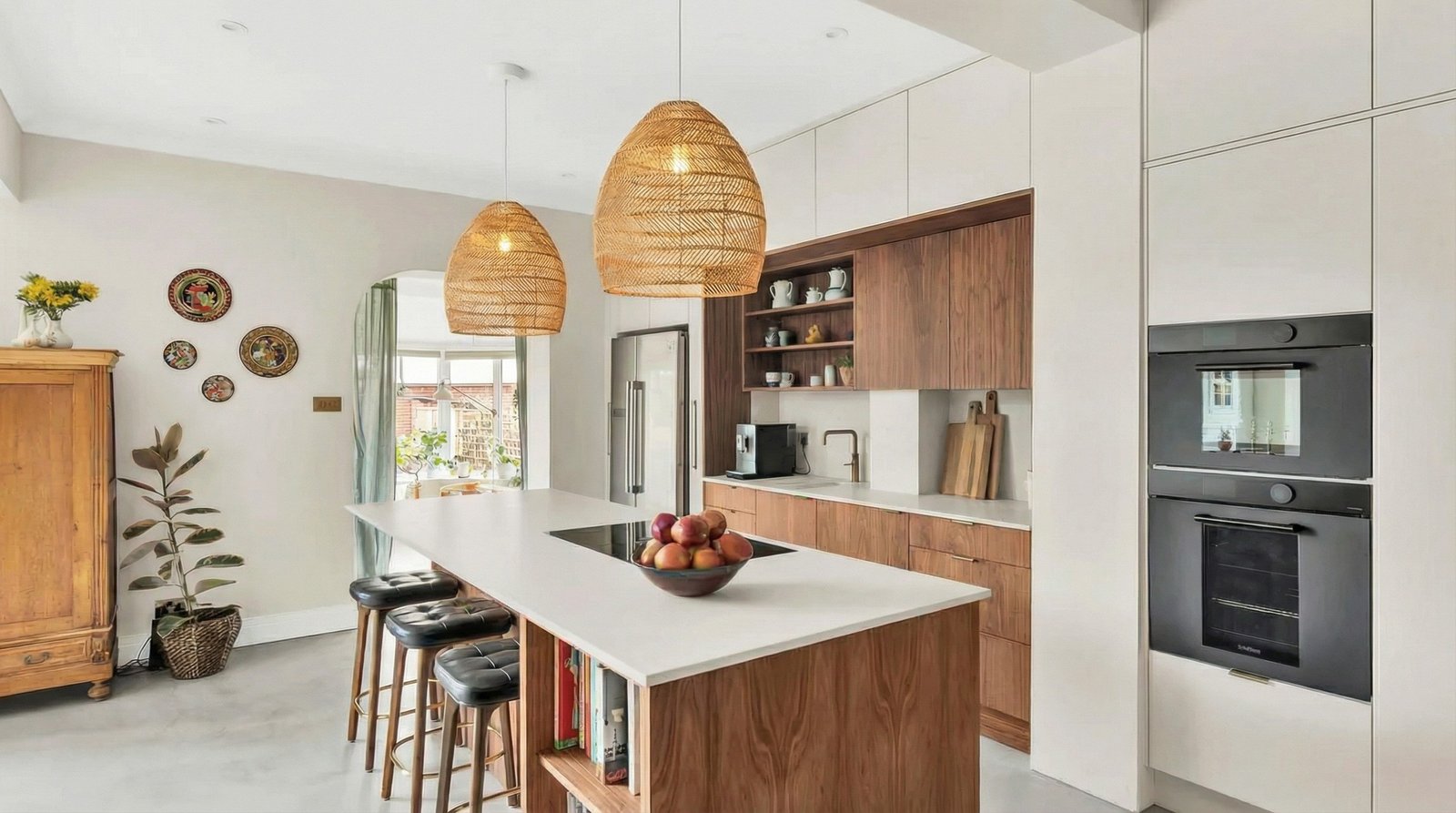
Hardware is minimal, tactile, and used sparingly so it quietly supports the cabinetry rather than becoming a feature.
Simple forms. Linear bar pulls, small round or oval knobs, or T-pulls – no ornate shapes, backplates, or chunky profiles.
Handleless options. True handleless rails, push-to-open, or finger pulls cut into the door edge, very typical and very calm.
Finishes. Matt black, brushed or satin stainless, and warm brushed brass. Timber pulls in oak or beech to tie into wood fronts and add warmth.
Matt and satin metals are preferred over shiny chrome, which feels harsher and less in keeping with the soft, hygge atmosphere. Handles stay slim and proportional – longer on wide drawers, smaller on doors – and lined up consistently to reinforce the clean lines.
How We Deliver Scandinavian Kitchens
Everything above is design intent. The reason it survives contact with a building site is that the same team designs and installs it.
There's no handover where the vision gets reinterpreted by a contractor who wasn't in the room – which matters with Scandinavian work where the calm depends on consistent matte finishes, panelled appliance runs, and pale timber matched carefully across cabinetry, worktop, and floor.
With us:
One project manager runs your project from the first call to the final walkthrough.
Every trade (fitters, plumbers, electricians, tilers, decorators) is vetted and sequenced in the right order.
Pricing is agreed before any work begins.
And the Scandi-style kitchen you envision is what gets delivered.