Styles /
contemporary
Contemporary Kitchens in London: Bold, Design-Led Spaces
Statement islands, mixed materials, and design choices that make an impact. Contemporary kitchens push beyond minimal into expressive – textured tiles, bold colour, warm metals, and refined details that feel current, not dated.
What Defines A Contemporary Kitchen?
A contemporary kitchen is built around confident design choices – bold materials, strong contrasts, and details that feel intentional rather than restrained.
Core principles:
Statement features and focal points – Dramatic islands, bold splashbacks, mixed materials as design elements
Texture over minimalism – Fluted panels, artisanal tiles, natural stone with character
Warm metals and mixed finishes – Brushed brass, black steel, bronze used as visual accents
Confident colour and contrast – Deep greens, navy, charcoal, rich earth tones balanced by warm neutrals
Design-led detailing – Waterfall edges, slab splashbacks, elongated hardware, feature lighting
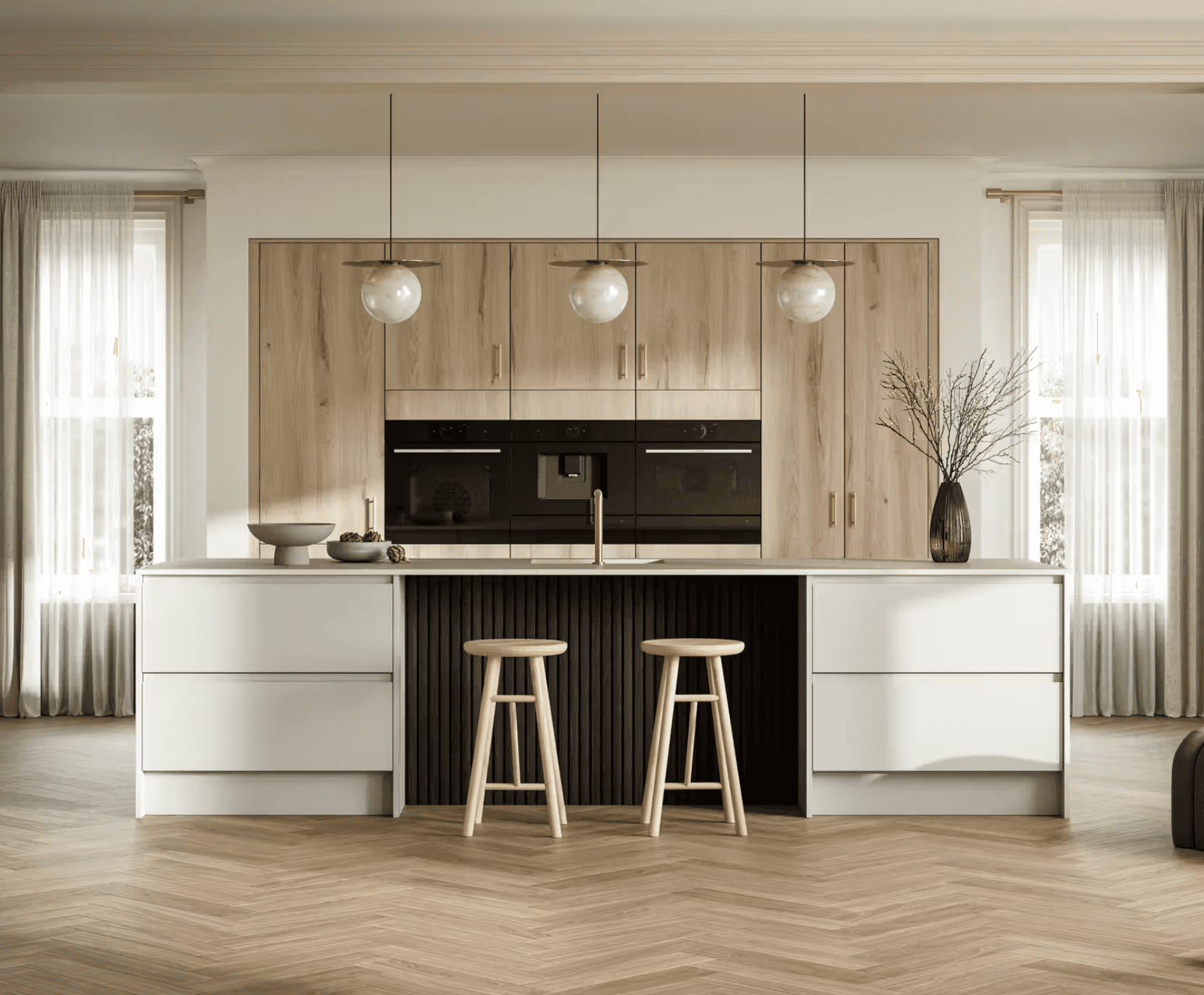
Slab cabinetry with fluted or textured panels. Stone with bold veining or dramatic colour. Statement tiling in artisanal finishes or geometric patterns. Mixed metals across hardware, taps, and lighting.
These are deliberate design decisions that create kitchens with personality and presence, suited to London homes where the kitchen is the centrepiece of open-plan living.
Materials That Define Contemporary Design
Cabintery
Contemporary cabinetry uses clean geometry as the foundation, then layers in rich texture, bold colour, and refined details to create visual interest.
Slab fronts remain the base
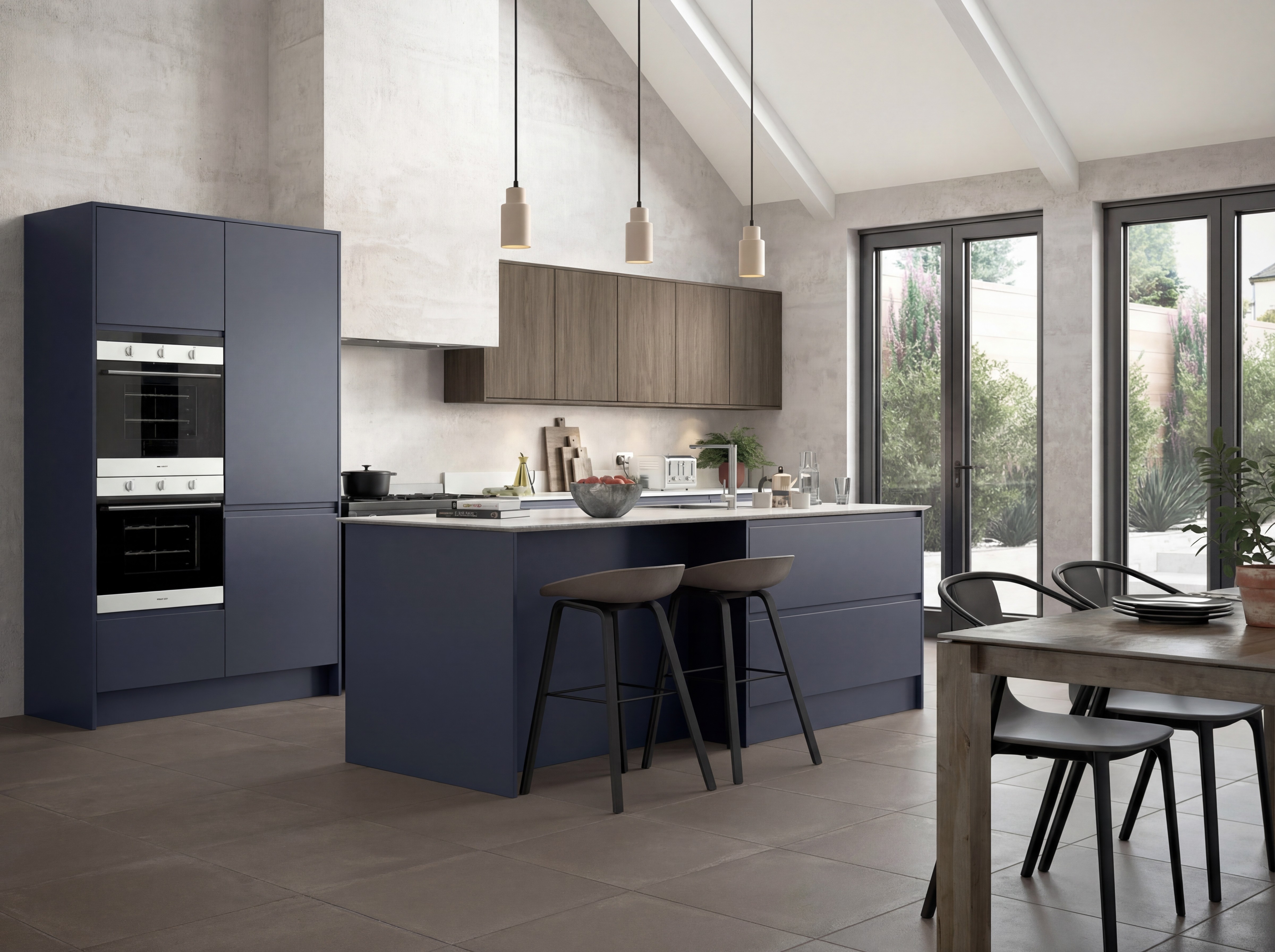
Flat-panel doors that create uninterrupted planes across cabinet runs. But contemporary schemes add interest through colour, texture, or mixed materials rather than keeping everything neutral and minimal. Deep greens, navy, charcoal, or warm earth tones are common on islands or feature runs, paired with lighter tall units or perimeter cabinets.
Fluted and ribbed panels
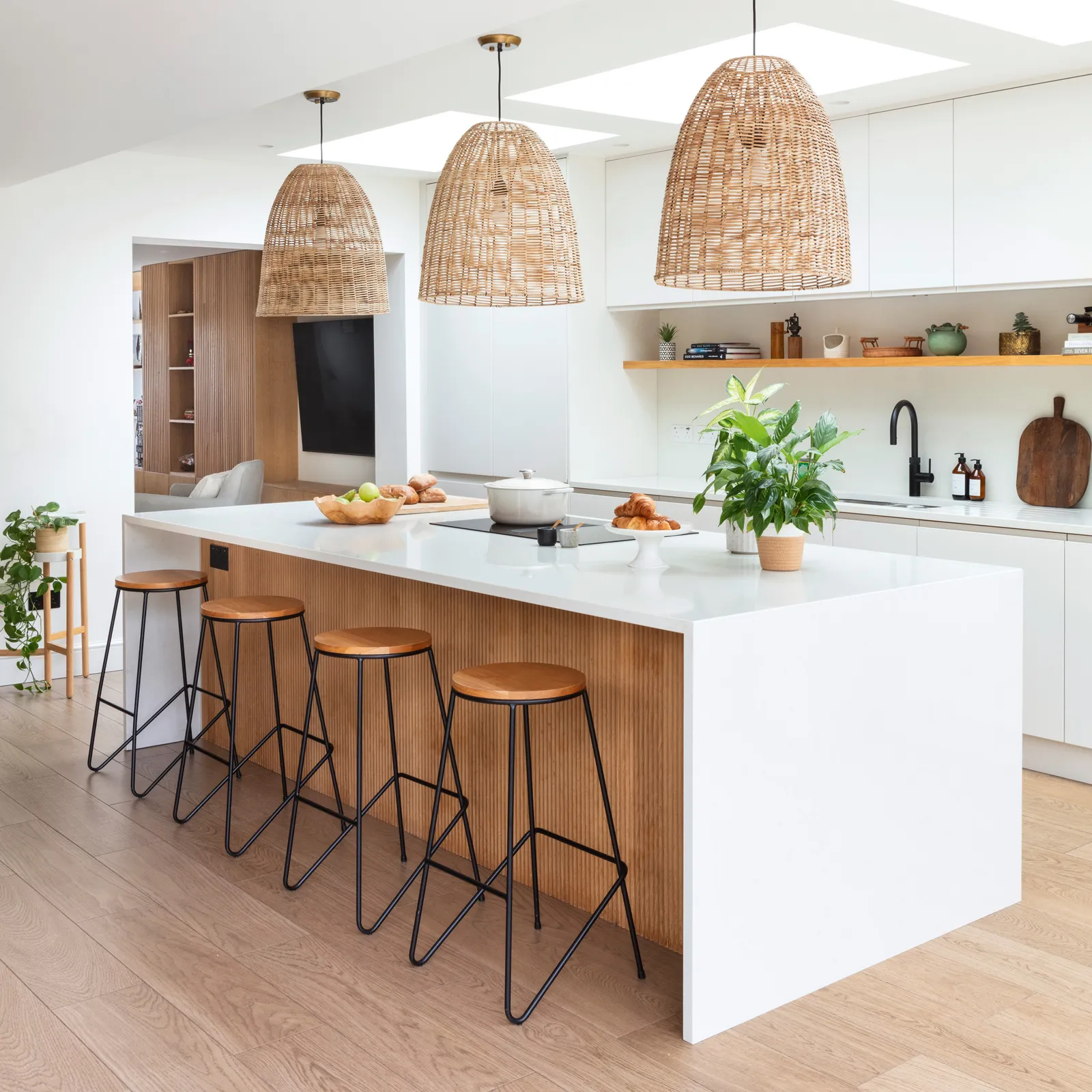
A key contemporary detail. Vertical fluting in timber, painted MDF, or fluted glass adds texture and shadow without introducing busy pattern. This works particularly well on island fronts, tall units, or feature panels where you want architectural depth.
Refined Shaker-lite
Brings frame-and-panel construction into contemporary schemes with very slim rails and stiles, crisp lines, and modern colours or finishes. This suits London period properties where you want contemporary function and aesthetics without losing all character.
Mixed cabinet styles are common
Slab tall units with fluted island fronts, or smooth painted perimeter runs with a contrasting wood-veneer feature bank. This layering prevents the space feeling one-dimensional and allows for bolder choices in controlled doses.
Handleless systems:
True handleless (aluminium rails), J-pull grooves, or push-to-open mechanisms keep fronts visually clean. When handles are used, they're treated as jewellery – elongated pulls on tall doors, slim bars in brushed brass or black steel, positioned to emphasise horizontal or vertical lines.
Finishes & Colours:
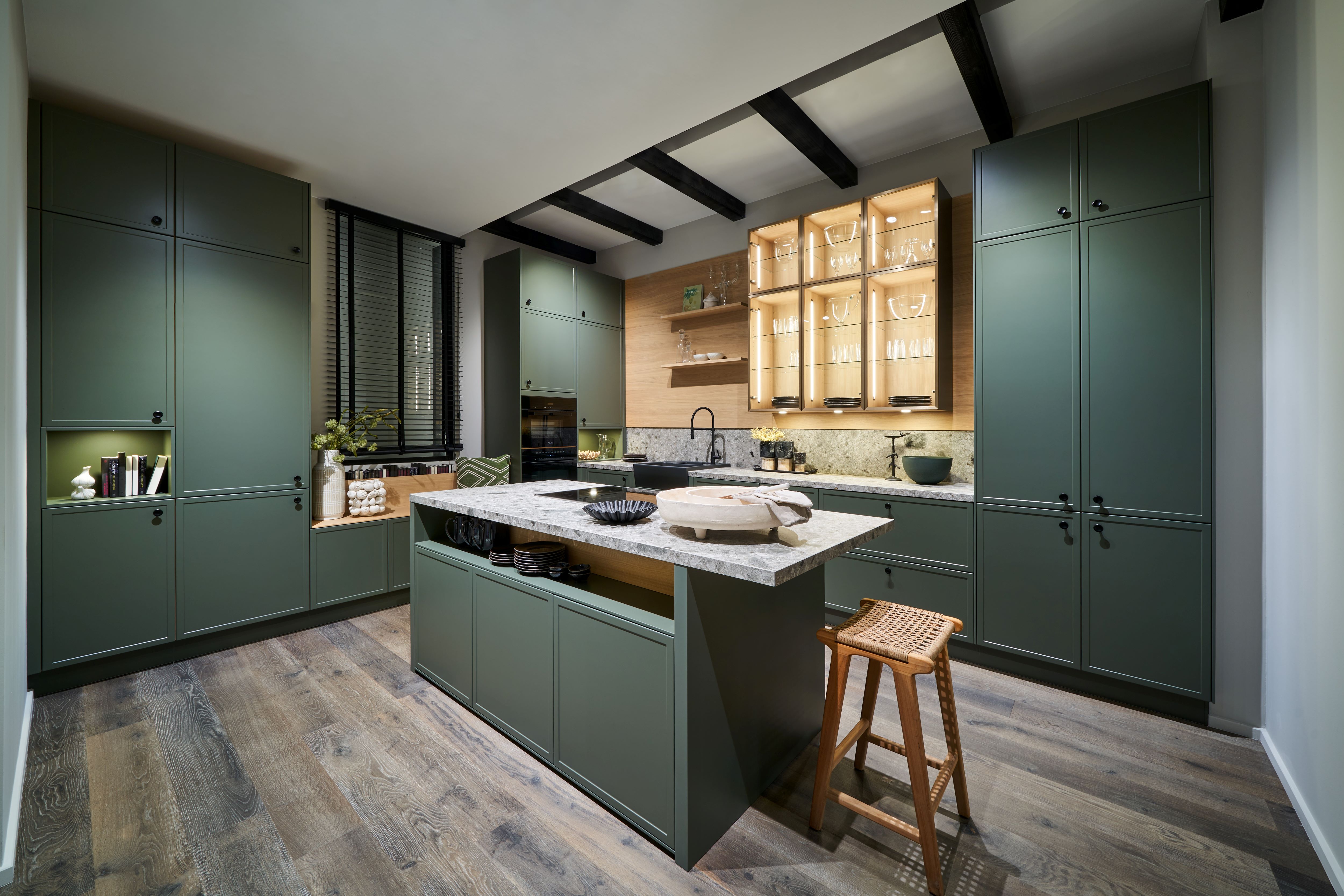
Earthy greens (sage, olive, forest), deep blues (navy, blue-black), charcoal, warm earth tones, and natural wood veneers (oak, walnut) define contemporary palettes. Warm whites, greige, and stone tones provide balance. Matt and soft-touch finishes dominate over high gloss. Two-tone schemes use darker islands or lower runs against lighter tall units for depth and grounding.
Worktops
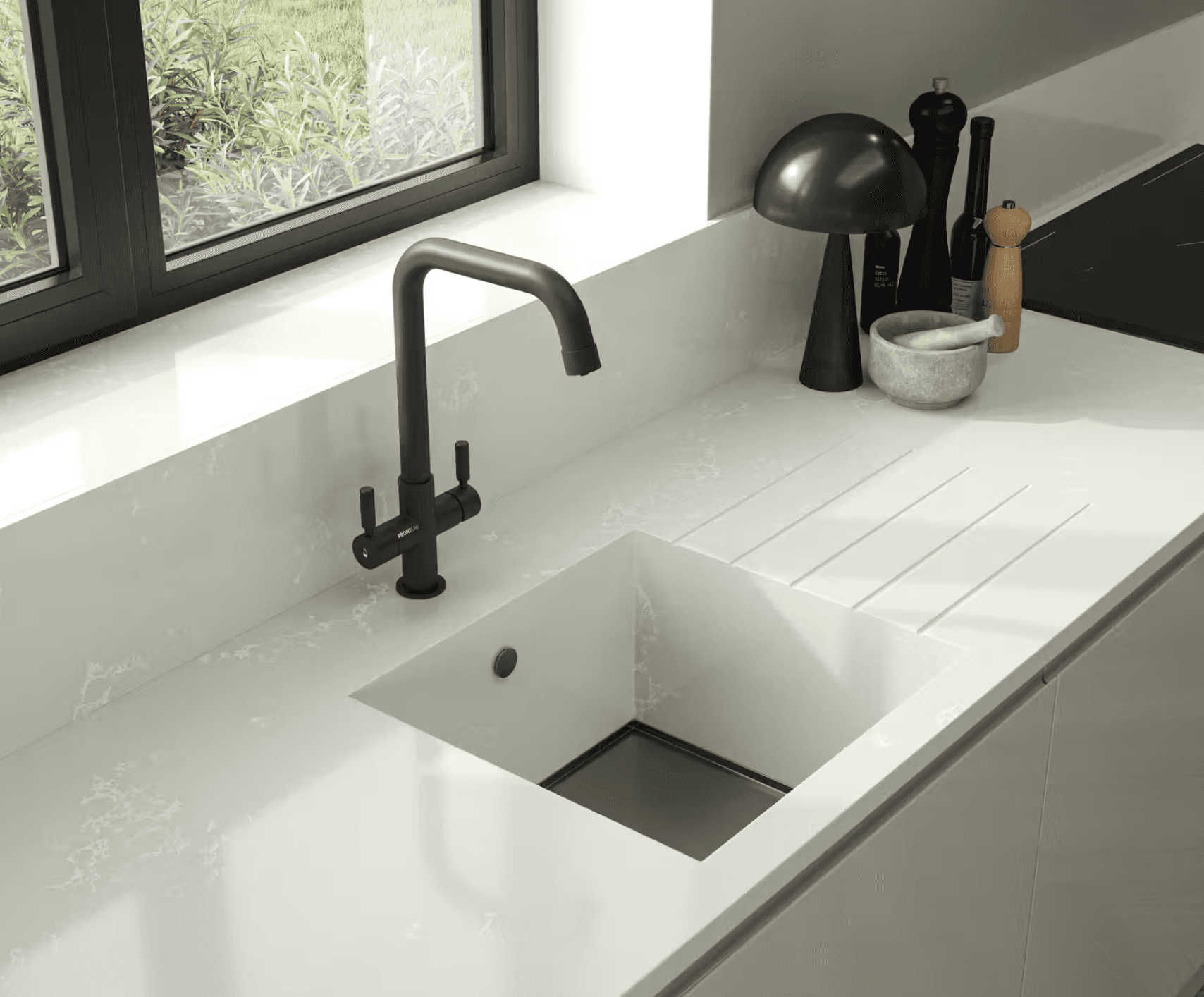
Contemporary worktops are treated as key visual anchors – bold veining, dramatic colour, or sculptural details like waterfall edges make them statement elements rather than neutral backgrounds.
Quartz (engineered stone) works for contemporary schemes when chosen with character – dramatic veining, bold colour, or refined concrete-look textures. Non-porous, stain-resistant, and low-maintenance, it suits busy London kitchens while delivering visual impact. Marble-effect quartz with strong, organic veining is popular for islands or feature runs.
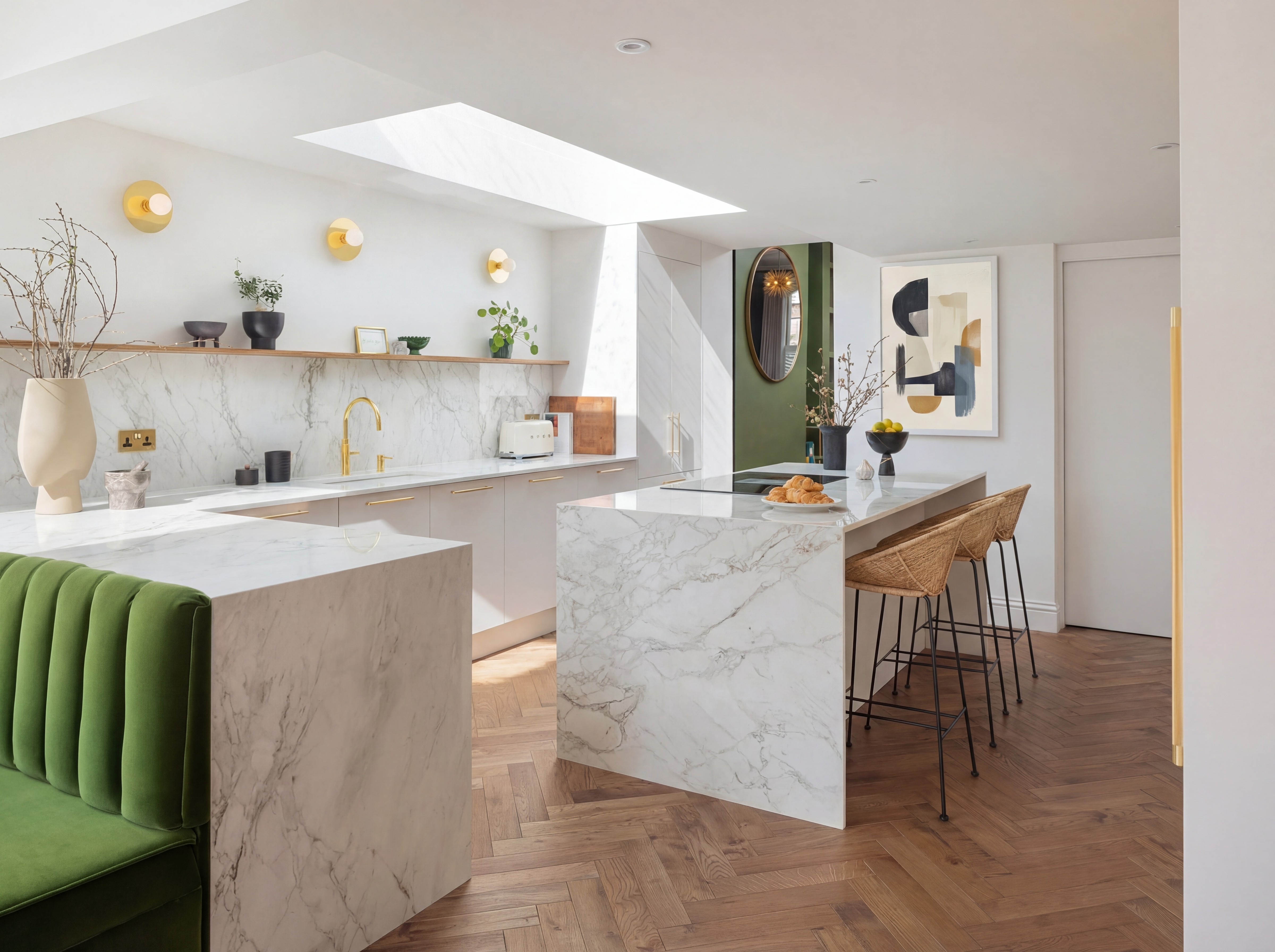
Porcelain and sintered stone offer very thin profiles (12–20mm) and large slab formats with stone, metal, or concrete looks. Ultra-hard, heat-resistant, and suitable for waterfall edges where the slab extends down island sides to create a sculptural, monolithic effect.
Natural stone – marble with dramatic veining, granite in darker tones, quartzite with rich character – is used more deliberately in contemporary schemes as a luxury feature surface. Honed or leathered finishes feel more architectural and textural than high polish.
Mixing surfaces:
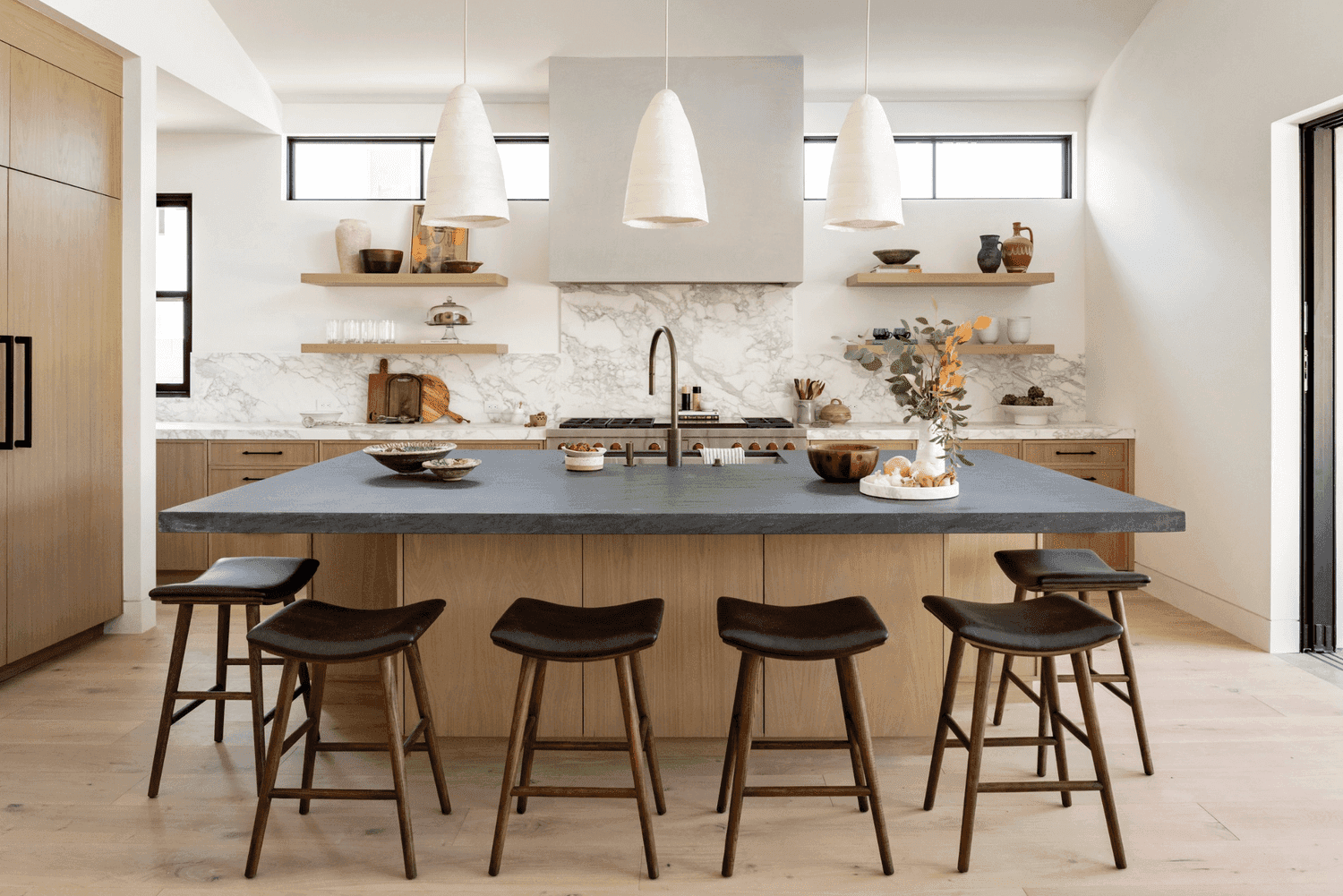
A contemporary move is pairing a light, durable quartz or porcelain on the main run with a darker, more veined statement slab on the island. This creates visual hierarchy and allows for bolder material choices without overwhelming the space.
Thickness and edges:
20mm profiles suit sleek, contemporary aesthetics. Edges are kept simple – square with micro-chamfer – rather than decorative. Waterfall ends (extending the slab down island sides) are a signature contemporary detail, giving a sculptural, continuous look.
Colour direction:
Light bases (warm whites, soft greys, beiges) balanced by darker, more dramatic islands or feature runs in charcoal, black, rich brown, or bold veining. Refined patterns with soft, organic movement rather than busy speckles.
Hardware
Contemporary hardware is either extremely minimal or treated as refined jewellery – warm metals, slim shapes, and deliberate placement that emphasises the cabinetry's lines.
Elongated pulls as statement:
Extra-long bar pulls on tall doors and large drawers emphasise vertical or horizontal lines and become the main decorative feature. These are sized boldly – spanning two-thirds of the door or drawer width – and positioned to create strong geometry.
Slim bars and edge pulls:
Clean metal bars with softened edges, slim D-pulls, or small tab/edge pulls mounted on door tops suit slab fronts and keep the look linear.
Warm metals dominate:
Brushed brass, champagne gold, bronze, and aged brass add warmth and a soft luxury note. These finishes pair especially well with greens, blues, dark neutrals, and natural wood. Matte black provides sharper, more graphic contrast.
Mixed metals, deliberately:
Contemporary schemes often coordinate but don't strictly match – black cabinet pulls with brass taps and lighting, or brass knobs with stainless appliances. One finish should lead; the others support.
Quality and tactility:
Substantial, solid metal pieces with pleasant grip and subtle texture (hammered, knurled, hand-cast finishes) are preferred over lightweight, hollow handles.
Tiling
Contemporary tiling moves beyond standard formats into textured, artisanal, and boldly patterned territory – used strategically as design features.
Kitchen splashbacks:
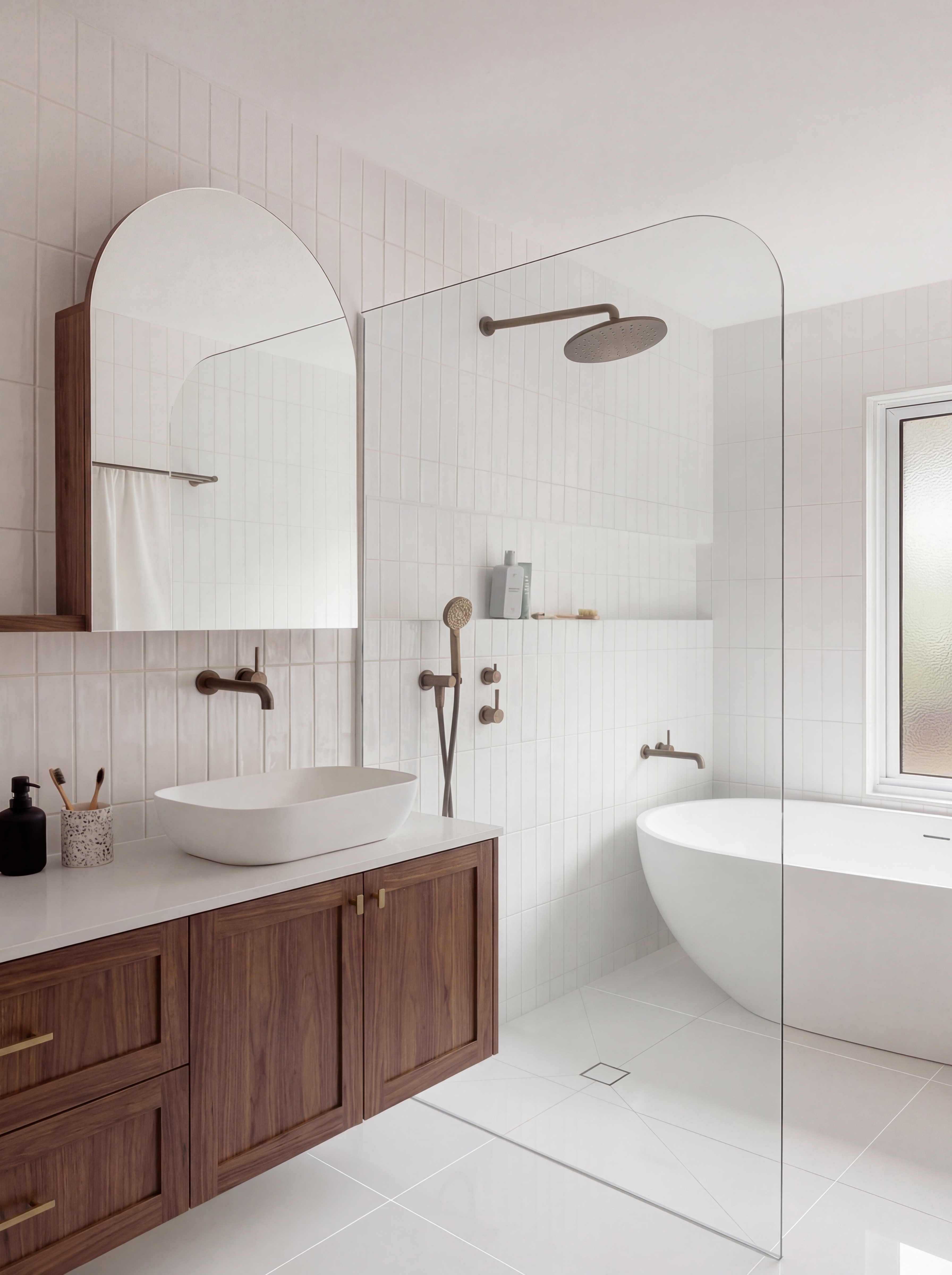
Artisanal and textured tiles (Zellige-style, handmade-look ceramics with tonal variation and uneven glaze) create characterful focal points behind hobs or along feature walls. Fluted or 3D tiles with vertical ribs or contoured surfaces add subtle shadow and depth. Large-format porcelain or continuing the worktop slab full-height gives a sleek, minimal alternative.
Statement over default:
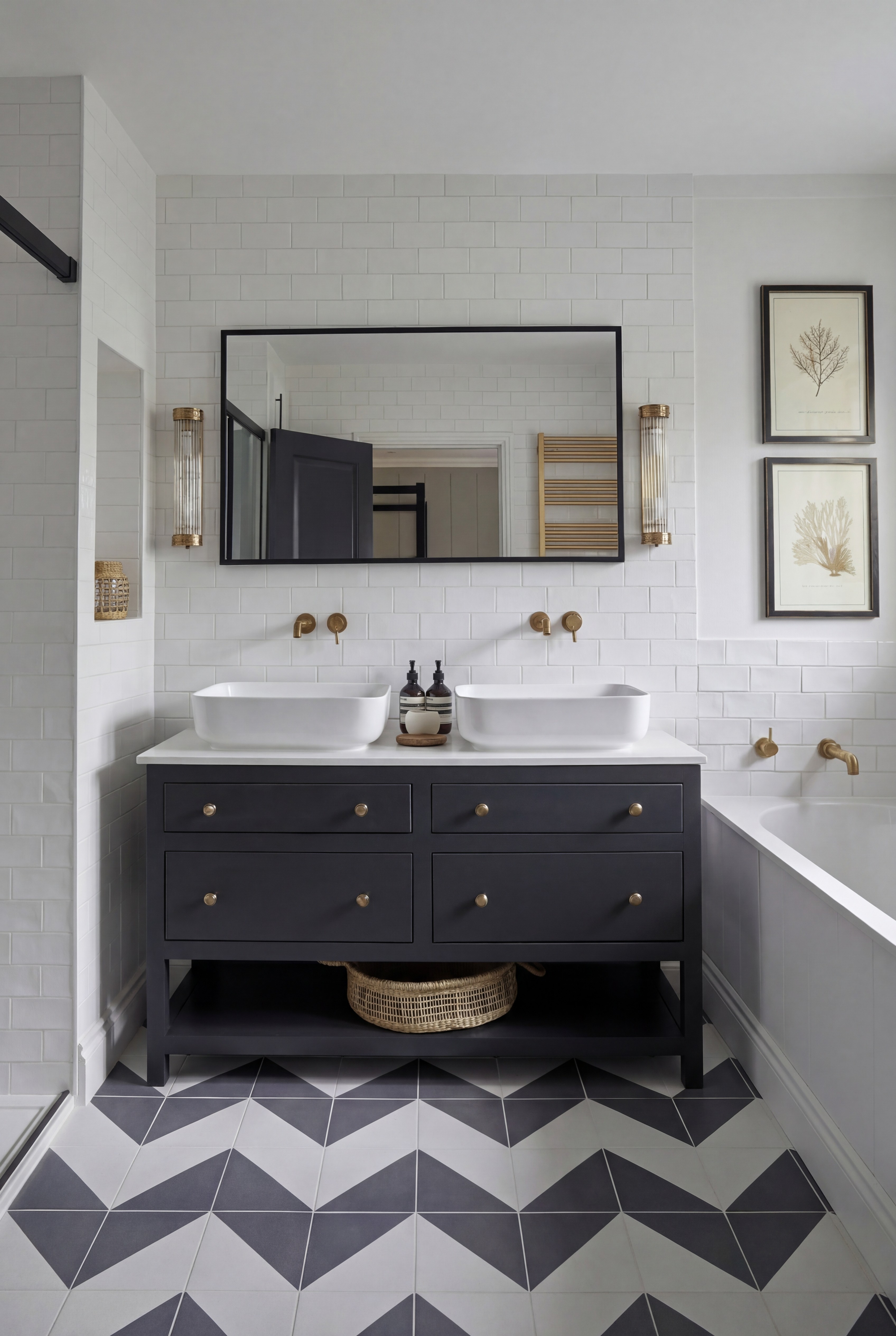
Contemporary schemes avoid generic white subway tiles in favour of bolder colour, textural glazes, geometric patterns, or slab splashbacks that feel intentional. Stack-bond, herringbone, or chevron layouts add visual interest to even simple tile shapes.
Bathroom walls:
Large-format porcelain (60×120cm and larger) in stone or marble-effect creates seamless, spa-like walls with minimal grout. Tile drenching (same tile across walls and floor) gives an enveloping, contemporary feel. Textured, fluted, or patterned tiles are reserved for shower walls or behind vanities, with plainer tiles elsewhere for balance.
Colour and texture:
Warm neutrals (taupes, beiges, warm greys), earthy tones (terracotta, deep blues, greens), and stone shades dominate. Texture and glaze variation act as the "pattern" – handmade-style irregularity, subtle relief, fluted ribs – rather than printed designs.
Colour Palette
Contemporary palettes are warm, nature-inspired, and bold in controlled doses – deeper tones used for impact, balanced by calm neutrals.
Core Base Colours:
Warm whites and creams – Off-white, clotted cream, soft ivory as softer, more inviting bases than stark white
Greige, stone, mushroom – Warm grey-beige and stone tones as "new neutrals" that work with wood, brass, and most materials
Natural wood – Oak, walnut, mid-tone timbers acting almost as a colour, adding warmth and texture
Contemporary Accent Colours:
Earthy greens – Sage, olive, moss, forest greens for cabinets, vanities, or feature walls
Deep blues – Navy, blue-black for islands, lower units, or bathroom furniture
Charcoal and black – Used as framing, accents, or feature runs rather than dominant colour
Soft pinks and blush – Muted, dusty pinks as alternative neutrals on walls or cabinetry
Rich earth tones – Terracotta, oxblood, warm browns for bold statements
Typical Contemporary Schemes:
Contrast and warmth: Sage or olive island + warm white perimeter cabinets + light stone worktops + brushed brass hardware
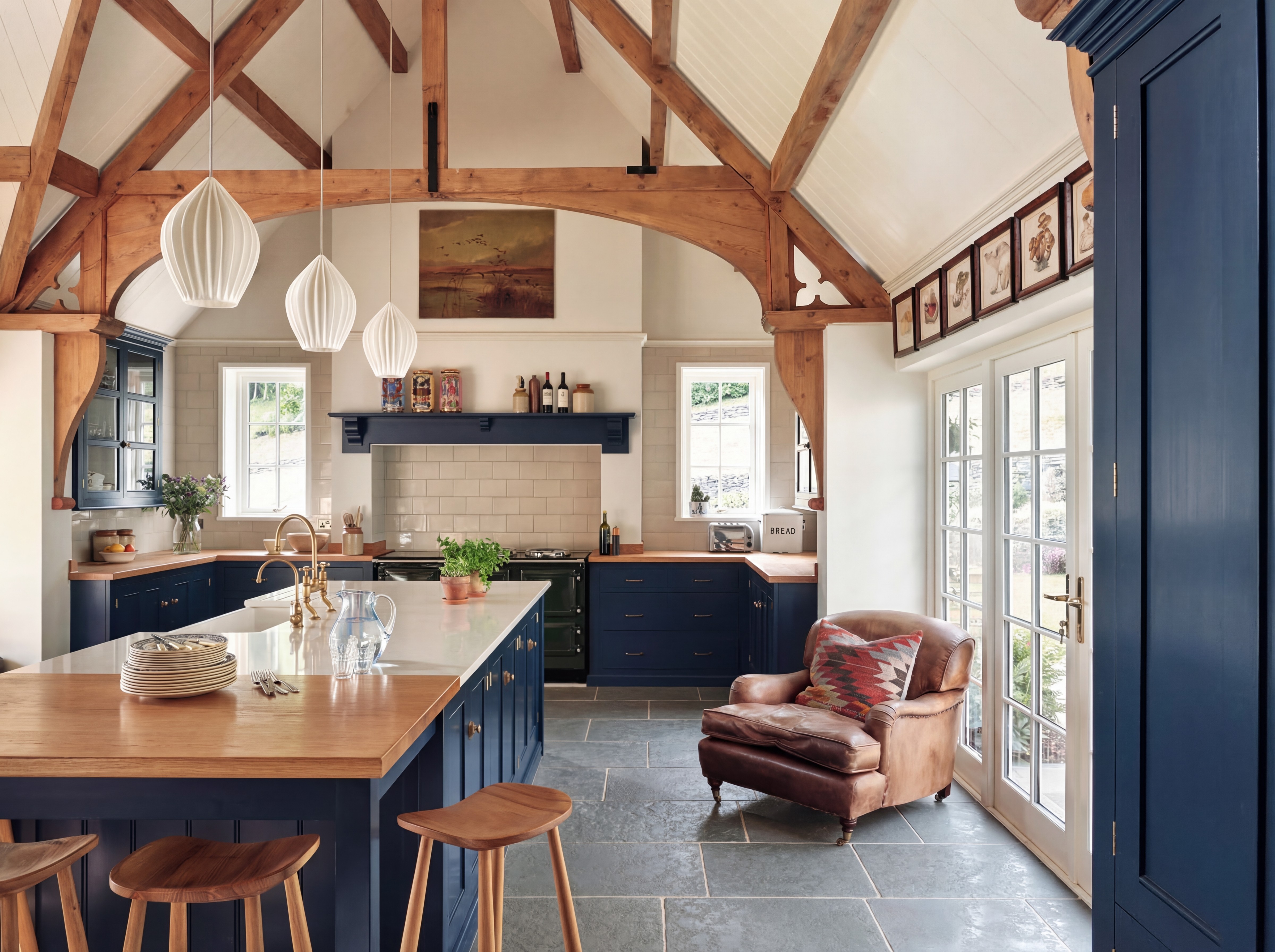
Bold and balanced: Navy or charcoal base units + lighter tall units + marble-effect quartz with veining + mixed brass and black metals
Earthy and textured: Natural oak cabinets + stone-tone walls + terracotta or geometric tile feature + bronze hardware
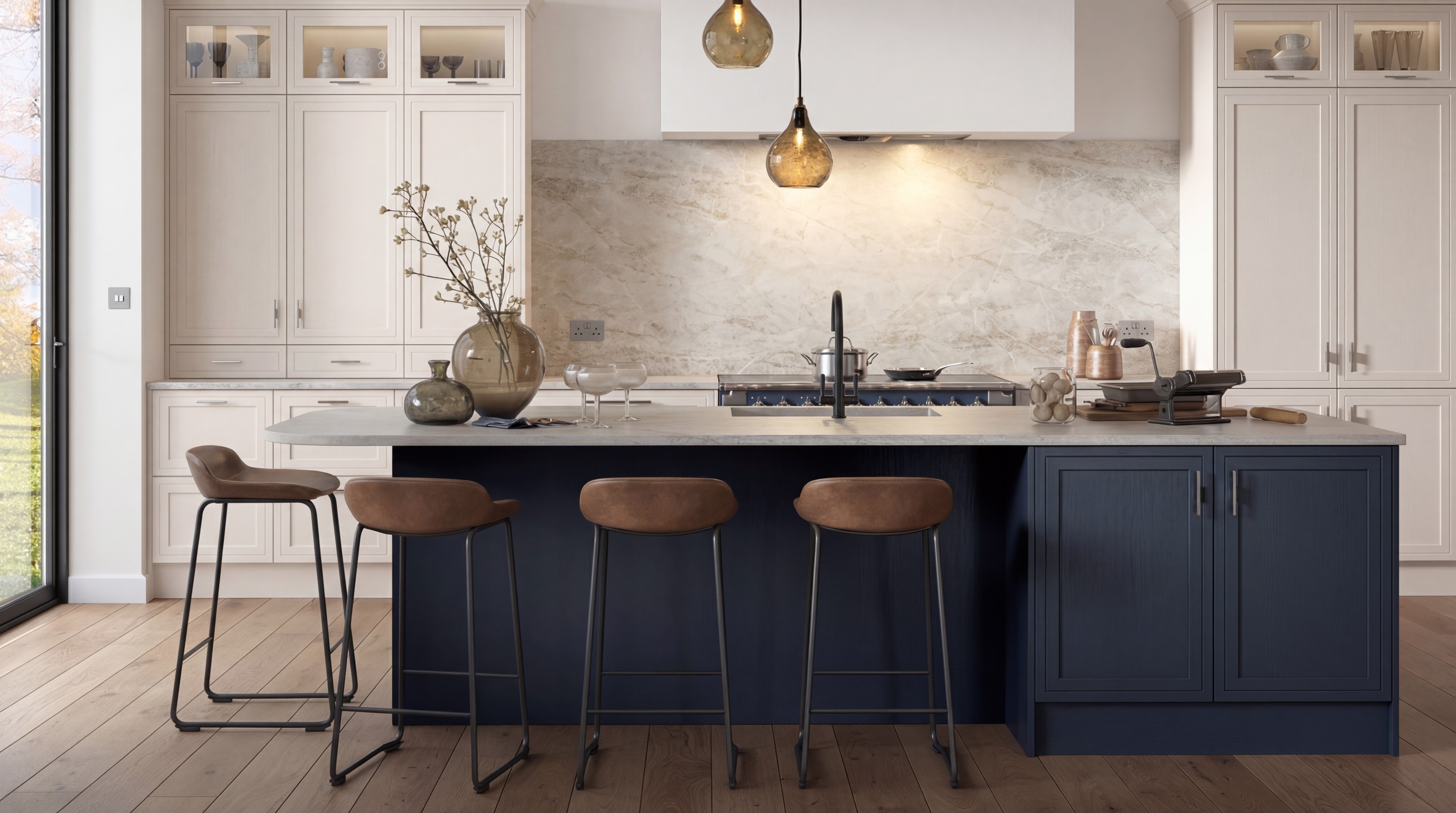
Contemporary Kitchens & Bathrooms We Design And Install
Kitchen
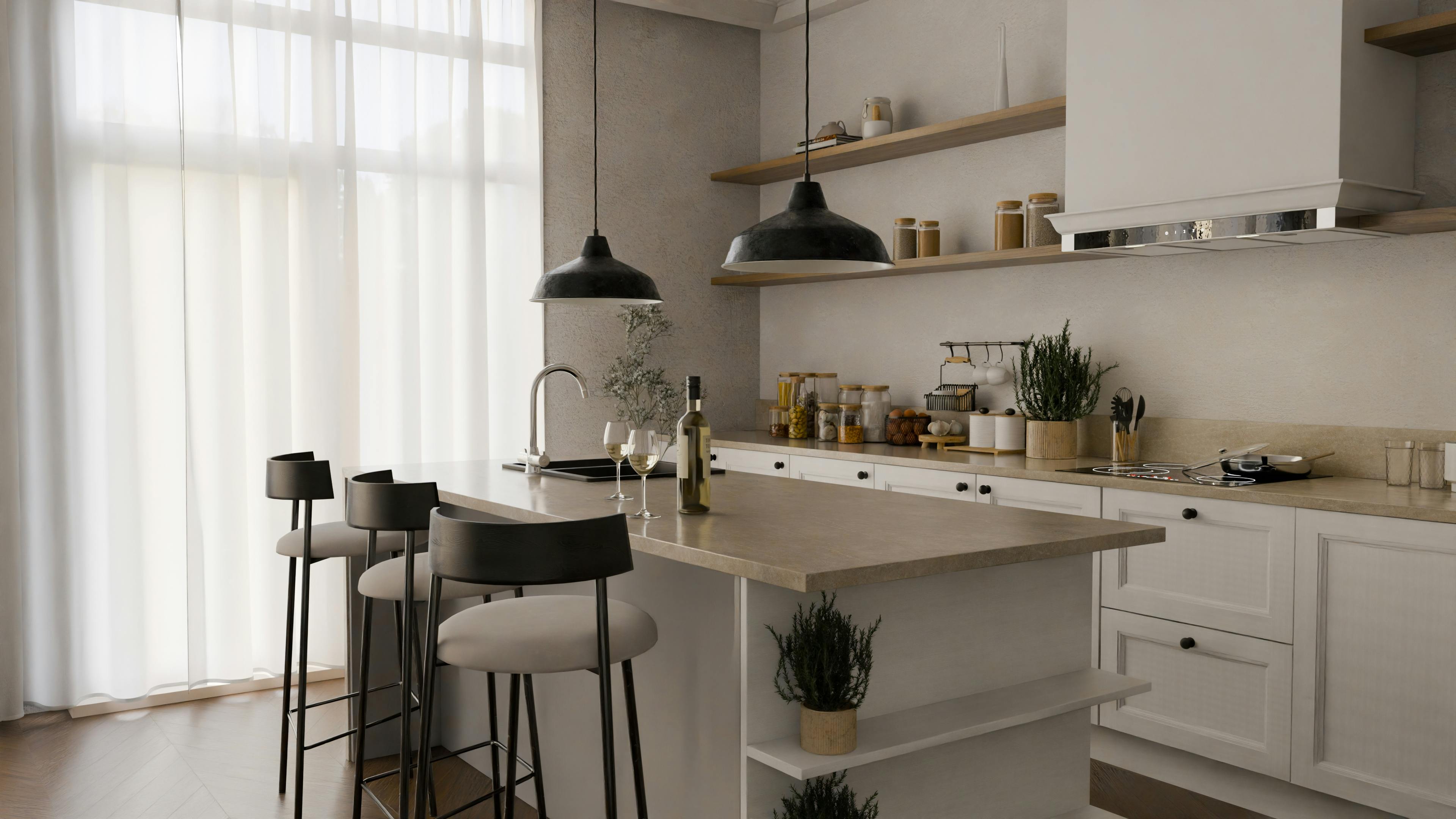
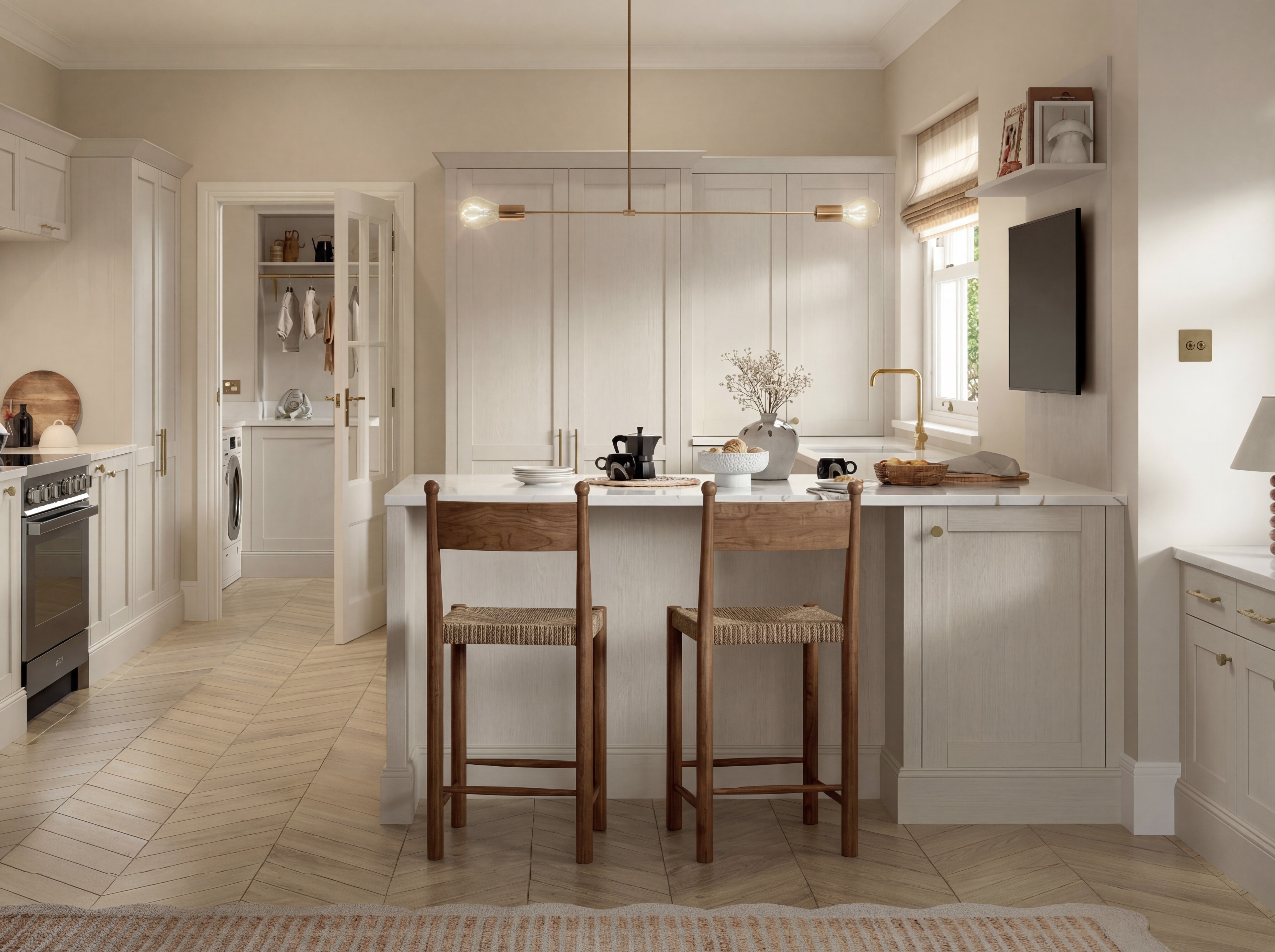
A contemporary kitchen works across London property types – new-build flats, warehouse conversions, period terraces. The aesthetic adapts through bold material choices and expressive details rather than playing it safe.
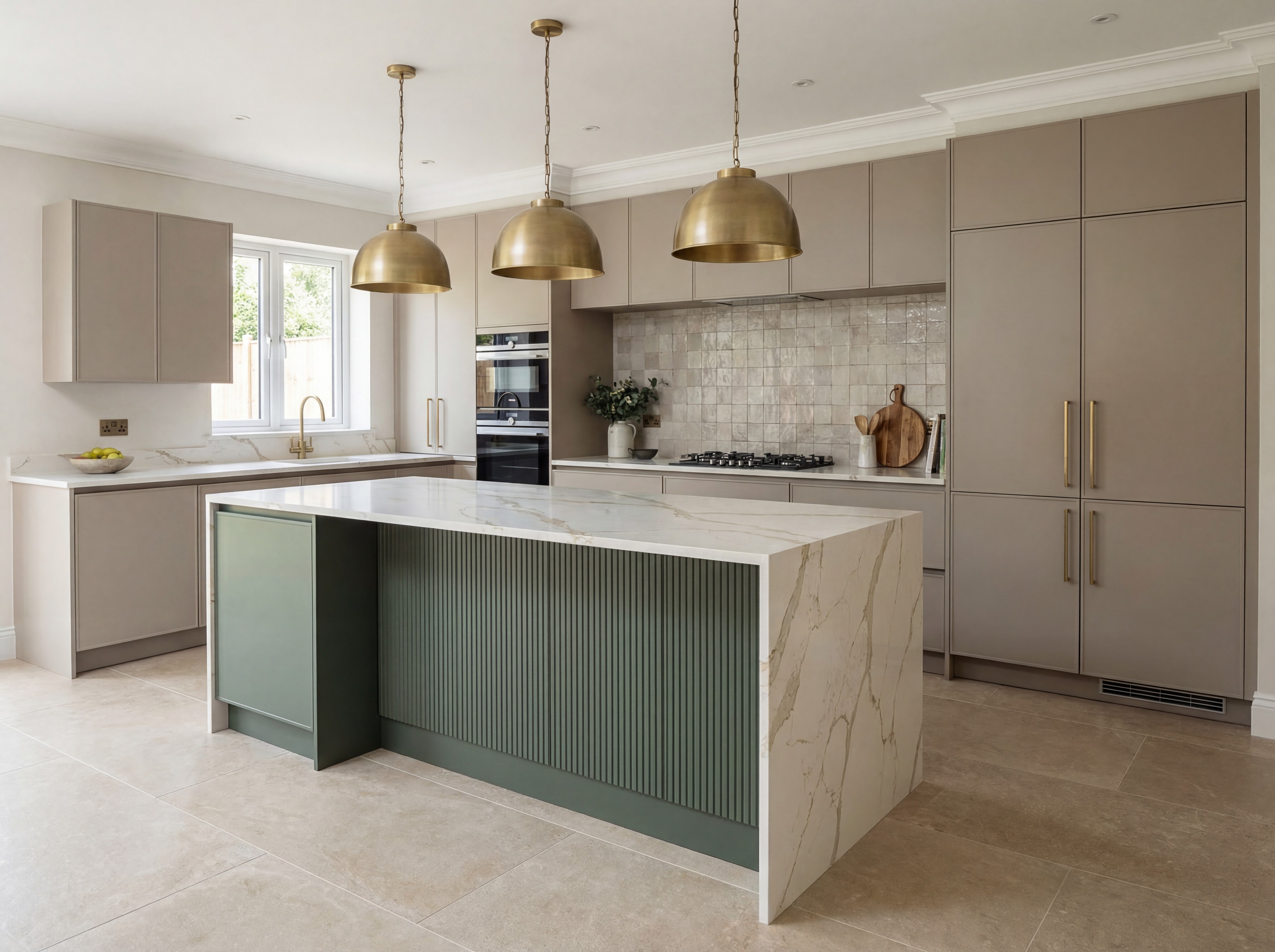
Statement Island with Mixed Materials
Slab cabinetry in warm greige or stone tones on perimeter runs, island in deep sage green, navy, or charcoal with fluted front panel or waterfall-edge quartz in dramatic veining. Brushed brass or black elongated pulls on tall units and island drawers. Splashback in artisanal tiles with textural glaze, geometric pattern, or full-height stone slab. Large-format stone-look porcelain floors in warm neutral tones. Integrated appliances, tall storage banks with handleless systems, feature pendant lighting over island.
Bathroom
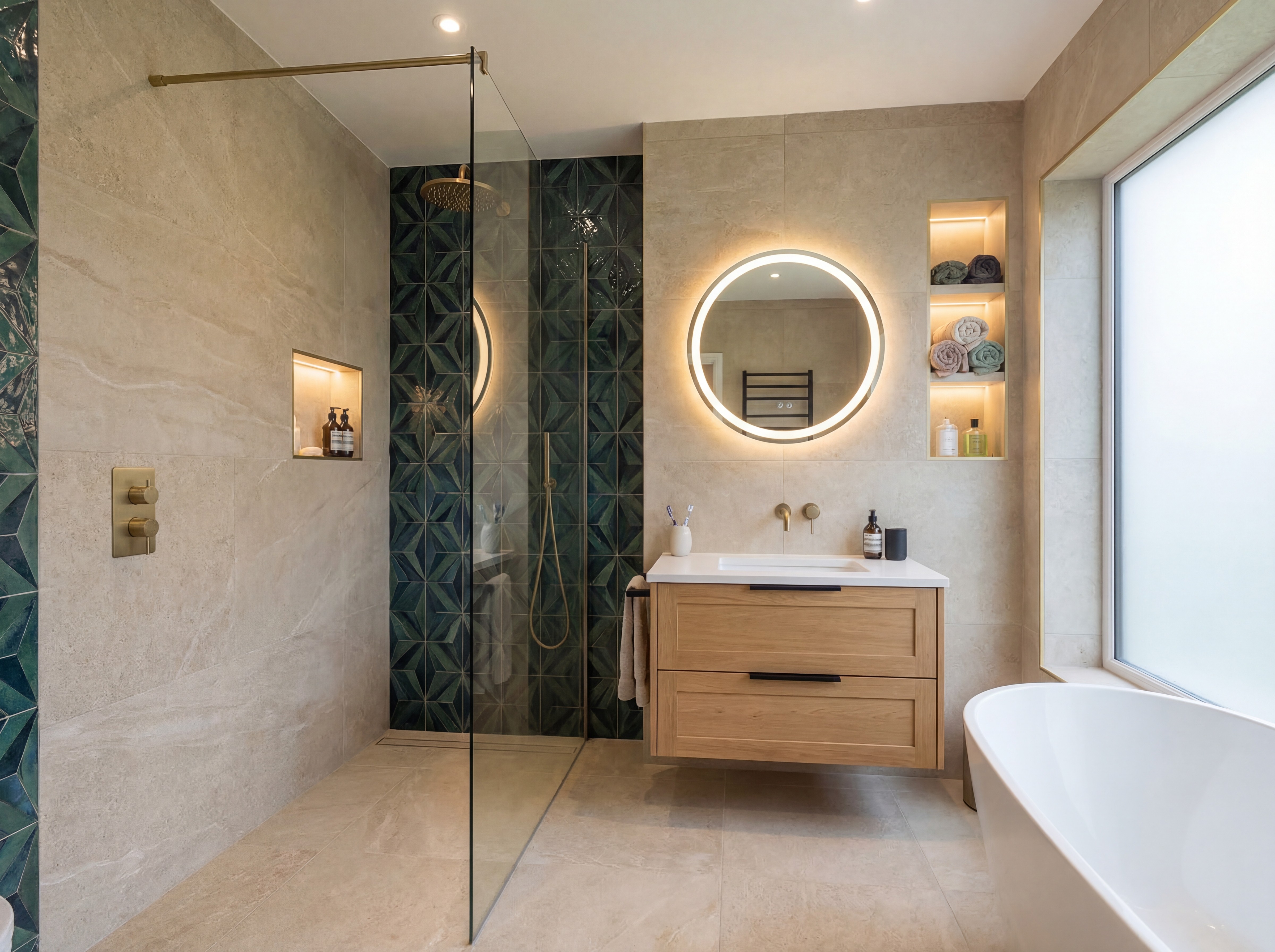
A contemporary bathroom balances spa-calm with bold statements – calm bases with expressive details in controlled zones.
Walk-In Shower with Feature Tiling
Large-format stone-effect or terrazzo porcelain on most surfaces, bold geometric tiles, fluted 3D tiles, or rich colour feature wall in shower or behind vanity. Wall-hung vanity in natural oak, deep green, or textured finish with integrated quartz or stone-effect top and undermount basin. Brushed brass, bronze, or matte black taps and shower controls coordinating with minimal bar pulls or edge pulls. Frameless glass screen, freestanding or back-to-wall bath where space allows, heated mirror with integrated lighting, recessed storage niches, level-access surfaces for seamless spa feel.
Contemporary Kitchen in London FAQs
What makes a kitchen contemporary?
A contemporary kitchen in London is built around bold design choices – statement materials, strong contrasts, and expressive details. Slab or fluted cabinetry in confident colours (deep greens, navy, charcoal), dramatic worktops with bold veining, artisanal or geometric tiling, and warm metals (brass, bronze, black). It's design-led rather than restrained, with personality and visual impact.
What's the difference between modern and contemporary kitchens?
Modern kitchens focus on clean lines, minimal detailing, and warm neutrals with natural materials – understated and timeless. Contemporary kitchens push into bolder territory – statement islands, mixed materials, dramatic colour, textured tiles, and design choices that feel current and expressive. Contemporary embraces trends and personality; modern stays calm and refined.
Can contemporary design work in small London kitchens?
Yes. Small contemporary kitchen design uses bold choices strategically – a statement island or feature splashback becomes the focal point, balanced by simpler perimeter runs. Large-format tiles, integrated appliances, handleless systems, and floor-to-ceiling storage maximise space while keeping visual impact. Contemporary details (fluted panels, warm metals, textured tiles) add richness without clutter.
Is contemporary kitchen design more expensive?
Not necessarily. Contemporary design often uses premium materials (quartz with bold veining, artisanal tiles, brass hardware, natural wood veneers) and bespoke details (waterfall edges, fluted panels, statement lighting), but the investment is in visual impact and quality rather than covering everything in expensive finishes. Bold choices in controlled zones (island, splashback, hardware) can create strong contemporary aesthetics without full luxury pricing.
How do you keep contemporary design from dating quickly?
Contemporary done well uses bold choices on a foundation of quality materials and good proportions. Natural wood, stone, warm metals, and refined detailing age gracefully. Avoid trend-chasing (loud colours everywhere, gimmicky features) in favour of expressive but considered design – dramatic veining, textured tiles, confident colour balanced by warm neutrals. These elements feel current without being disposable.