Styles /
shaker
Shaker Kitchen Company in London: Simple Frames, Enduring Design
Five-piece framed doors, honest materials, functional layouts that work across period terraces and contemporary homes. Shaker design is about restraint – clean lines, subdued palettes, quality joinery without ornament.
What Defines A Shaker Kitchen?
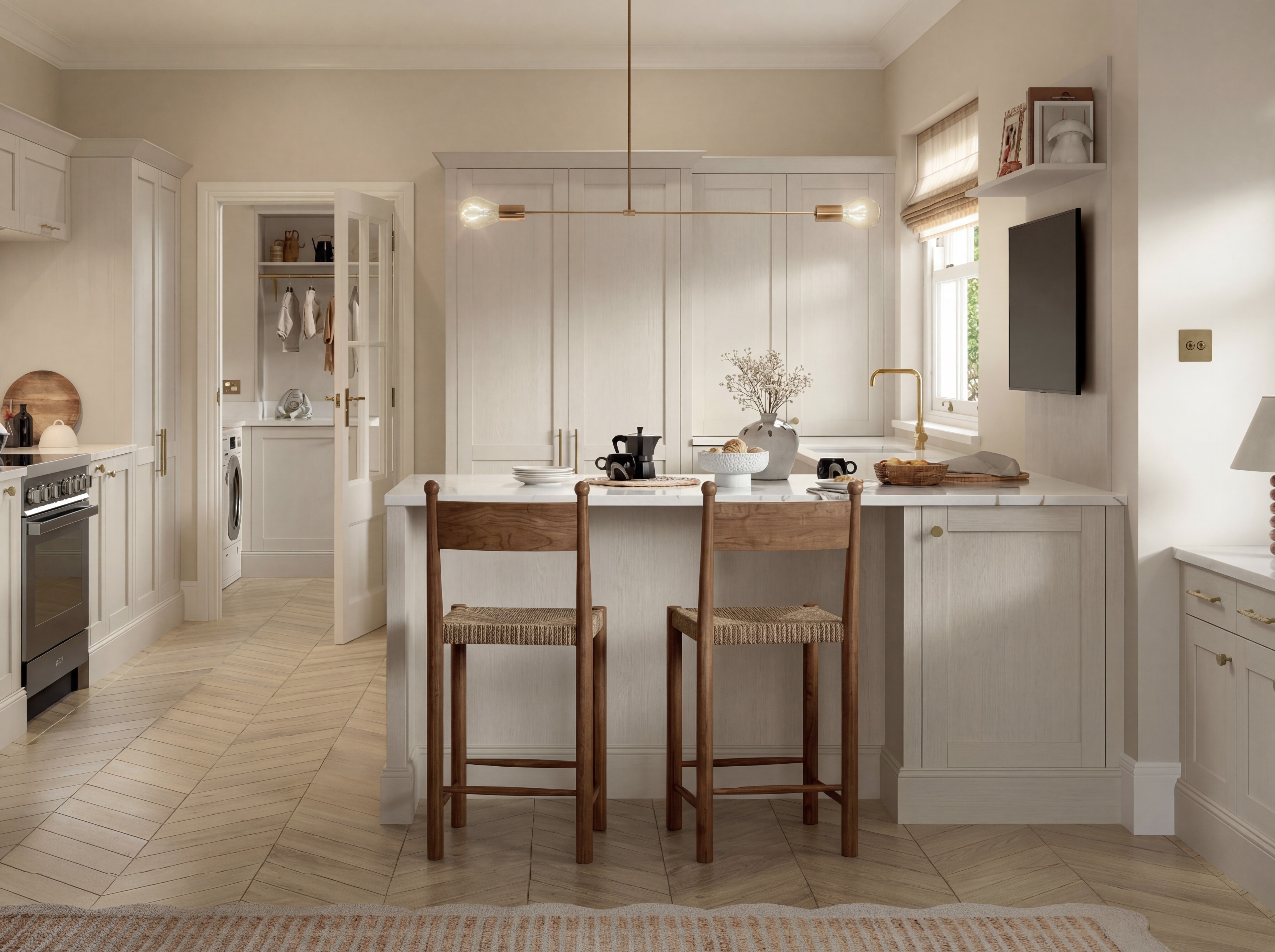
A Shaker kitchen is defined by simple five-piece framed doors, honest materials, and very functional layouts.
Core principles:
Five-piece framed doors – Square frame with flat recessed centre panel, no mouldings or beading
Clean lines and minimal ornament – Straight edges, simple or no cornice, restraint in detailing
Subdued, calm palettes – Whites, greys, stone, navy, muted greens that read calm in low London light
Honest, natural materials – Painted timber or quality MDF, paired with wood or stone worktops
Functional hardware – Classic knobs or cup pulls in brass, chrome, nickel, or black
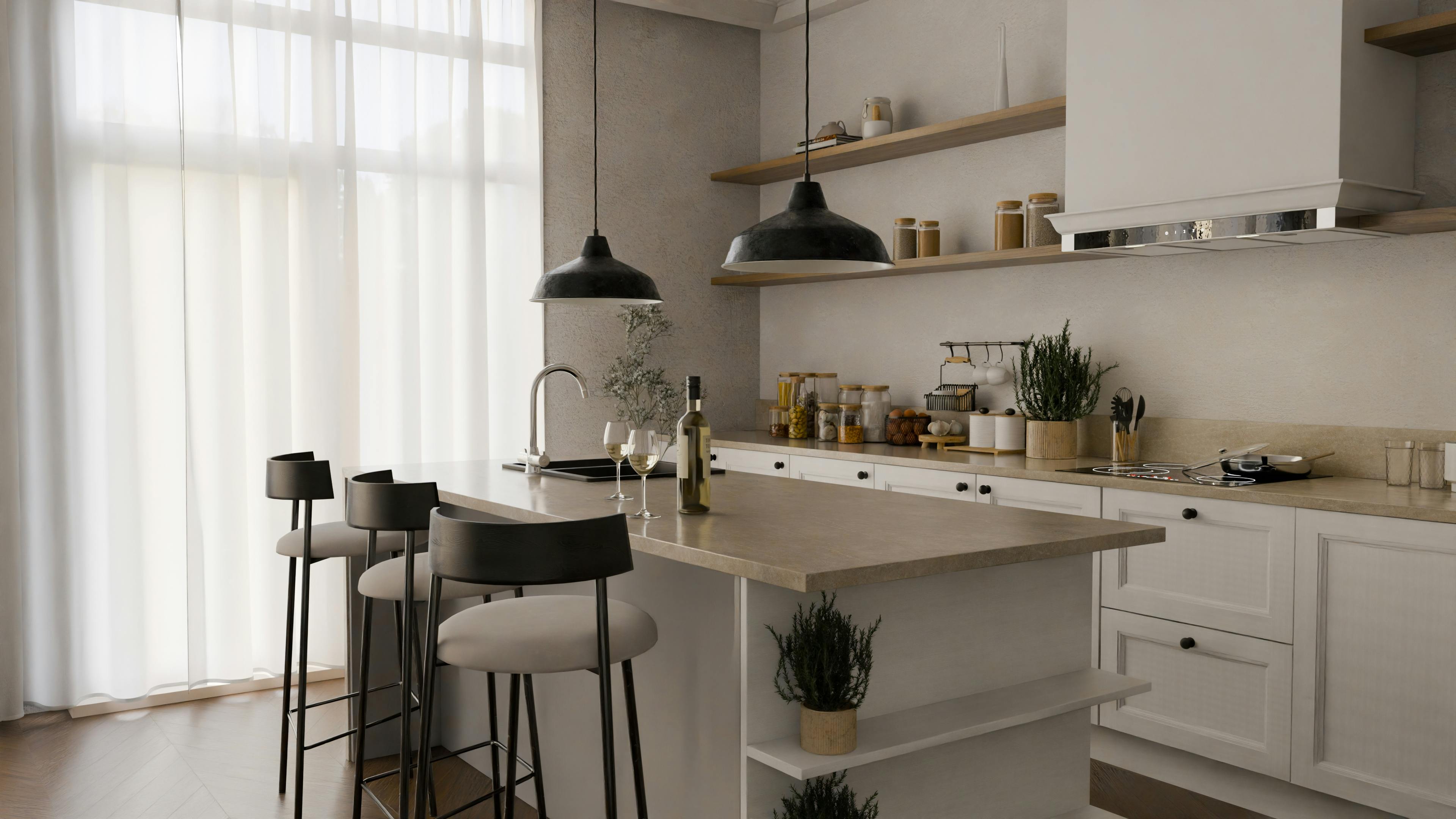
Five-piece Shaker doors in painted finishes. Quartz, marble-effect, or wood worktops. Simple metro tiles or stone upstands. Classic knobs or cup pulls in warm metals or chrome.
These aren't decorative flourishes. They're functional design principles rooted in craftsmanship and simplicity, suited to London's mix of Victorian terraces, mansion blocks, and contemporary conversions.
Materials That Define Shaker Design
Cabintery
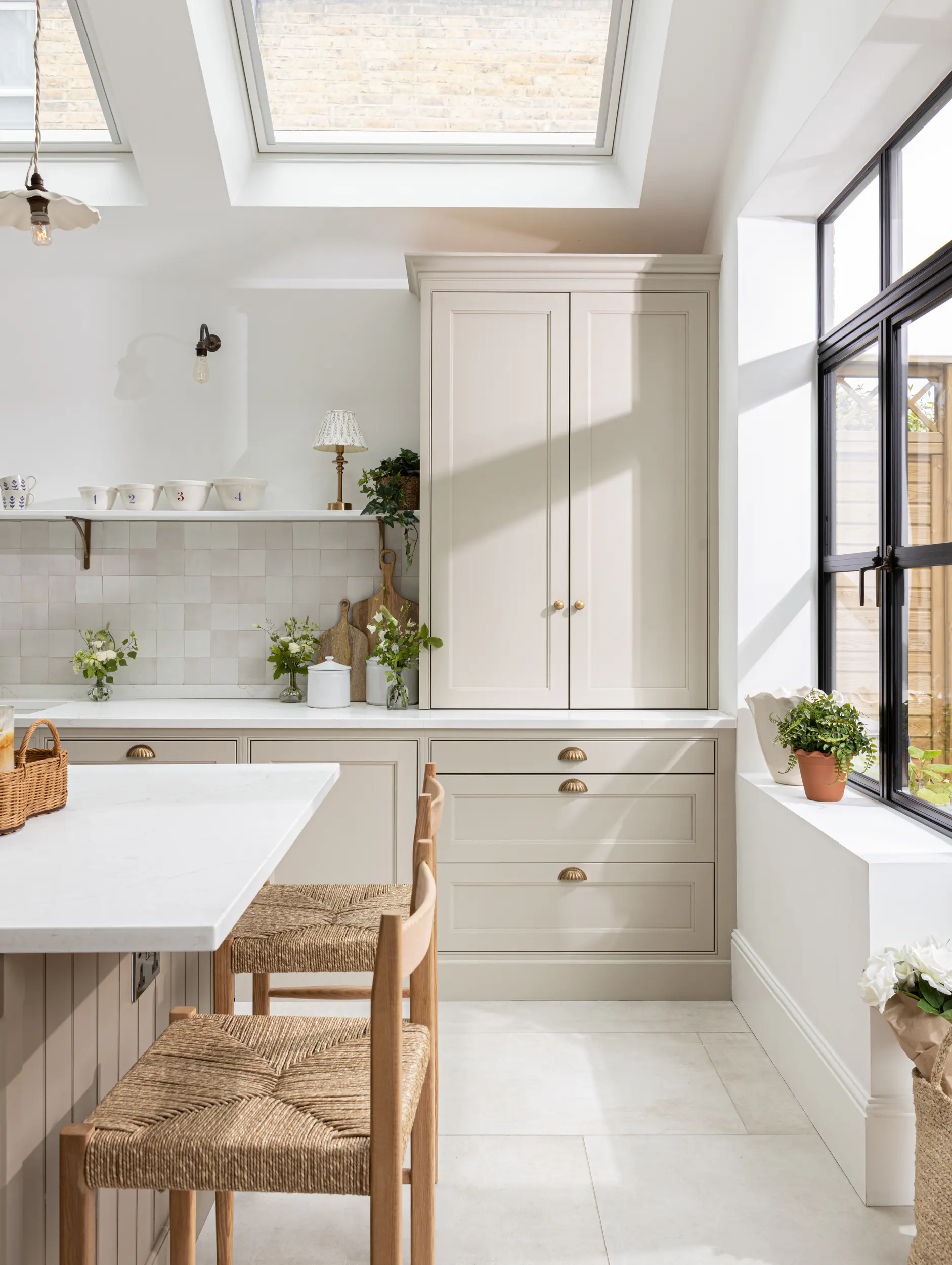
Shaker cabinetry is built around a framed, five-piece door with specific proportions and joinery that create the calm, quiet look characteristic of the style.
Five-piece door construction:
Two vertical stiles, two horizontal rails, and a flat recessed centre panel. Rails and stiles are usually 55–90mm wide on standard doors; larger pantry doors can push wider to stay stiff and in proportion.
The centre panel sits about 6mm back from the frame, creating the characteristic shallow step rather than a deep bevel or raised panel. Joints are typically cope-and-stick (tongue-and-groove at 90°) rather than mitred corners, keeping the profile crisp and robust.
Proportions set the character:
Slimmer frames (55–60mm) read more modern; chunkier frames (75mm+) look more traditional or farmhouse. Keep the frame width consistent across doors and drawer fronts where possible. Small top rails on drawers are sometimes narrowed slightly so hardware sits comfortably. Door size should feel balanced to the cabinet box – typical base and wall cabinets range from 225mm to 1200mm wide, so double-door runs are used on wider units to avoid very heavy single doors.
Inset versus overlay:
Inset doors and drawers sit inside the face frame opening, flush with the frame, exposing the full frame and giving a furniture-like, very crafted look strongly associated with classic Shaker. Overlay doors sit on top of the frame; full overlay nearly covers it for a cleaner, slightly more contemporary feel.
Inset needs tighter tolerances (doors made about 2–3mm smaller than the opening on all sides to allow a narrow, even reveal) and typically costs more. Overlay is more forgiving to fit and often more budget-friendly.
Box construction:
Shaker look is about the door, but the carcass matters. Framed boxes suit inset particularly well. Frameless boxes with full-overlay Shaker doors give a very clean, modern Shaker look, maximise storage, and simplify fitting in tight London spaces.
Edge treatment on the inside of the frame is usually square or has the tiniest easing – once you add bevels or ogees, you drift from true Shaker.
Worktops
For Shaker, the worktop is the punctuation mark that sets the mood – calm and classic, or more modern and punchy.
Quartz is the most balanced choice with Shaker – durable, non-porous, stain-resistant, available in marble-look whites and creams for classic Shaker, or concrete and stone tones for modern takes.
Granite – natural, very hard, scratch-resistant – suits traditional or country Shaker when you pick quieter, honed stones.
Solid wood (oak, iroko) is warm and Shaker-authentic, great on islands. Needs oiling and more care with water and heat but can be refinished.
Laminate offers budget-friendly stone or wood visuals in modern square-edge finishes.
Thickness and edges:
20mm quartz or concrete gives a more modern Shaker; 30–40mm stone or chunky wood feels traditional and solid. Simple square or very small bevel edge profiles – ornate ogees or bullnoses fight the simplicity of Shaker fronts.
Pairing with Shaker colours:
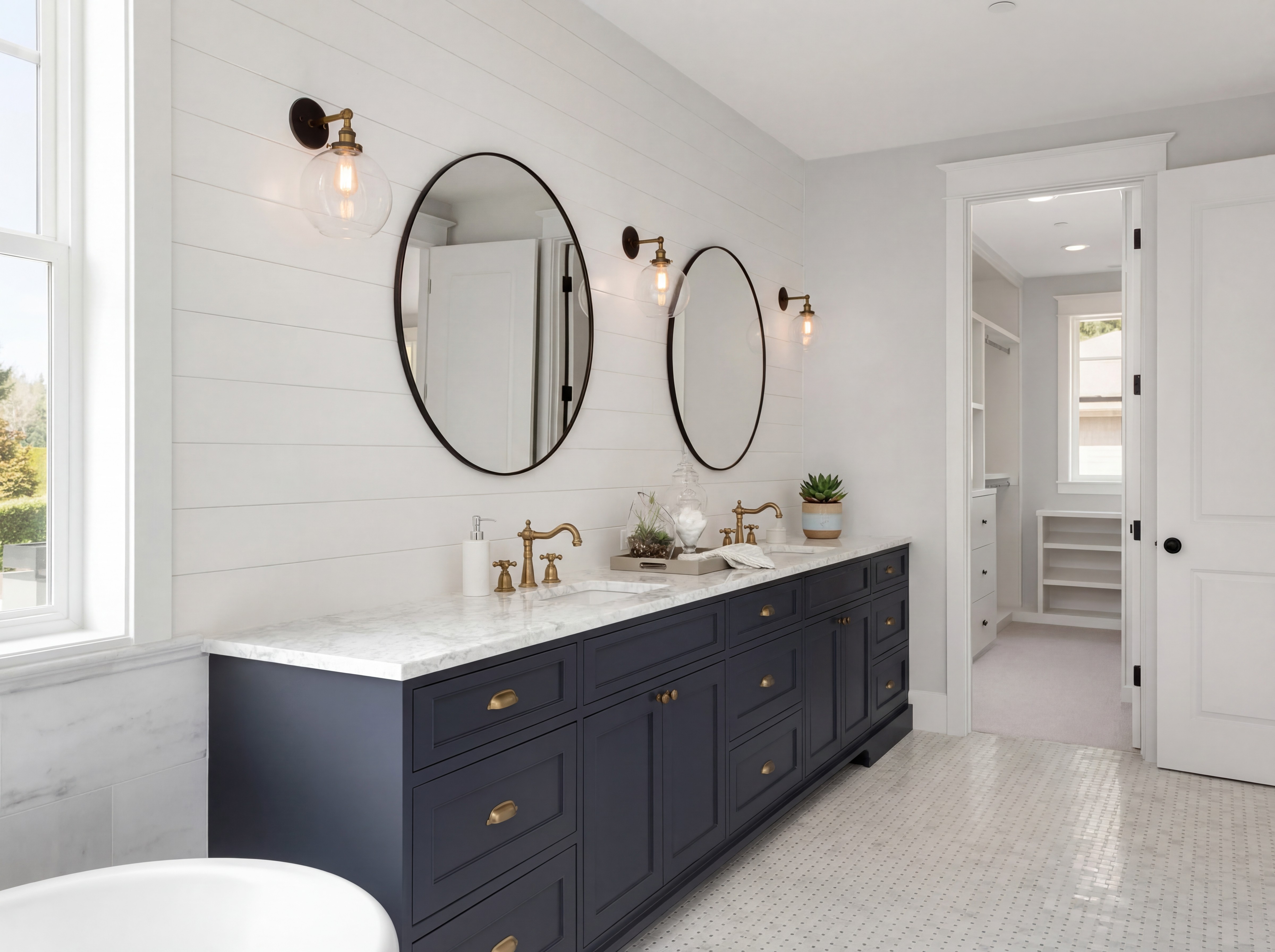
Light Shaker (white, cream, light grey) works with soft marble-effect quartz or pale granites; darker woods or dark stone create classic contrast.
Dark Shaker (navy, green, charcoal) pairs with crisp white or very light quartz for high-end looks; rich woods give moodier, heritage feel.
Sage or greige Shaker suits mid-tone taupe, warm greys, or dark textured worktops.
Hardware
Hardware pushes Shaker towards classic, modern, or somewhere in between – it's the detail that defines the mood.
Round knobs are the most authentic Shaker choice.
Cup or bin pulls – half-moon pulls on drawers with knobs on doors – are the classic kitchen combo, especially in period-leaning schemes.
Bar pulls (horizontal on drawers, vertical on doors) give a cleaner, more contemporary Shaker look.
Finishes:
Polished or brushed nickel and chrome are safe, timeless, and bright.
Brass and bronze (polished, aged, or brushed) add warmth and London townhouse or heritage feel.
Matte black creates strong contrast and is very current – great with white or pale Shaker for a graphic, modern effect.
Placement:
On doors, knobs or vertical pulls sit about 50–75mm from the corner, centred on the stile width. On drawers, small drawers take one centred knob or pull; wide drawers either one long pull or two smaller pulls spaced symmetrically.
Keep hardware lined up across banks – with Shaker frames and simple lines, any misalignment shows.
Tiling
For Shaker, tiling should feel simple, textural, and secondary to the cabinetry rather than the main event.
Kitchen splashbacks:
Classic metros – 75×150mm or elongated 50×200mm subway tiles in white, cream, or soft grey, laid brick-bond or herringbone. Handmade-look or slightly wavy metros add texture without loud pattern. White or light grout for calm; dark grey or black grout for graphic definition. Slab backs (marble-look quartz or stone slabs) give a more modern, minimal Shaker look.
Kitchen floors:
Natural stone (limestone or tumbled travertine) for a grounded, period house feel. Stone-effect or terrazzo-effect porcelain in large formats for durability. Gentle patterns (soft Moroccan, small-scale encaustic-look) can work if colours are muted.
Bathroom walls:
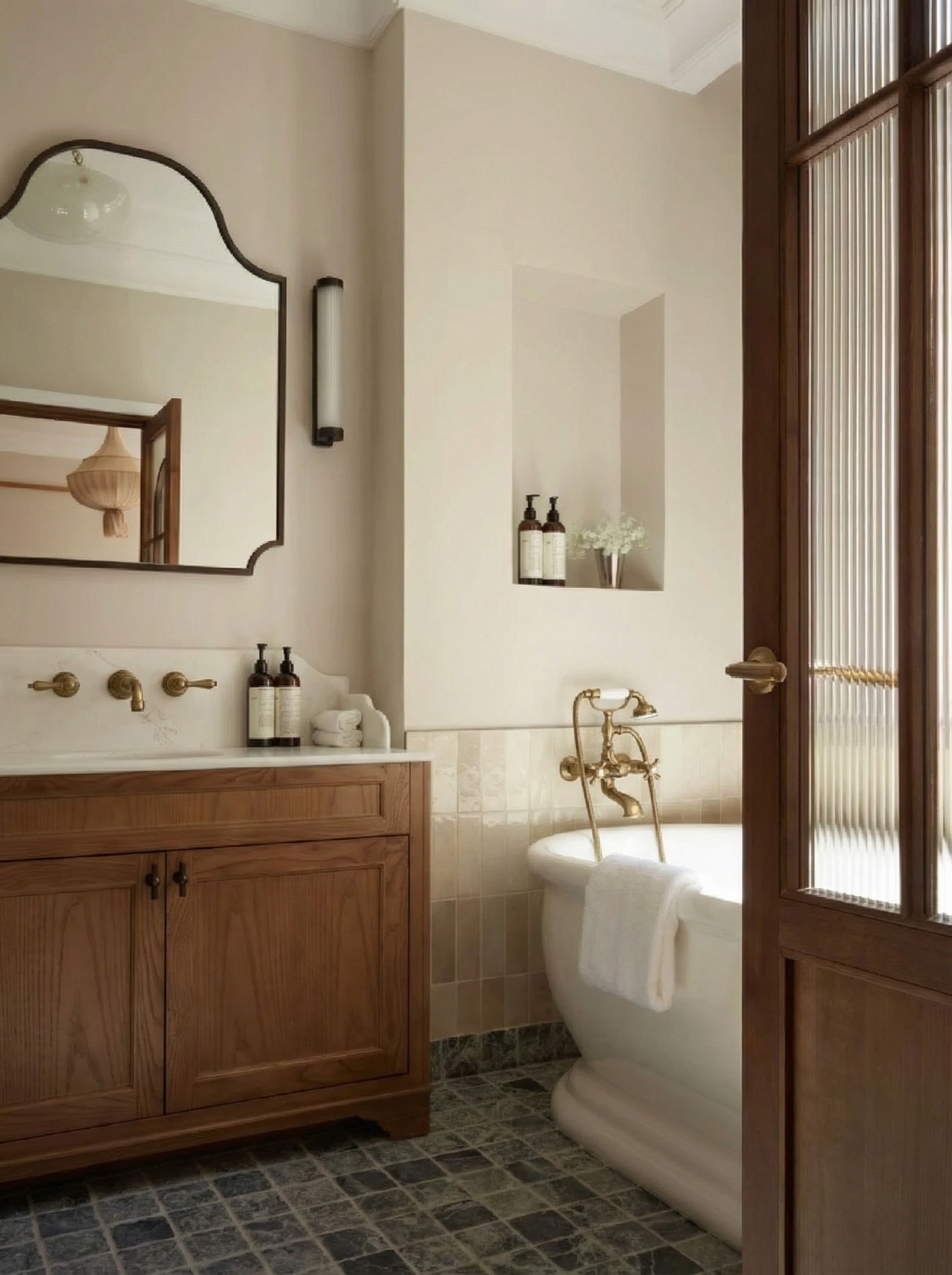
Ceramic or porcelain metros (white, soft grey, sage, pale blue) around wet areas. Larger rectangles (600×300mm) in matt stone-effect read calm and spa-like.
Bathroom floors:
Porcelain stone-effect in soft greys, beiges, or off-whites. Classic black-and-white mosaics or small hex tiles can give a period nod.
Principle:
Keep the tile palette quiet so the Shaker frames, worktops, and hardware stay the focus. Use texture (handmade edges, matt finishes, subtle veining) instead of bold prints.
Colour Palette
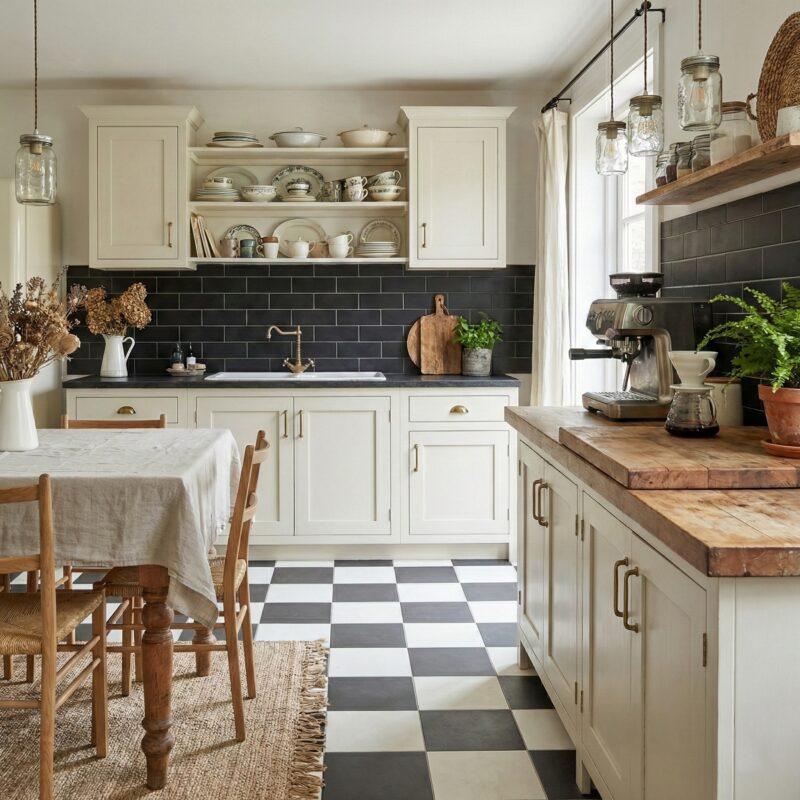
For Shaker, the colour palette is calm, muted, and slightly chalky, with contrast created through worktops and hardware rather than loud cabinet colours.
Timeless Core Palette:
Soft whites and creams – Classic white, off-white, cream keep spaces bright
Light greys and greige – Pale grey and grey-beige feel soft, elegant, less clinical
Natural wood – Clear-finished oak on all cabinets or island adds warmth
Popular Colour Families:
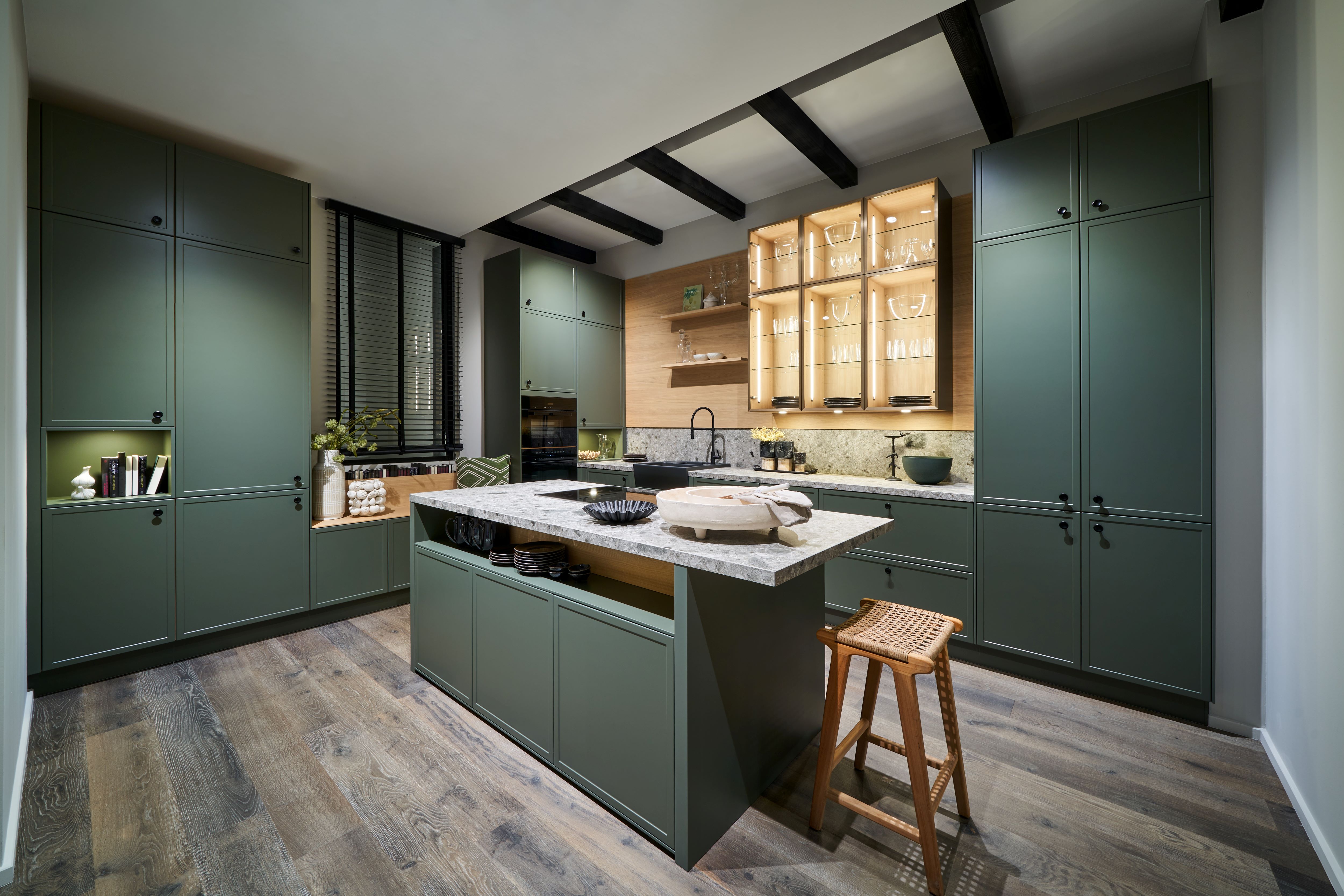
Greens – Sage, olive, eucalyptus, forest greens pair with brass or black hardware and light stone
Blues – Navy and deep moody blues give depth and tailored feel
Warm earthy tones – Taupe, warm greys, terracotta-inspired shades, dusky pinks
Typical Shaker Schemes:
One-colour calm: All cabinets in soft neutral (white, cream, light grey) + contrast from darker floors + medium-tone worktops
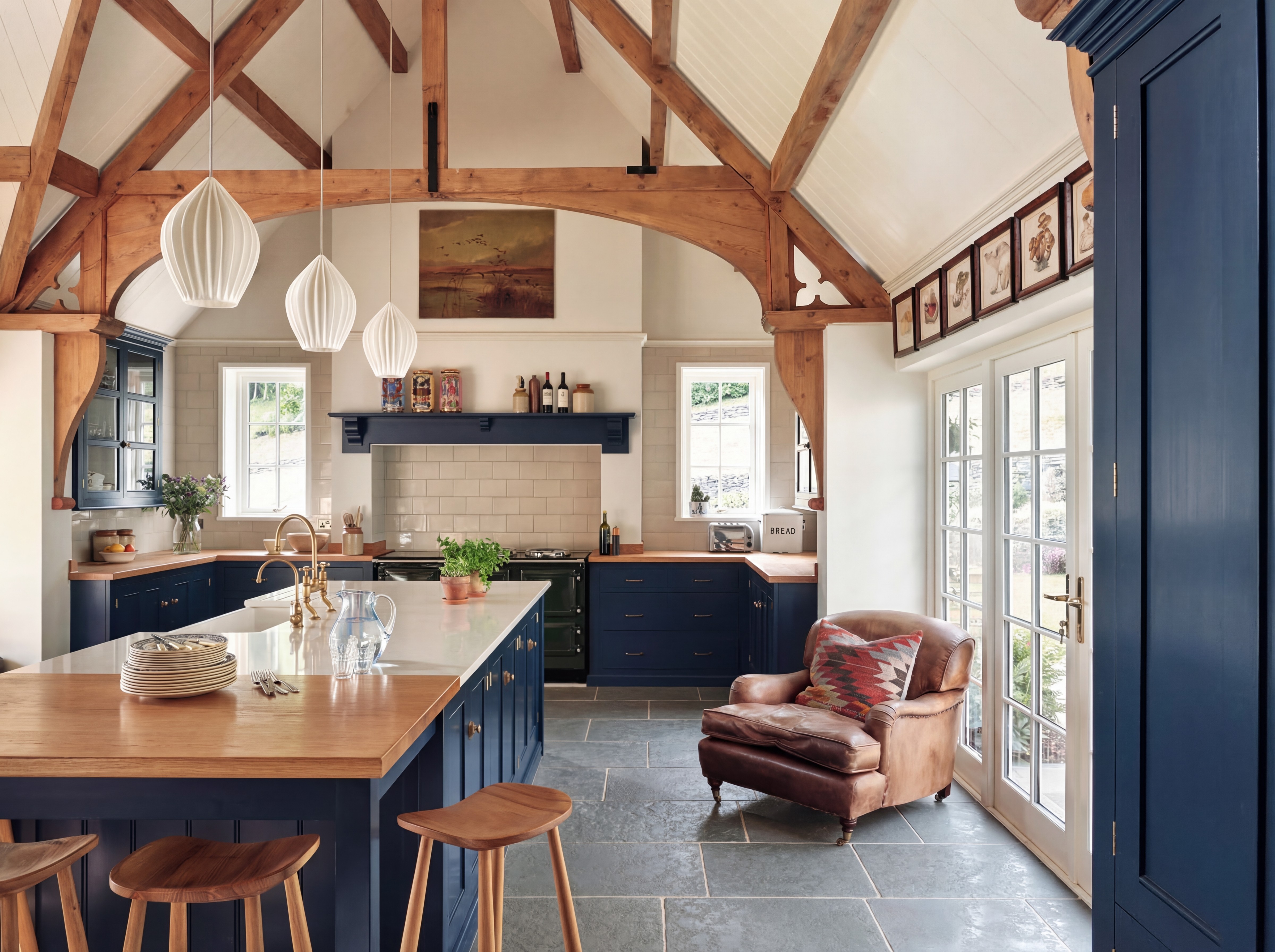
Two-tone classic: Light uppers + darker bases or island (navy, green, charcoal) + light stone worktops + brass or black hardware
Warm and grounded: Sage or olive cabinets + warm white trim + wood worktops + cream metros + brass hardware
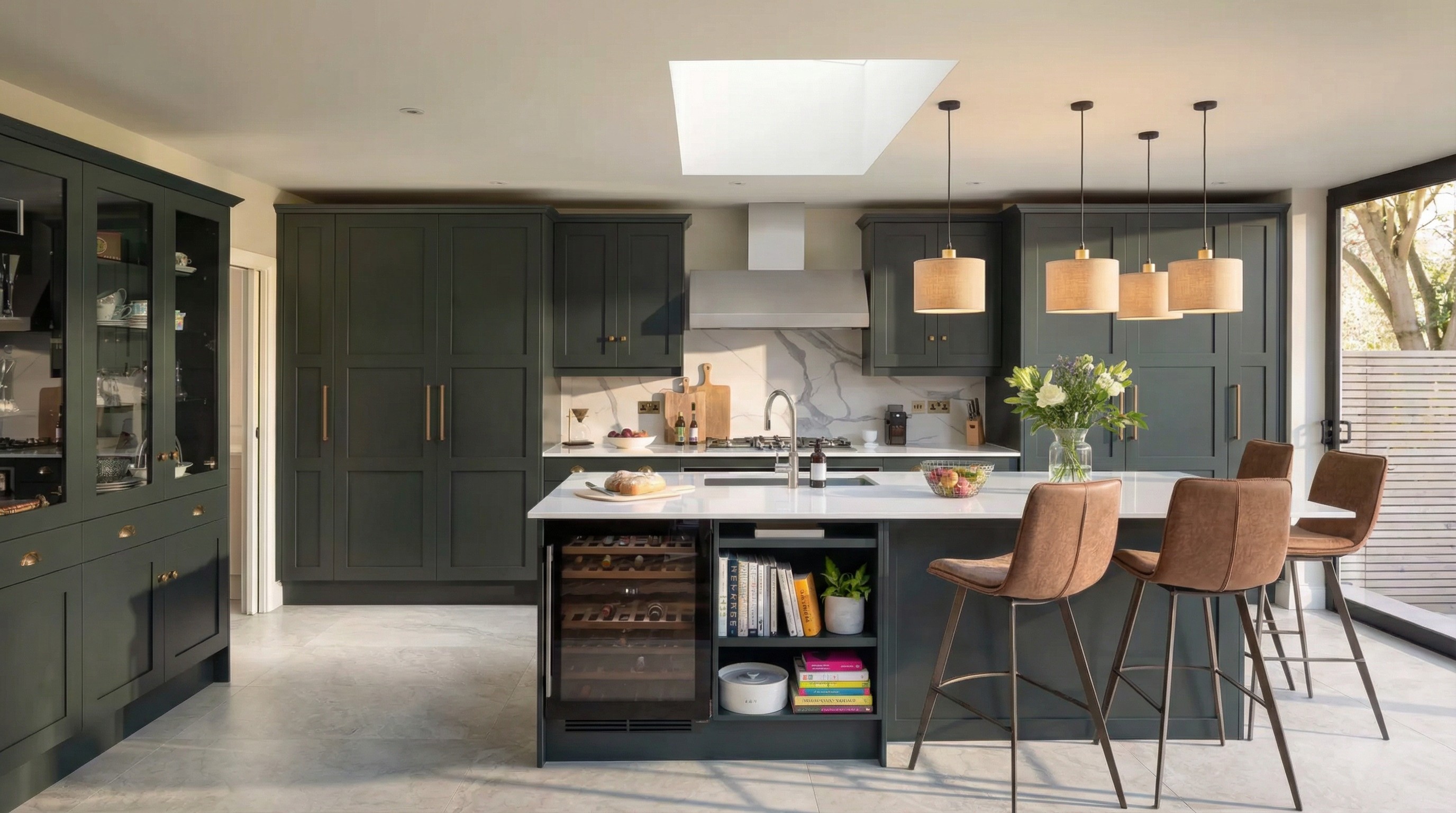
Shaker Kitchens & Bathrooms We Design And Install
Kitchen
A Shaker kitchen works across London property types – Victorian terraces, mansion blocks, warehouse conversions, new-builds. The simple framed doors adapt to any architecture through colour, hardware, and material choices.
Classic Shaker with Natural Stone
Painted Shaker cabinetry in soft white, cream, light grey, or sage green with five-piece framed doors and consistent rail widths. Island or lower units in navy, deep green, or charcoal for contrast. Quartz, marble-effect quartz, honed granite, or solid wood worktops with simple edge profiles. White or cream metro tile splashback in brick-bond or herringbone with soft grey grout, or full-height stone slab behind hob. Classic knobs or cup pulls in antique brass, brushed nickel, or matte black. Integrated appliances, tall larder units with simple cornice, turned legs on island or furniture-style end panels. Stone-effect or natural stone floor tiles in soft neutrals.
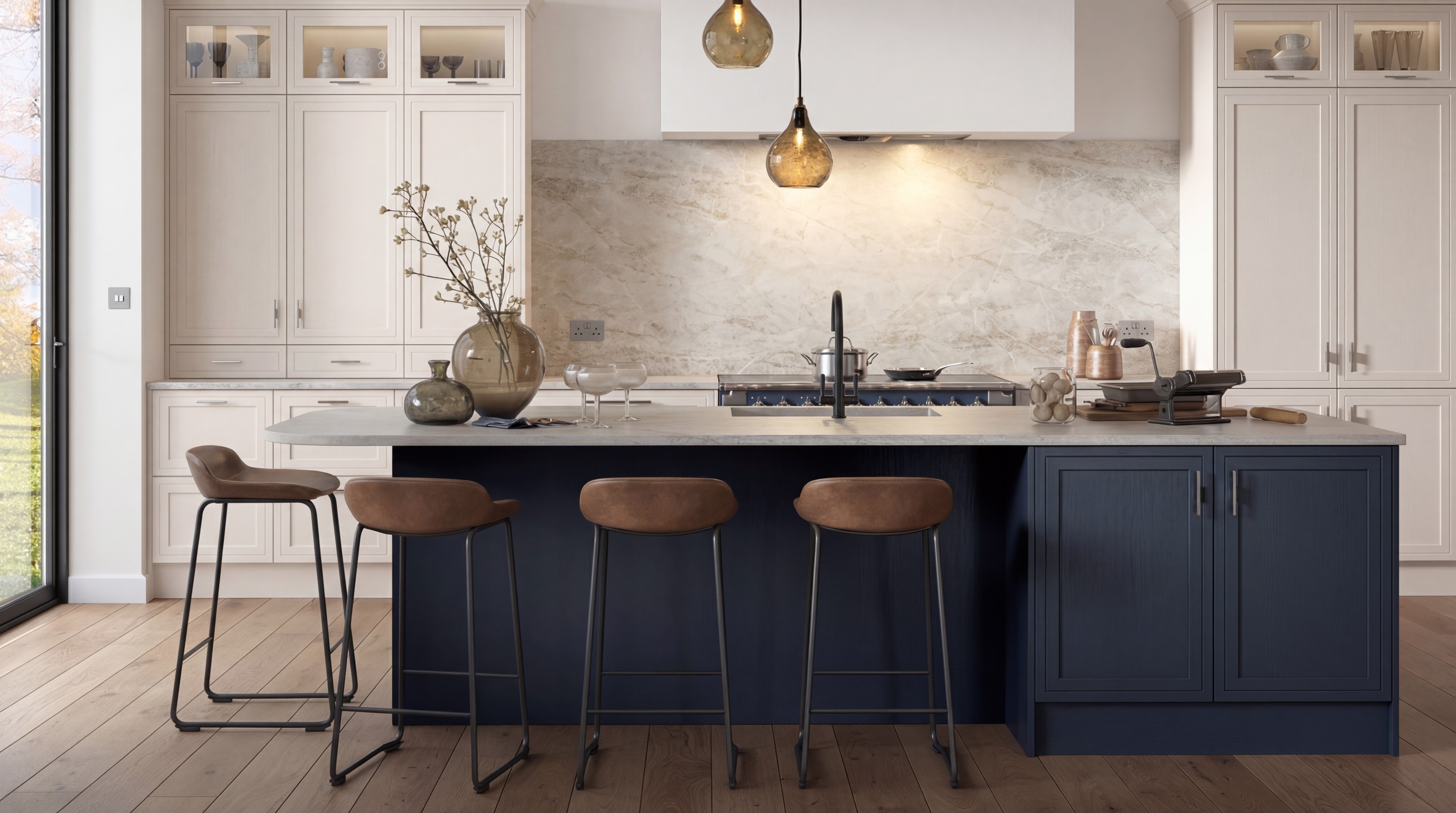
Bathroom
A Shaker bathroom uses the same five-piece framed construction scaled to bathroom proportions, paired with simple tiles and classic fixtures.
Shaker Vanity with Period Detailing
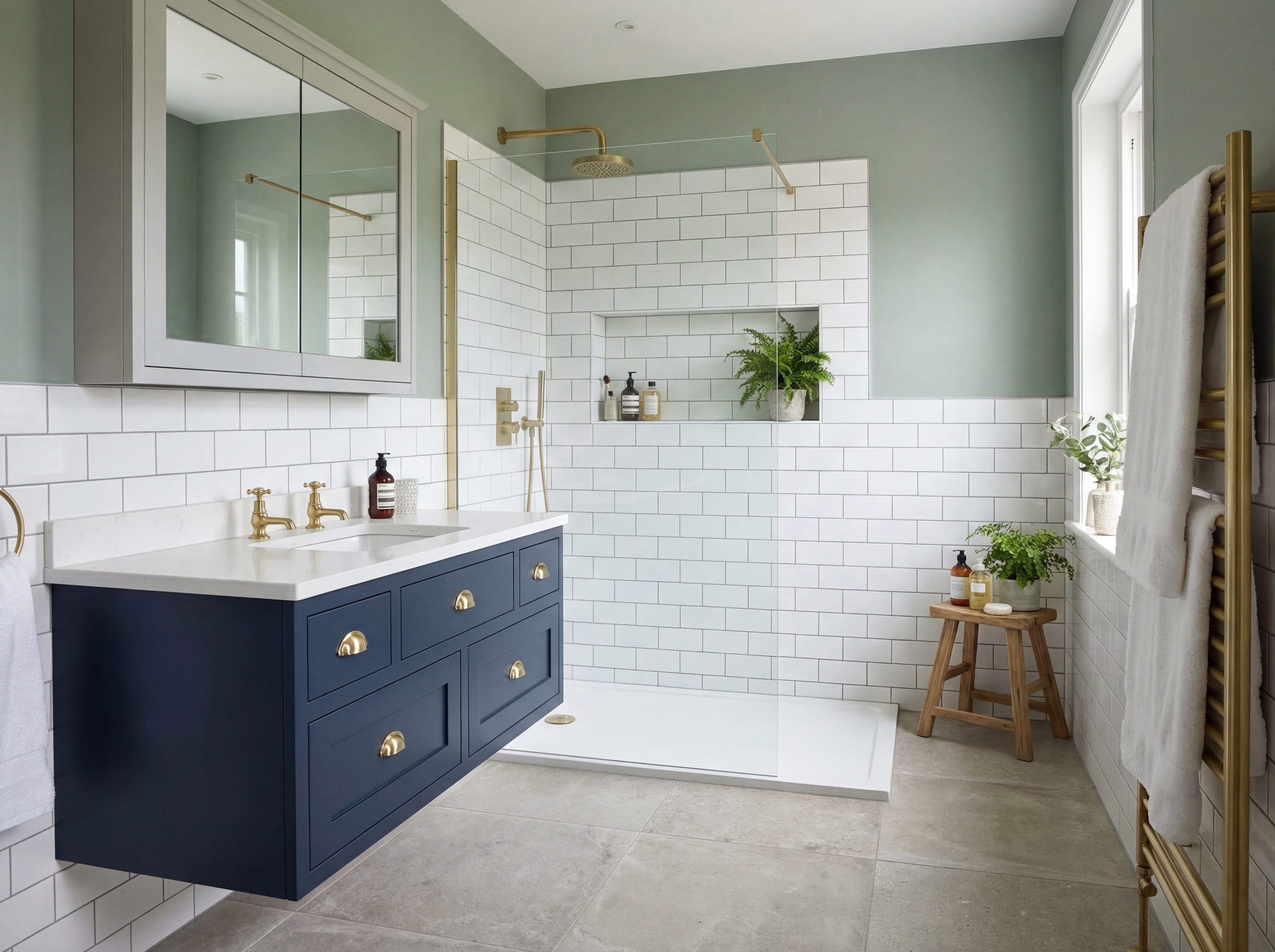
Wall-hung or freestanding Shaker vanity in painted finish (white, light grey, sage, navy, or deep green) with five-piece framed doors and drawers. Quartz, solid surface, or porcelain worktop with undermount basin or integrated top. Metro tiles, larger rectangles in stone-effect, or painted tongue-and-groove wainscoting with simple tiles or painted walls above. Walk-in shower with frameless glass or period-style enclosure. Cross-head or lever taps in chrome, nickel, or brass matching vanity hardware. Stone-effect porcelain floors or classic black-and-white mosaics or small hex tiles. Recessed storage niches, mirrored cabinets with shallow Shaker frames, underfloor heating integrated discreetly.
Shaker Kitchen Company London in FAQs
What makes a kitchen Shaker?
A Shaker kitchen in London is defined by five-piece framed doors (two stiles, two rails, flat recessed centre panel), clean lines without mouldings or ornament, and honest materials – painted timber or quality MDF, natural stone or wood worktops, simple hardware in classic finishes. It's about restraint, quality construction, and functional design without fuss.
What's the difference between inset and overlay Shaker?
Inset Shaker has doors and drawers that sit inside the face frame opening, flush with the frame, exposing the full frame for a furniture-like, very crafted look. Overlay Shaker has doors sitting on top of the frame, nearly covering it for a cleaner, more contemporary feel. Inset needs tighter tolerances and typically costs more; overlay is more forgiving to fit and often more budget-friendly.
Can Shaker kitchens work in modern London properties?
Yes. Shaker adapts to modern builds through slimmer frame widths, bolder colours, contemporary hardware (bar pulls, matte black), and clean material pairings (thin quartz worktops, slab splashbacks, large-format tiles). The simple framed door works across period terraces and new-build flats – it's the finishing details that set the mood.
Are bespoke Shaker kitchens more expensive?
Bespoke handmade Shaker kitchens in solid timber with inset construction and hand-painted finishes cost more than standard overlay Shaker in painted MDF. But well-executed painted MDF Shaker with quality hardware, good worktops, and proper proportions can create authentic Shaker aesthetics without full bespoke pricing. Cost depends on specification, materials, and finish quality.
What hardware works best with Shaker kitchens?
Classic knobs (round, mushroom-style) are most authentic, often paired with cup or bin pulls on drawers. Antique brass or bronze gives a heritage London townhouse feel; brushed nickel or chrome feels timeless and bright; matte black creates contemporary contrast. Bar pulls work for more modern Shaker. Keep one finish family across all hardware and align placement carefully – with simple Shaker frames, any misalignment shows.