Styles /
traditional
Traditional Kitchen Installers in London: Period Character, Modern Function
Shaker cabinetry, natural stone, and heritage detailing designed to fit the bones of Victorian and Edwardian homes. Classic proportions and period materials with modern convenience integrated discreetly.
What Defines A Traditional Kitchen?
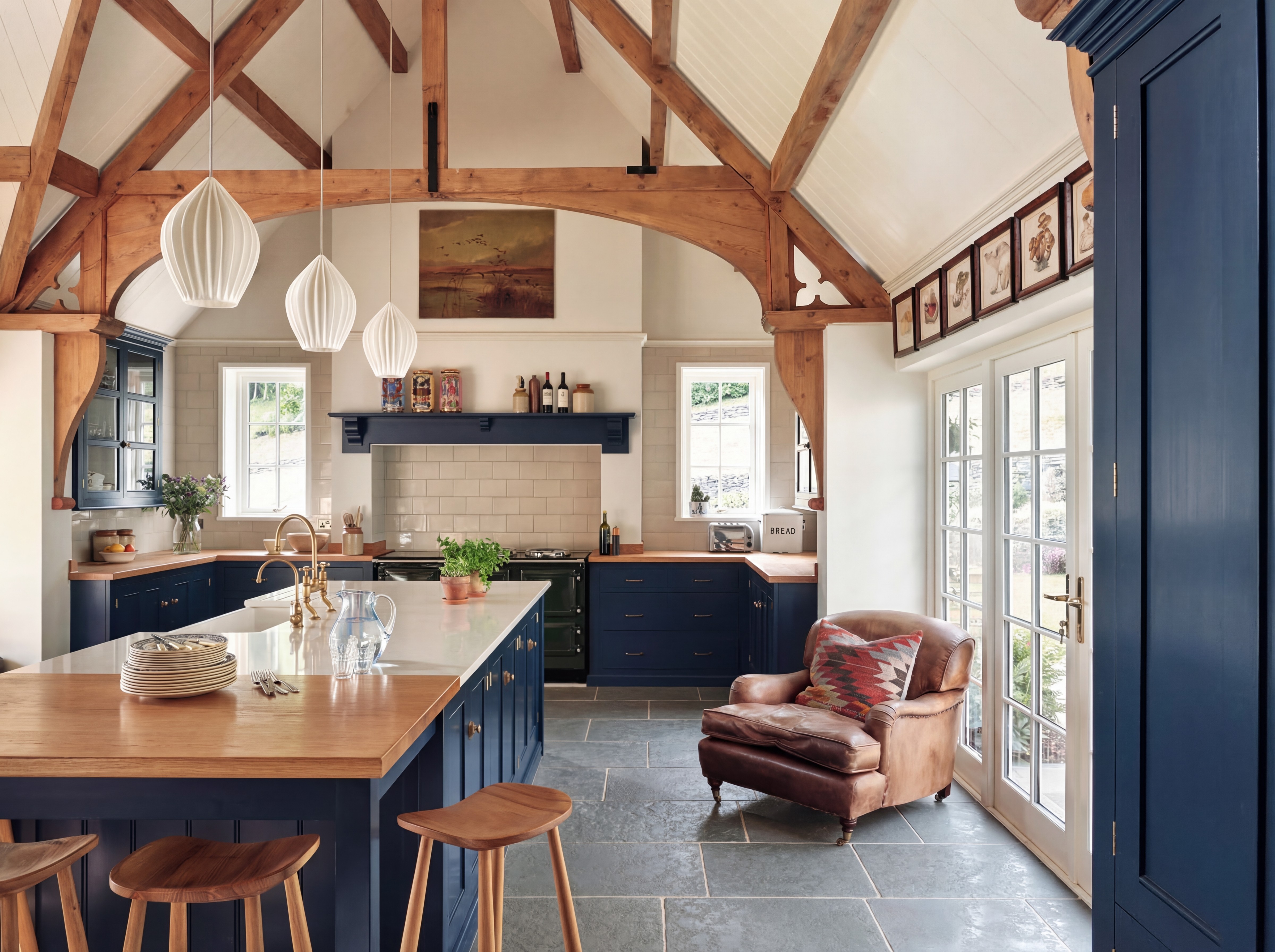
A traditional kitchen is built around framed construction, panelled doors, and period detailing that respects the architectural character of London's Georgian, Victorian, and Edwardian homes.
Core principles:
Framed cabinetry and visible detailing – Shaker or in-frame doors, cornice, pilasters, furniture-like proportions
Natural materials with character – Solid wood or painted timber, natural stone or wood worktops, ceramic tile
Heritage colour palettes – Soft neutrals, sage, heritage greens and blues, deep navy or forest green accents
Classic hardware and fixtures – Antique brass, pewter, bronze in knobs and cup pulls
Architectural detailing – Cornicing, glazed doors, plate racks, turned legs on islands
Shaker or raised-panel cabinetry in painted finishes. Solid wood or honed stone worktops. Metro tiles or classic patterns. Farmhouse sinks, range cookers, and warm brass hardware.
These are authentic period details executed with quality materials and proper proportions, designed to feel like they've always been part of London terraces, townhouses, and conversions.
Materials That Define Traditional Design
Cabintery
Traditional cabinetry is defined by framed construction, panelled doors, visible detailing, and furniture-like proportions – usually in painted timber with classic hardware.
Framed (in-frame) construction is the foundation
Doors sit within a surrounding frame fixed to the carcass, giving visible structure, tighter gaps, and a handcrafted, durable feel characteristic of period joinery. This construction style creates shadow lines and reveals that modern overlay cabinets can't replicate.
Shaker doors
Five-piece fronts with two stiles, two rails, and a flat recessed centre panel with square edges are the backbone of most traditional English kitchens. Simple, adaptable, and enduring, they work across country cottages and Georgian townhouses.
Raised and fielded panels bring more formality – Georgian or Victorian-influenced doors with raised centres and bevelled or bolection mouldings for ornate, period-correct schemes.
Full-height runs with cornice on top
Gives a built-in, architectural feel and maximise storage in tight London footprints. Tall larders or wall units taken to the ceiling create visual height and echo period room proportions. Symmetry and rhythm matter – regularly spaced doors, centred ranges or sinks, balanced pairs of wall units create calm, designed order.
Furniture moments
Elevates traditional kitchens beyond pure joinery. Dressers with open plate racks, cook's tables or islands with turned legs, chunky end panels read as standalone furniture pieces. Glazed doors with framed glass fronts break up solid runs and display china or glassware, often with interior lighting.
Detailing and mouldings:
Crown moulding (cornice) at the top of wall units, subtle pelmets under cabinets, decorative side panels, fluted or twisted pilasters at island corners, cock-beading to drawer edges, profiled plinths tie cabinetry into the room's architecture.
Materials and finishes:
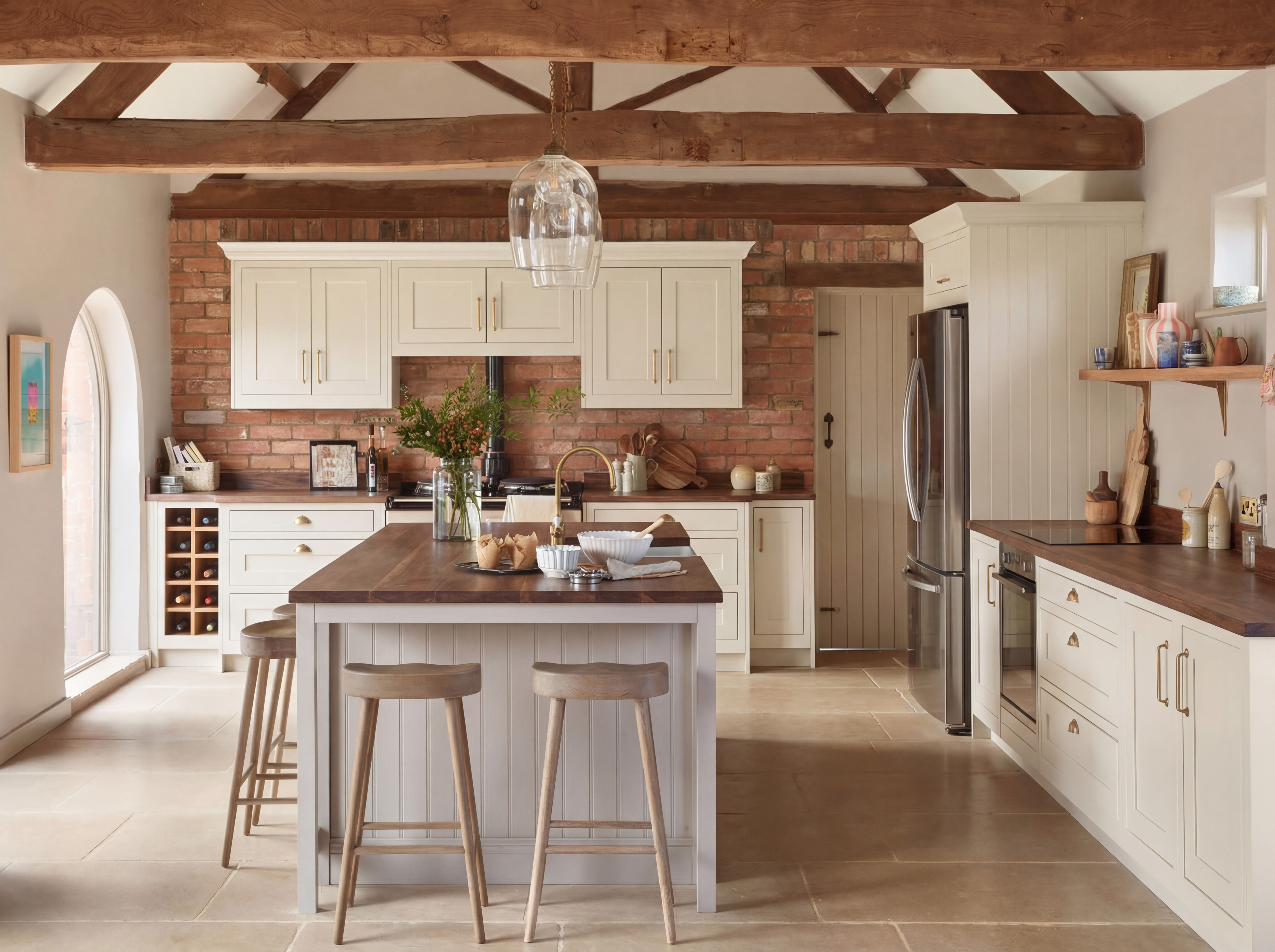
Solid wood or wood-veneered doors at the higher end; durable MDF with timber frames for movement control. Matt or eggshell paint in soft neutrals, greys, blues, and greens. Deeper tones (navy, bottle green, charcoal) reserved for islands or base cabinets.
Worktops
Traditional worktops look natural and slightly classic rather than ultra-sleek, with wood and stone anchoring the aesthetic.
Solid wood (oak, walnut, maple, iroko) adds warmth, visible grain, and heritage feel. Wood develops patina over time, which many traditional schemes accept as character. Requires regular oiling and careful maintenance but is repairable and authentically period.
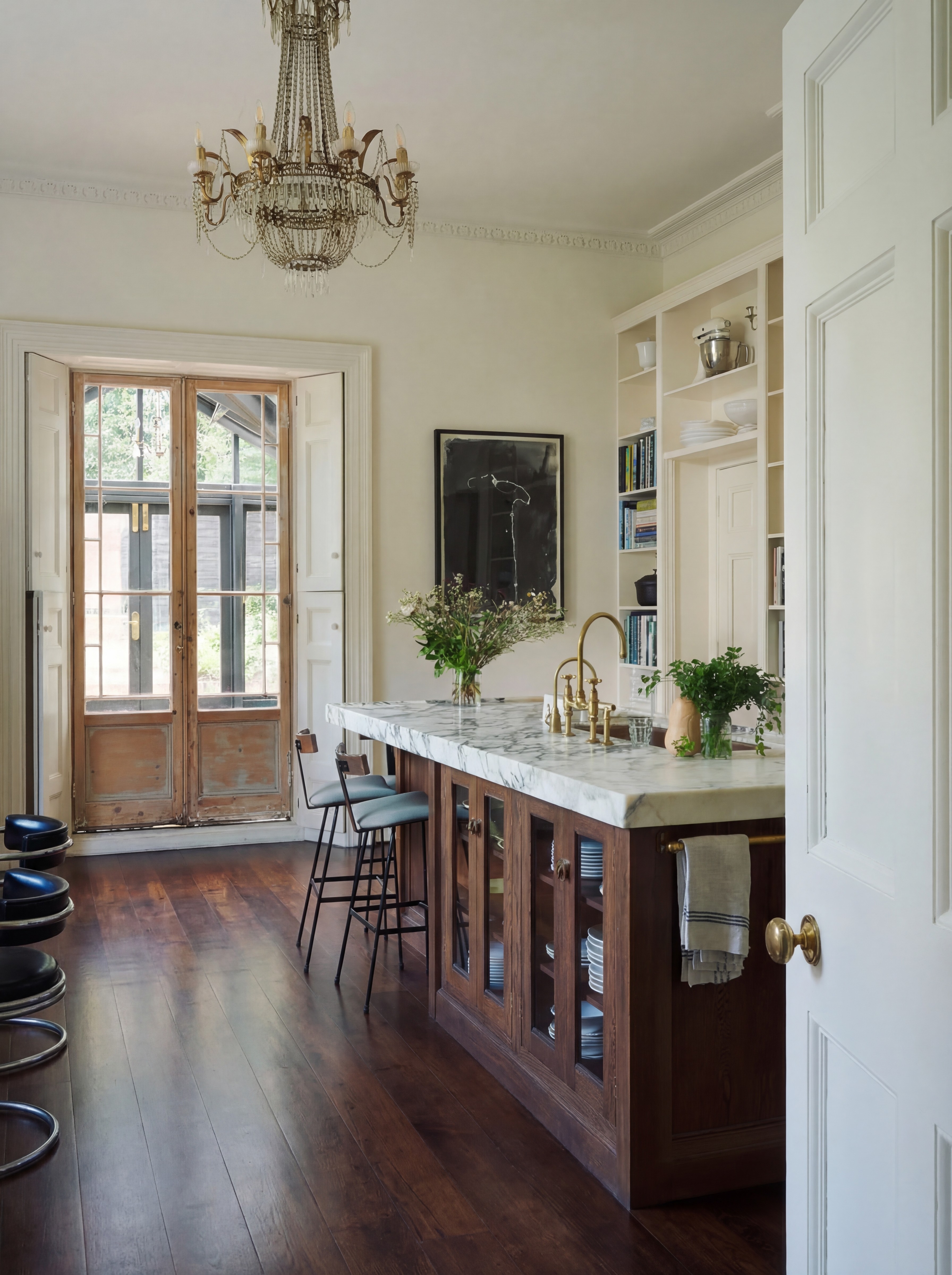
Natural stone – marble (Carrara or Calacatta) and granite. Marble gives old-world patina and classic luxury but is softer, porous, prone to etching and staining – better for islands than hard-working prep zones. Granite is tougher, more stain-resistant, practical for busy family kitchens.
Quartz and composite stone are practical stand-ins for marble or granite. Veined or subtly speckled patterns read traditional but need minimal maintenance – non-porous, stain-resistant, no sealing required.
Colour pairing:
Cream or white Shaker with mid-tone wood, soft white or grey marble, or light speckled stone. Deep green or navy units with lighter marble or stone for contrast, or rich dark wood for library-kitchen feel. Sage or grey units suit warmer taupe, off-white, or dark subtly textured tops.
Hardware
Traditional hardware sells the classic feel – solid metal knobs and cup pulls in warm finishes with tactile, heritage shapes.
Knobs (round or slightly detailed) are the most traditional choice for Shaker and in-frame doors, positioned 40–60mm from door edges.
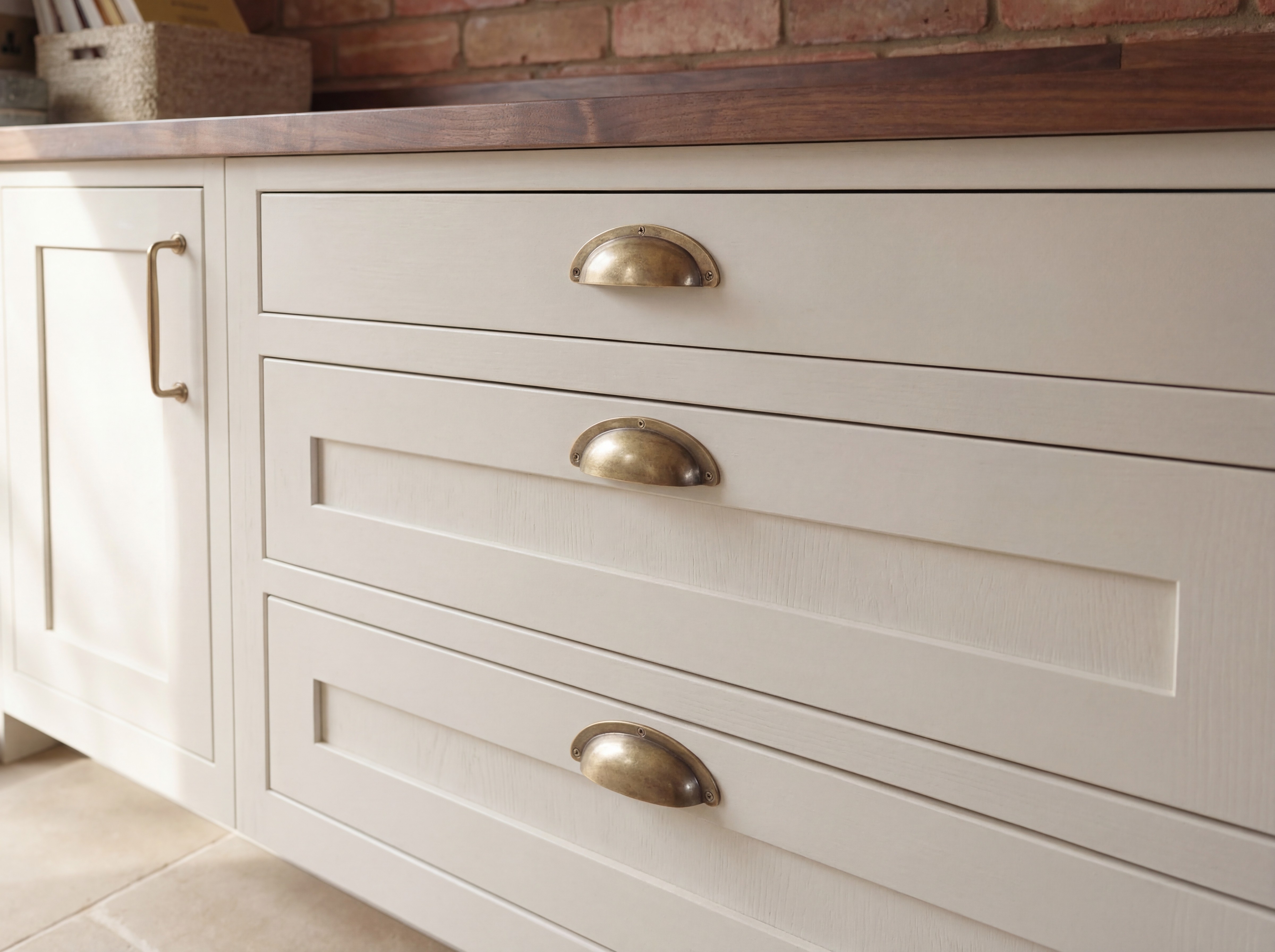
Cup or bin pulls (half-moon drawer cups) are classic English farmhouse and Victorian, pairing well with knobs on doors.
Arched or bridge pulls work on wider drawers, reading softer than sharp linear bars.
Backplates give a more period "ironmongery" look.
Aged or antique brass is probably the go-to for London traditional schemes – warm, golden, slightly muted. Pewter offers soft grey metallic with weathered look. Bronze or oil-rubbed bronze (dark brown-black metal) gives strong contrast on lighter cabinets. Polished or satin nickel and chrome provide refined townhouse feel; polished chrome nods to late Victorian and Edwardian bathrooms.
How to use hardware:
Common traditional pattern is knobs on all doors, cup pulls on pan drawers, small knobs or short pulls on narrow drawers. Larger drawers take wider pulls or two knobs. Keeping one finish family across handles, hinges, and visible latches gives tailored feel.
Tiling
Traditional tiling leans on classic shapes, heritage patterns, and muted colours that feel period-appropriate.
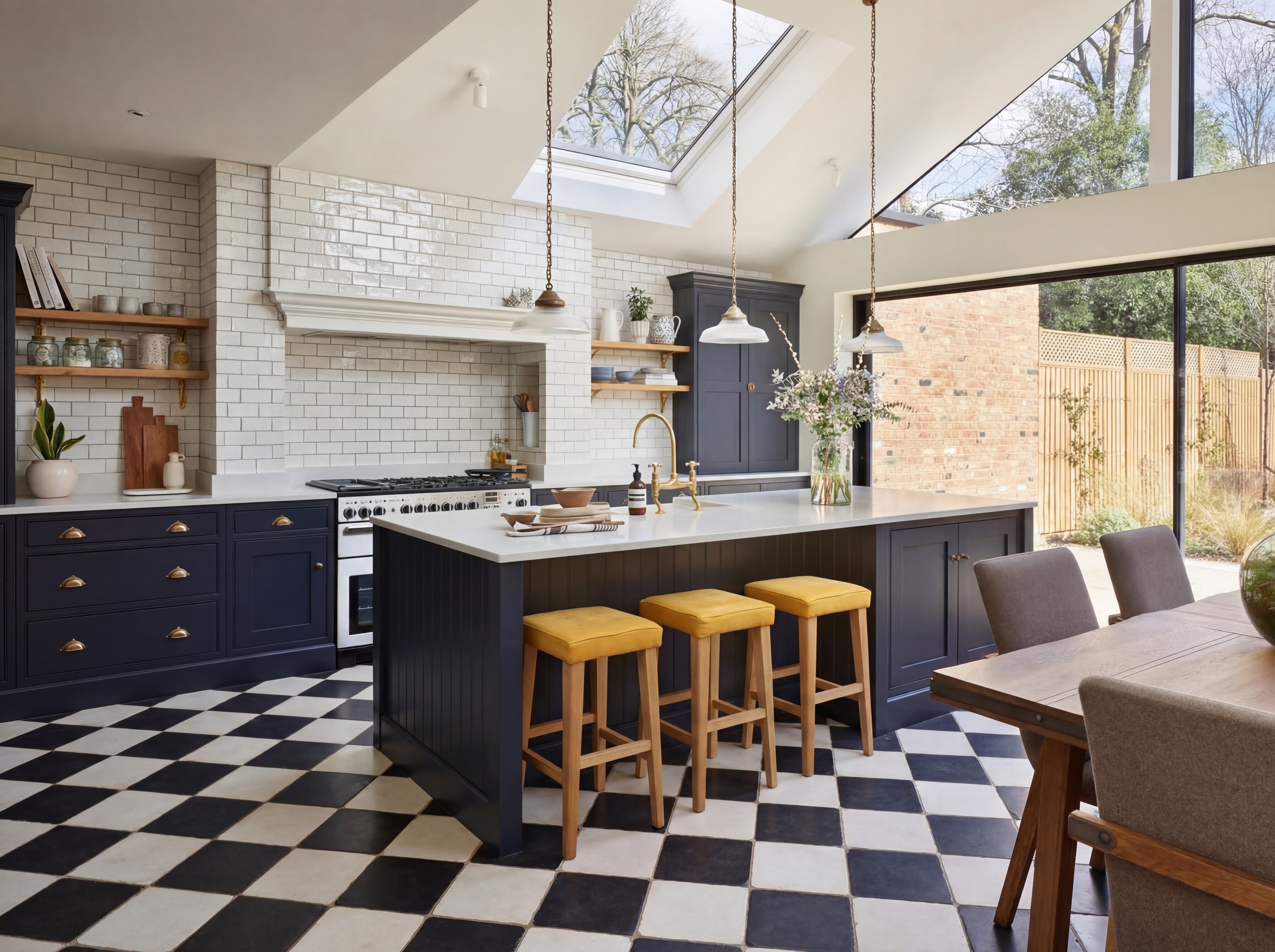
Metro or subway tiles – typically 75–100 × 150–200mm glazed rectangles in white, cream, or soft colours, laid in brick-bond.
Gloss or lightly crackle-glazed ceramics bounce light.
Matt versions feel more understated.
Wall tile colours: Whites, creams, greys, deep greens, and blues. Stronger hues kept to feature walls or splashbacks.
Layouts:
Traditional brick-bond or herringbone feel most authentic. Basketweave reads historic; straight vertical stacking feels contemporary. Borders and trims terminate tiled areas neatly, very in keeping with Victorian detailing.
Floor tiles:
Checkerboard (black-and-white or dark-and-light ceramic or porcelain) is a hallmark of Victorian and Edwardian London, often laid diagonal. Geometric Victorian patterns – small-scale encaustic or porcelain geometrics (diamonds, hexagons, squares) echo original London hallways.
Pattern scale:
Classic Victorian hierarchy uses smaller, more intricate patterns on floors with simpler, larger tiles on walls. Texture and grout: Slightly irregular or handmade-look tiles give softer, historic character. White or very light grout for blended traditional feel; mid-grey grout around white or cream metros for gentle definition.
Colour Palette
Traditional palettes sit in two families: calm, heritage neutrals, greens, and blues for everyday use, and deeper Victorian tones used sparingly.
Core Traditional Kitchen Colours:
Soft neutrals – Warm whites, creams, cashmere, pale greige, light grey
Heritage greens – Sage, olive, eucalyptus, softer yellow-greens feel very English
Deep blues and greens – Navy, inky blue, forest or emerald green bring drama, especially on islands or lower runs
Two-tone schemes – Light uppers with darker bases or island (off-white + navy, cashmere + deep green)
Traditional Bathroom Palettes:
Victorian mood – Deep burgundy, maroon, navy, forest green, black and dark browns with white sanitaryware
Edwardian lightness – Softer pastels and floral tones (primrose yellow, sage, lilac, dusky blues, gentle pinks)
Modern take – Neutral or light grey/cream walls with accents of rich plum, emerald, navy, or deep red plus warm brass or gold metals
Typical Traditional Schemes:
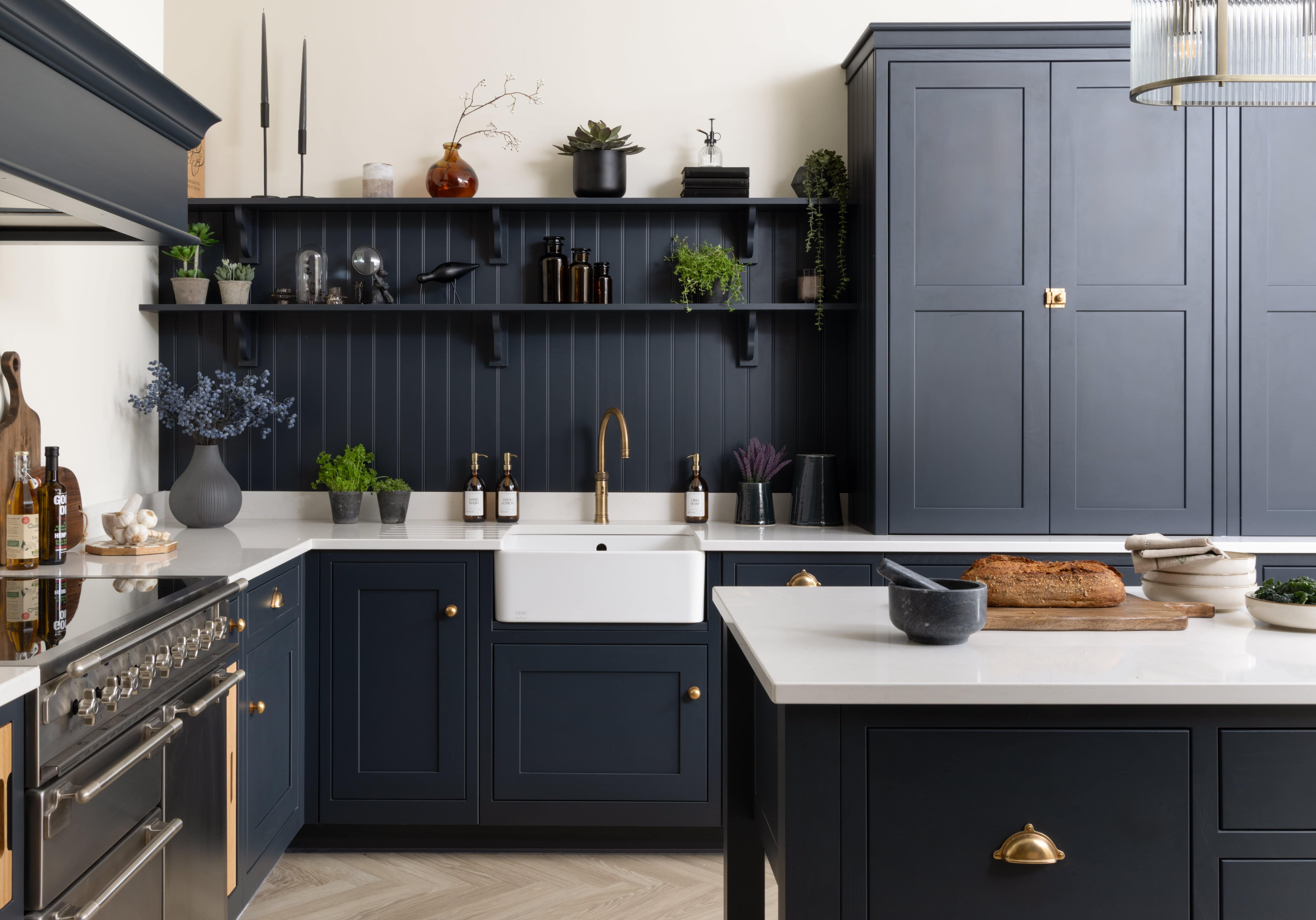
Classic Shaker: Soft white or pale grey cabinets + navy or deep green island + brass hardware + light stone worktop
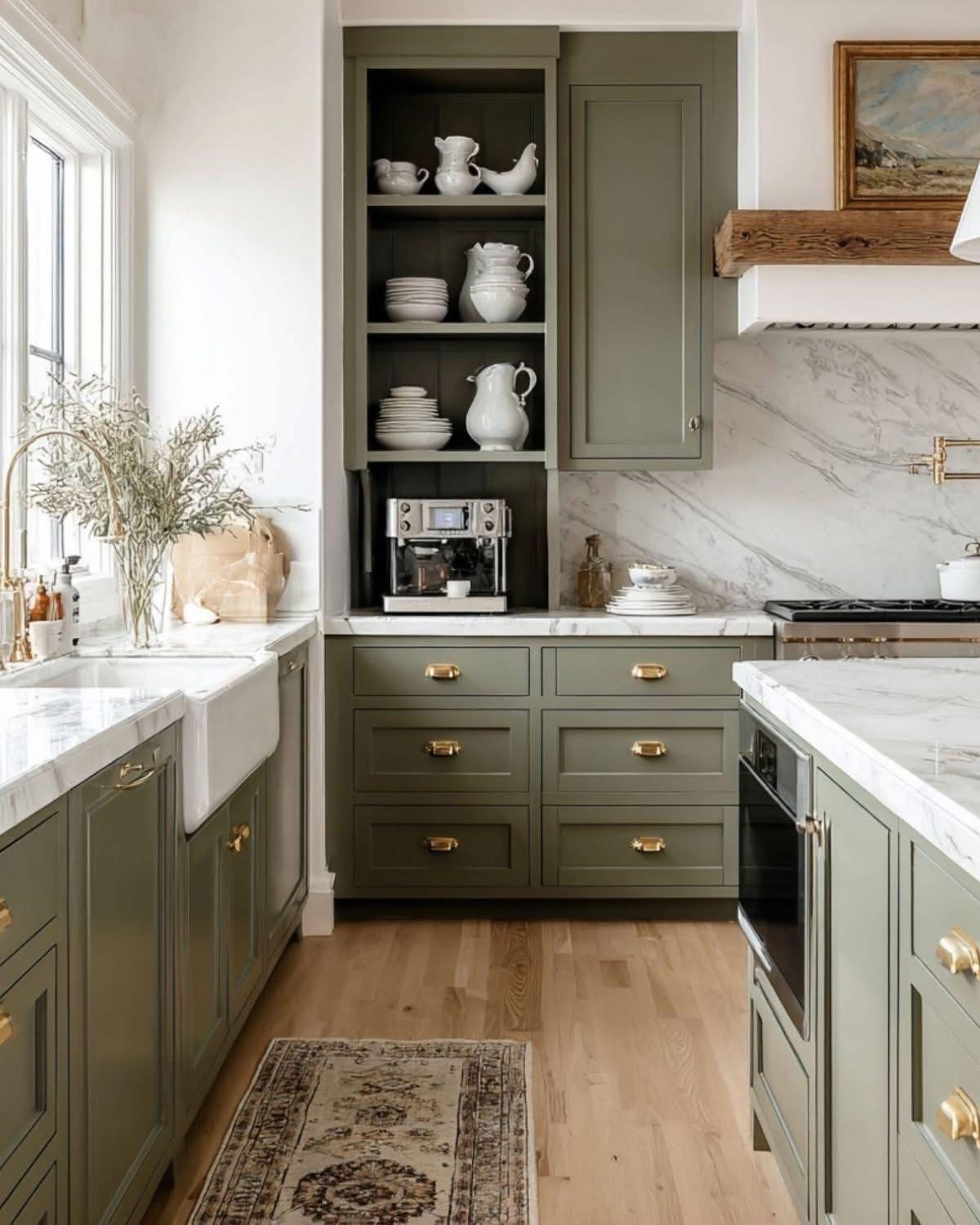
Warm country: Sage or olive green cabinets + warm white trim + wood tops/floor + cream metros
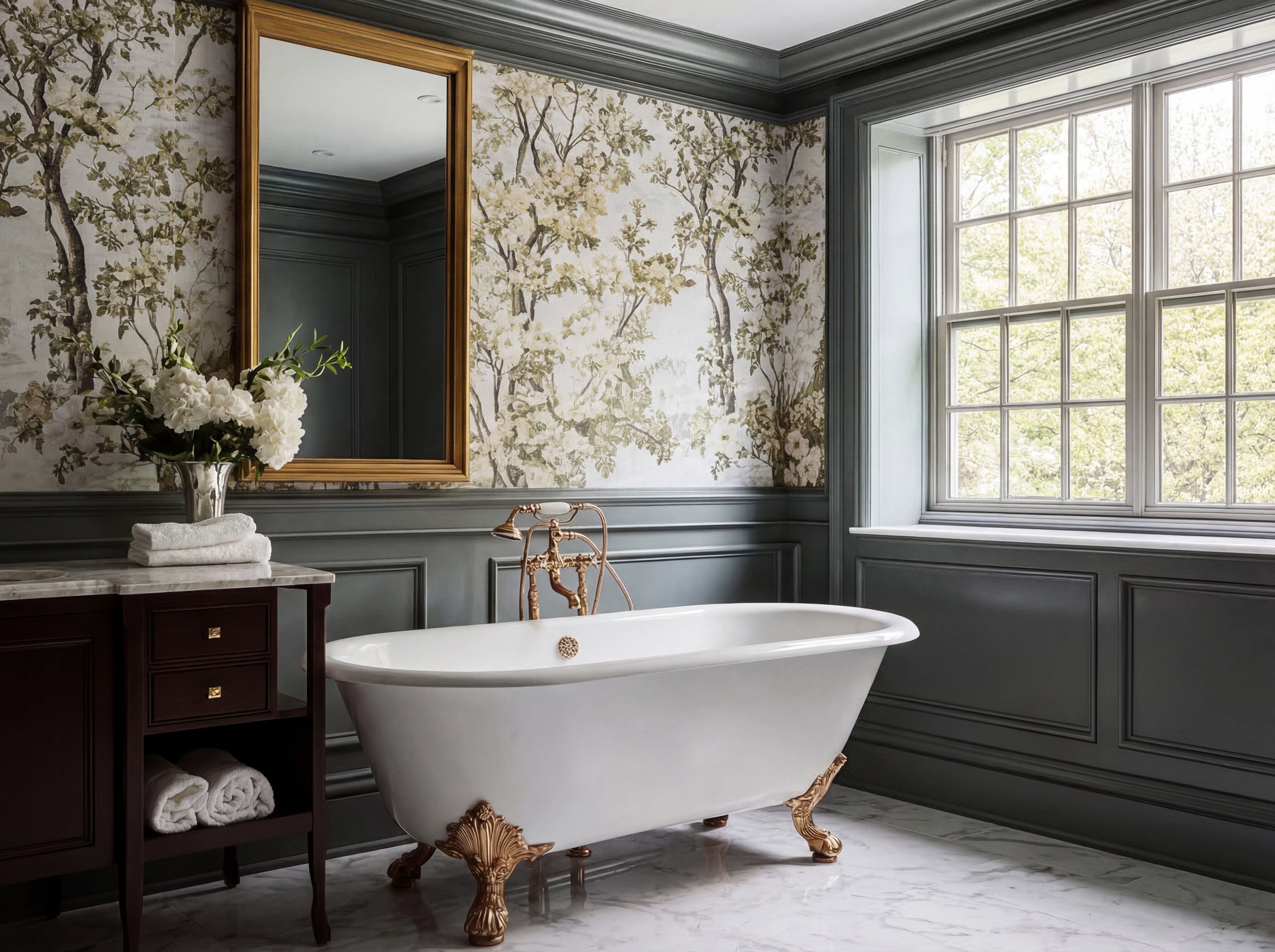
Victorian bathroom: Cream or light grey walls + forest green or burgundy accents + black/white floor + brassware
Traditional Kitchens & Bathrooms We Design And Install
Kitchen
A traditional kitchen works best in London's period properties – Victorian terraces, Edwardian conversions, Georgian townhouses. The aesthetic respects the bones of the building through period detailing and classic materials.
Shaker with Natural Stone and Heritage Colour
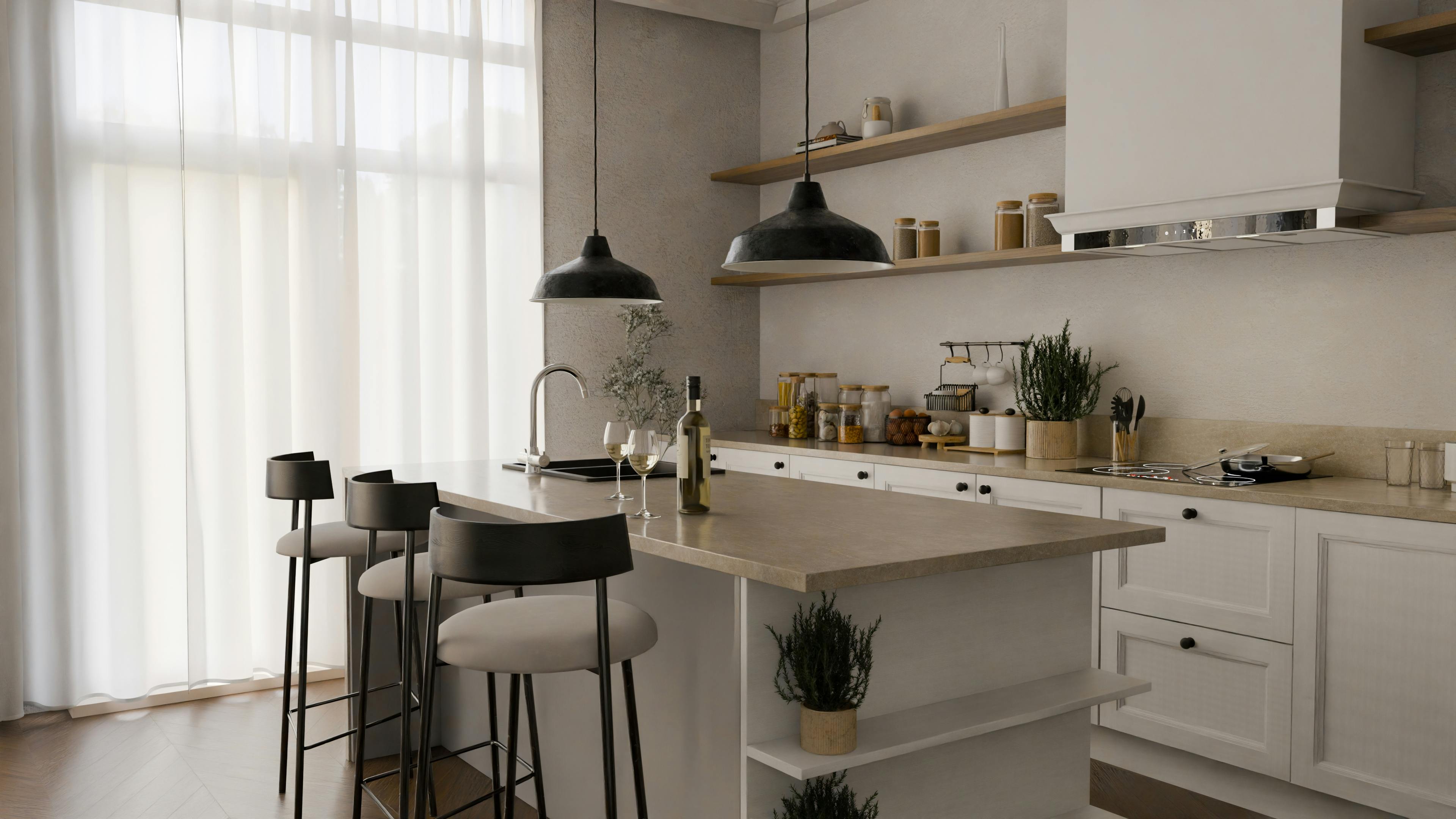
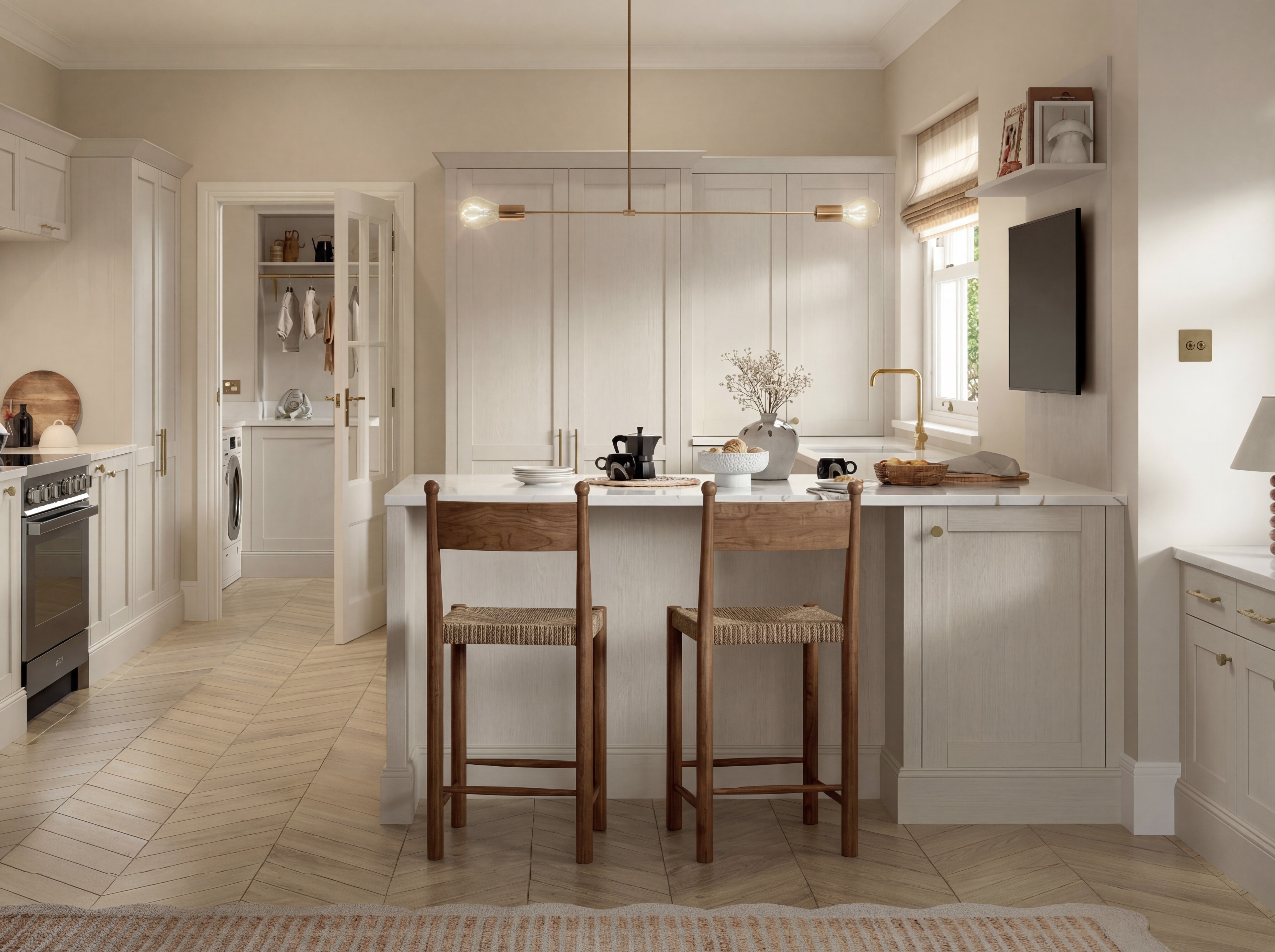
Painted Shaker cabinetry in soft white, cream, or sage green with in-frame construction and visible cornice. Island or lower units in navy, deep green, or charcoal for contrast. Honed marble, granite, or marble-effect quartz worktops with simple edge profiles. White or cream metro tile splashback in brick-bond or herringbone pattern with soft grey grout. Farmhouse or Belfast sink, range cooker or AGA, antique brass or pewter cup pulls and knobs. Tall larder units with glazed doors, turned legs on island or dresser-style open shelving. Victorian geometric or checkerboard floor tiles in entrance or feature zone.
Bathroom
A traditional bathroom references Victorian or Edwardian London bathrooms through period sanitaryware, classic tiling, and heritage brassware.
Period Detailing with Modern Comfort
Clawfoot or roll-top freestanding bath, or back-to-wall bath where space is tight. Pedestal basin or vanity with Shaker-style doors in painted finish. High-level or mid-level cistern WC with exposed flush pipes and traditional ceramic form. Half-height metro tiles or square ceramics in white, cream, or heritage colours with painted tongue-and-groove panelling or painted wall above. Victorian geometric floor tiles, checkerboard pattern, or small-scale encaustic porcelain. Cross-head taps and exposed thermostatic shower valves in chrome, nickel, brass, or bronze. Walk-in shower with period-style fixtures or traditional shower enclosure. Underfloor heating, discreet modern ventilation, heated towel rails integrated subtly.
Traditional Kitchen Installers in London FAQs
What makes a kitchen traditional?
A traditional kitchen in London is built around period detailing – Shaker or in-frame cabinetry, natural stone or wood worktops, heritage colours, classic hardware in brass or pewter, and architectural detailing like cornice and glazed doors. It's designed to fit the bones of Victorian, Edwardian, and Georgian homes with authentic proportions and materials that could plausibly belong to the original era, updated with modern function.
Can traditional kitchens work in modern London properties?
Yes, though they're most at home in period properties. Traditional design can adapt to modern builds through careful material and colour choices – Shaker cabinetry in warm neutrals, natural materials, classic proportions – creating a timeless aesthetic that feels grounded and characterful rather than trendy. The key is quality materials and proper proportions, not fighting against the architecture.
What's the difference between traditional and timeless kitchens?
Traditional kitchens reference specific period styles (Georgian, Victorian, Edwardian) with authentic detailing like in-frame construction, raised panels, cornice, and heritage hardware. Timeless kitchens use classic materials and enduring proportions but without explicit period references – simpler Shaker profiles, cleaner lines, less ornate detailing. Traditional is more historically specific; timeless is more universally adaptable.
Are traditional kitchen installers in London more expensive?
Not necessarily. Traditional kitchens often use quality materials (solid wood or painted timber cabinetry, natural stone, brass hardware) and crafted details (in-frame construction, cornice, glazed doors), but costs depend on specification level and finish quality. Painted MDF with timber frames, quartz instead of marble, and well-executed details can create authentic traditional aesthetics without full bespoke pricing.
How do you keep traditional kitchens from feeling dated?
Traditional done well uses authentic period proportions and quality materials that age gracefully – Shaker cabinetry, natural stone, brass hardware, classic tile patterns. Avoid overly ornate details, fussy mouldings, or theme-park period styling. Balance heritage elements (cup pulls, cornice, glazed doors) with cleaner backdrops (simple metro tiles, honed stone, painted finishes). The materials and proportions stay relevant; the execution determines whether it feels timeless or dated.