Styles /
scandinavian
Scandinavian Kitchens in London: Light, Natural, Functional
Scandinavian design is about warm minimalism – simple joinery, clutter-free surfaces, and hygge touches that make spaces feel inviting.
What Defines A Scandinavian Kitchen?
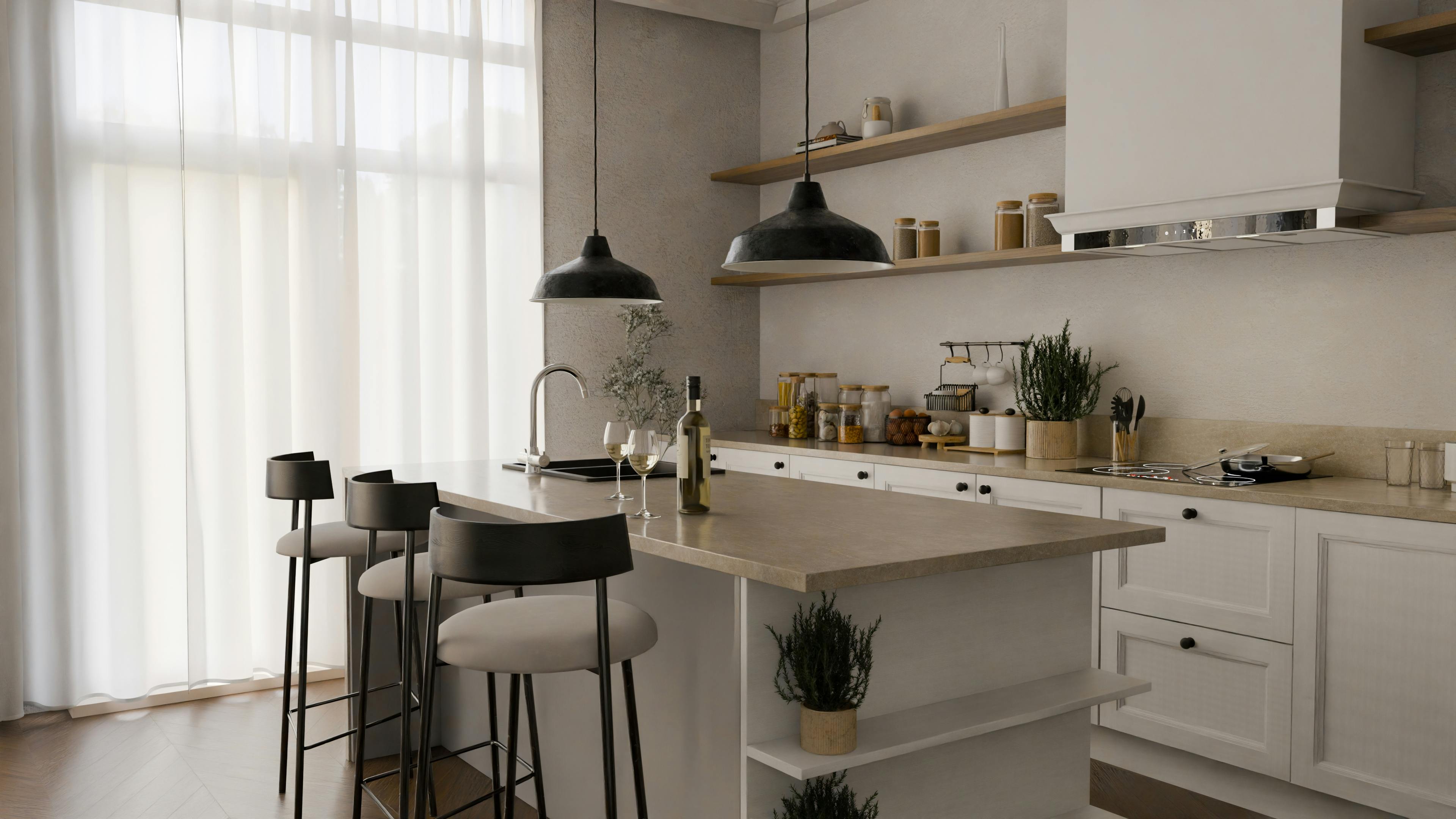
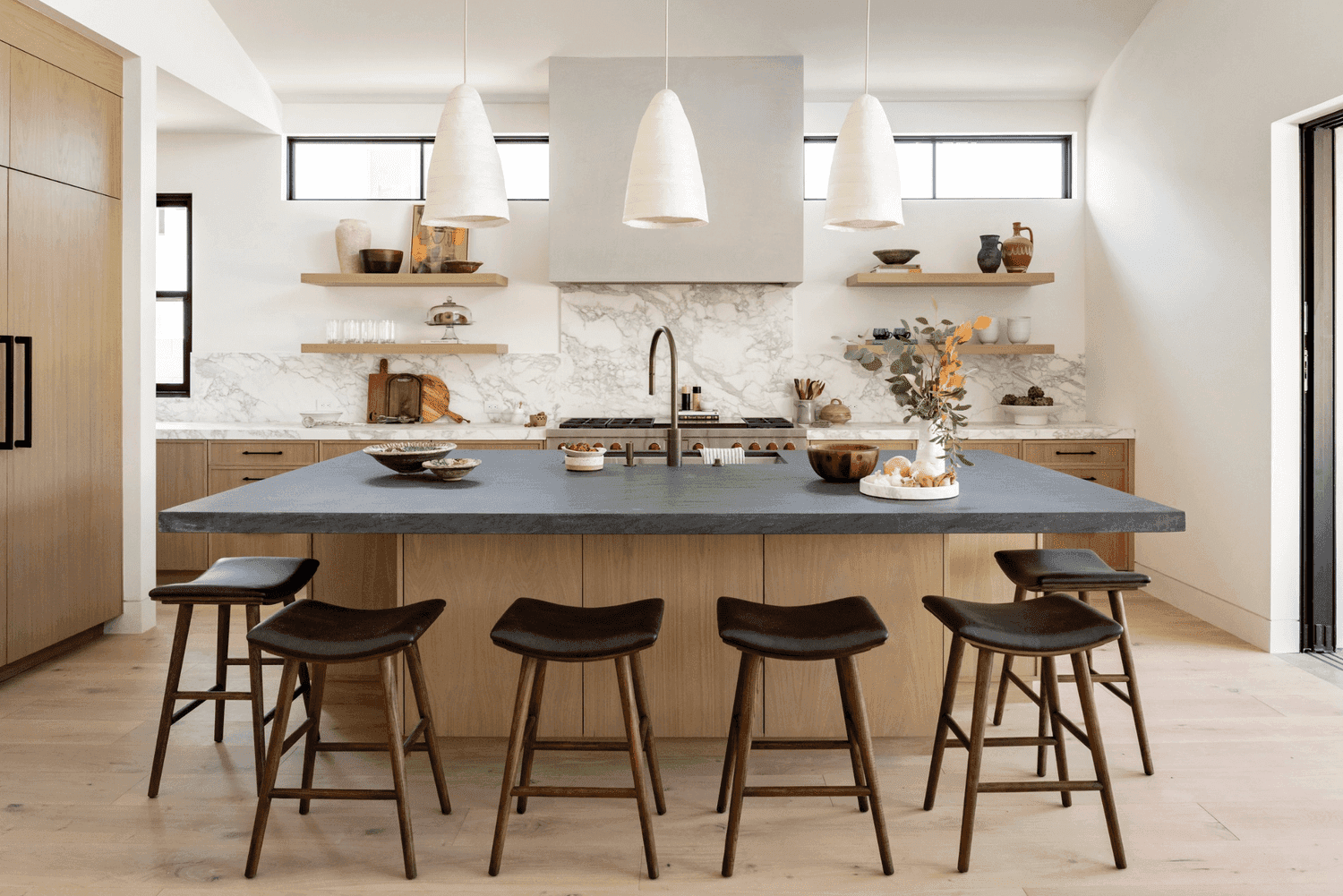
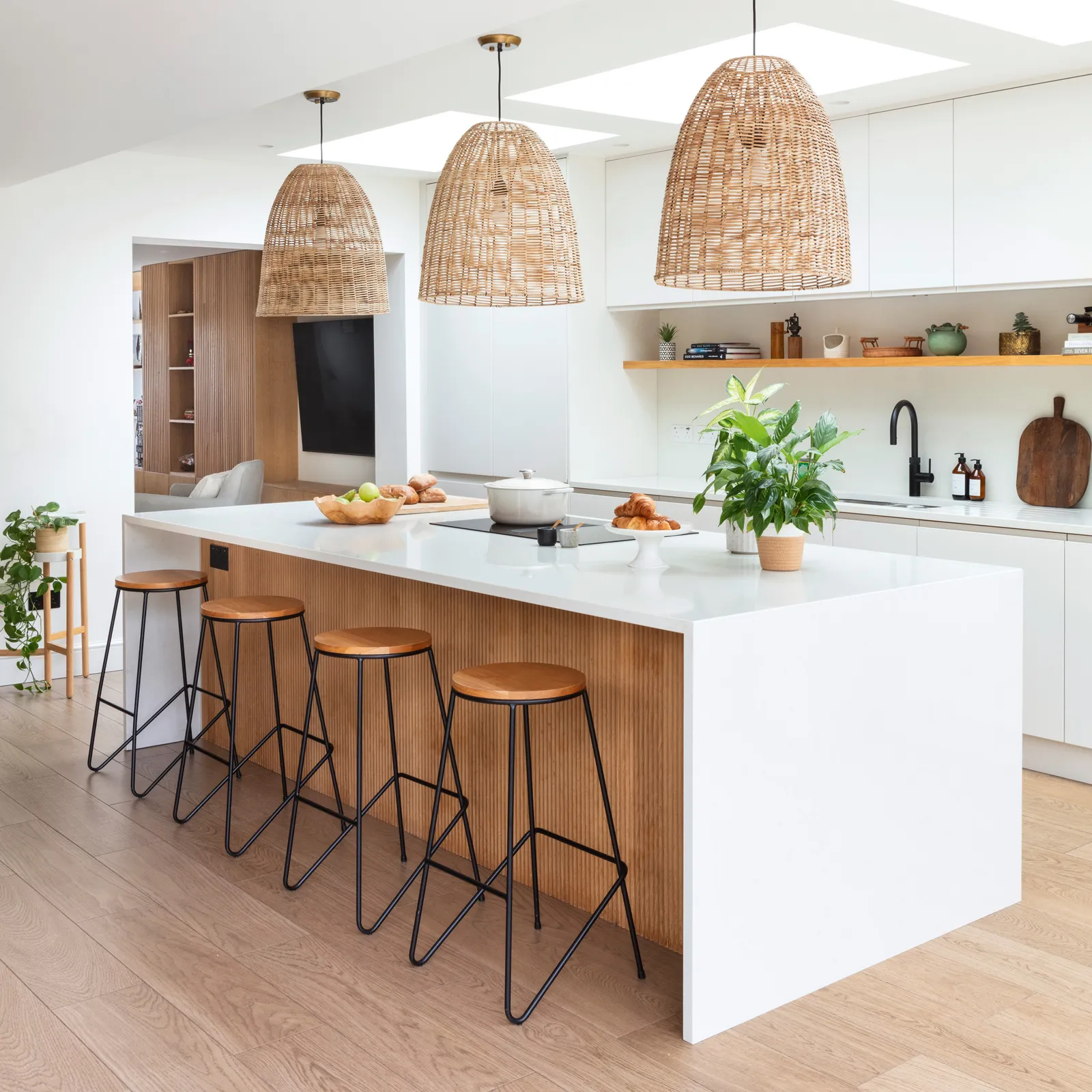
A Scandinavian kitchen is defined by light materials, natural textures, minimal ornamentation, and highly functional layouts that maximise brightness and create calm, inviting spaces.
Core principles:
Simplicity first – Clean lines, flat-front or simple Shaker joinery, minimal ornamentation, very little visible clutter
Neutral, light palette – Whites, soft greys, beige, greige, muted pastels with black or dark accents for contrast
Natural materials – Pale woods (oak, ash, birch), stone or concrete, linen textiles, woven baskets, greenery
Light and air – Maximise natural light, avoid heavy window treatments, keep volumes visually open
Warm minimal – Warm wood tones, soft textures, hygge touches prevent the look feeling clinical
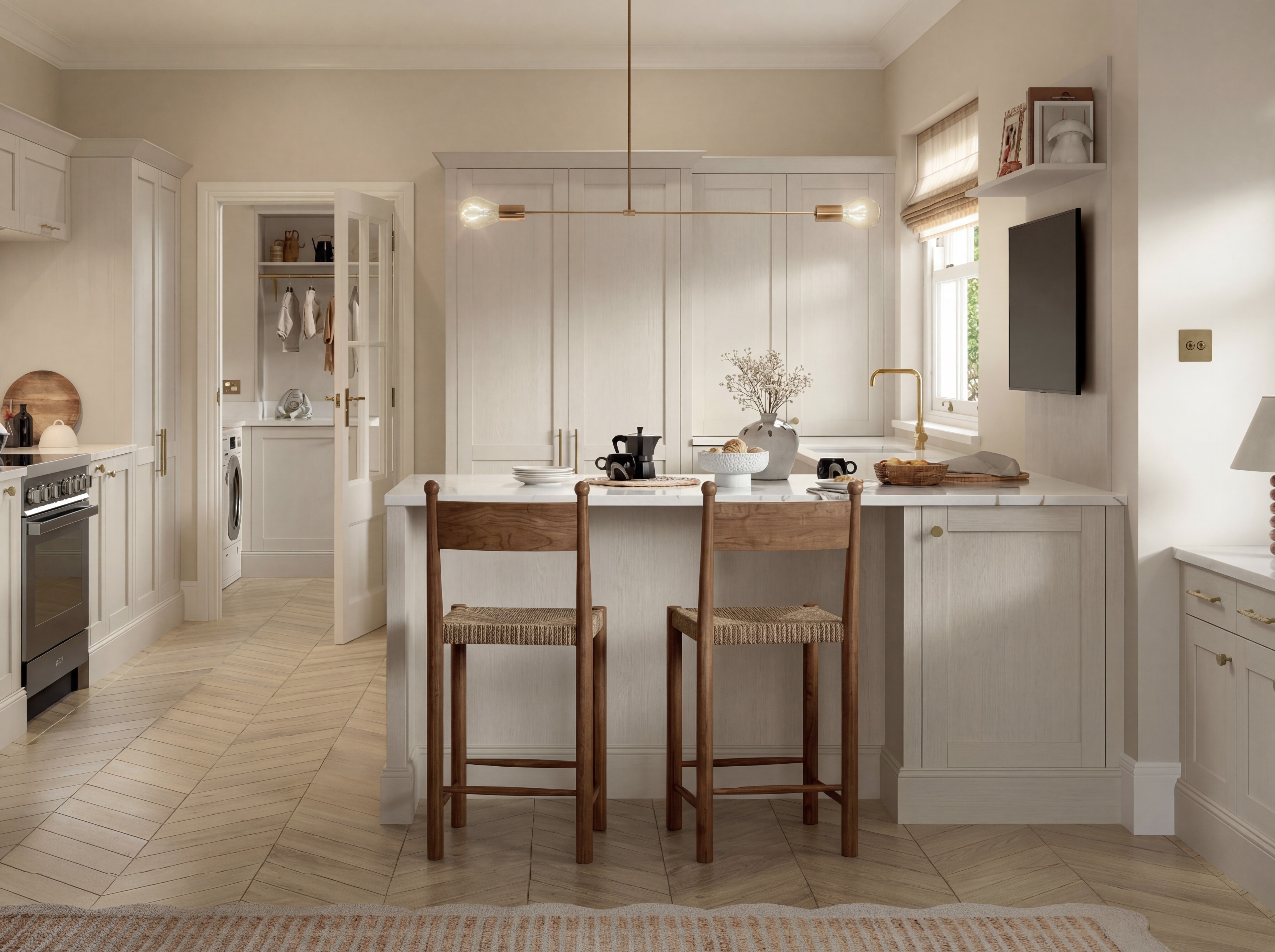
Flat-panel or simple Shaker cabinetry in matte white, light grey, or light wood. Pale stone or wood worktops. Simple white or off-white tiles. Brushed steel or matt black hardware. Light oak or ash floors.
These aren't stark white rooms. They're deliberately light and calm to maximise brightness in London's often low natural light, with warm woods, soft textures, and functional storage that keeps surfaces clear.
Materials That Define Scandinavian Design
Cabintery
Scandinavian cabinetry is all about calm, simple fronts, natural pale materials, and very considered detailing that keeps everything visually quiet and highly functional.
Front style and proportions:
Mostly flat or slab doors for very clean plane, with simple Shaker used where you want slightly softer, more traditional feel while staying minimal. Long, uninterrupted runs of units, full-height tall cabinets to frame the space, and very few changes in depth to keep elevation visually calm.
In kitchens, tall larder walls and ceiling-height cupboards structure the room; in bathrooms, tall but slim storage towers and mirrored cabinets add height without heaviness.
Fronts, materials, and finishes:
Common cores are MDF or birch ply for painted and veneered fronts. Higher-end Scandi brands often use birch, ash, or other light hardwoods for durability. Real wood veneer (oak, ash, birch) in light or mid tones is typical, often clear-matt lacquered so grain stays visible but low-sheen.
Painted fronts in whites, off-whites, pale greys, mushroom or greige, and muted greens or blues – always in matte or eggshell, never high gloss. Occasional fluted or ribbed fronts on selected runs (islands, bathroom vanities) add interest without pattern or colour.
Handles and opening systems:
Push-to-open, J-pulls, or finger-pull channels routed into top or side of door so elevations read as simple blocks rather than dotted with hardware. If using handles, slim bar pulls or small knobs in matt black, brushed steel, or warm brushed brass – shapes extremely simple with no backplates or ornate profiles. Square or very slightly eased edges rather than heavy chamfers.
Carcasses, layout, and storage:
Frameless Euro-style construction is common, giving tighter gaps and more seamless facade. Pull-out larders, deep pan drawers, tray and chopping-board slots, and dividers keep surfaces visually empty. Fridge, dishwasher, sometimes oven and bins are panelled to match, turning cabinet run into one continuous volume.
Bathroom vanities:
Wall-mounted vanities and tall units keep floor visible, making small bathrooms feel lighter – very characteristic of Scandi bathrooms. Flat white or light-wood fronts, sometimes with subtle ribbing or beadboard, paired with thin stone or composite tops and sit-on basins.
Recessed or surface-mounted mirrored cabinets with completely plain doors give storage while bouncing light around.
Worktops
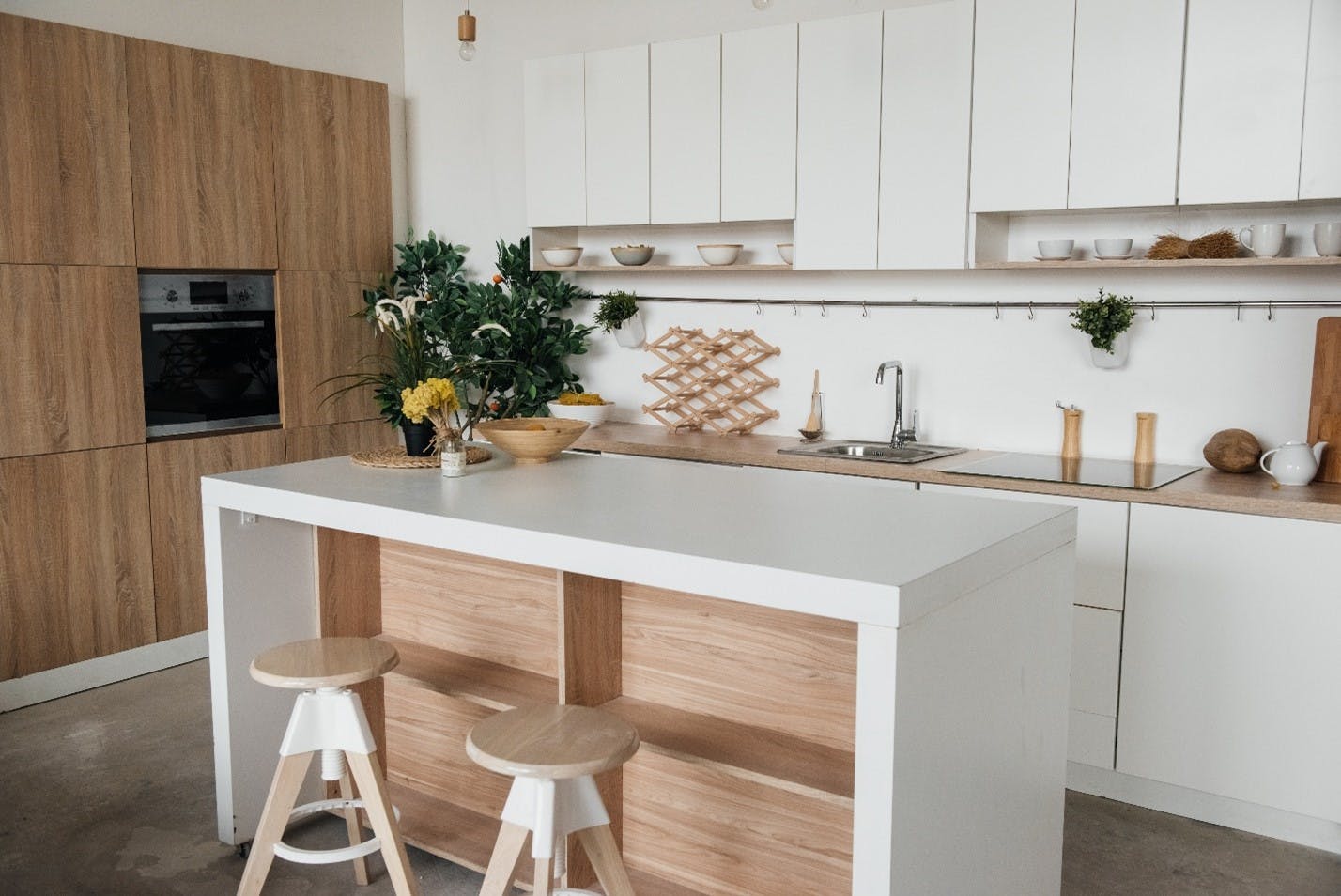
In Scandinavian design, worktops are pale, low-contrast, and matte or low-sheen, chosen to bounce light and stay visually quiet against simple cabinetry.
Quartz or engineered stone is very common for Scandi kitchens – warm whites, beiges, greiges, and soft greys with minimal veining, in matte or satin finishes. Thin profiles (12–20mm) feel more contemporary and reduce visual bulk on slim, minimal cabinets.
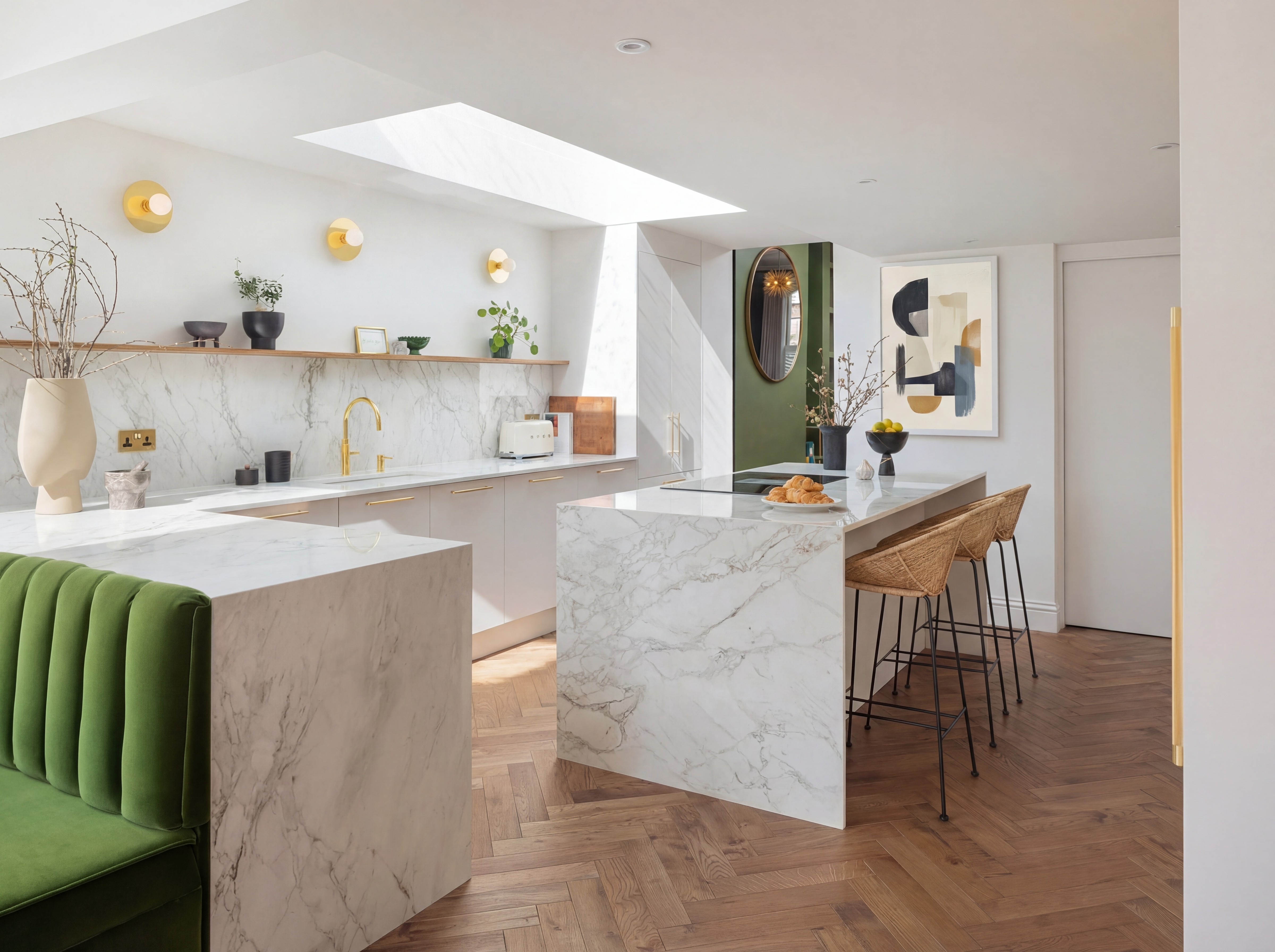
Natural stone (honed marble, quartzite, or light limestones) work if veining is subtle and finish is honed rather than polished, keeping surface soft and calm. These bring depth and real material character but need more sealing and maintenance.
Wood (light oak, ash, or birch tops) looks very authentically Nordic and pairs beautifully with white cabinets, but is best used in lower-risk zones (peninsulas, breakfast bars) due to water and stain sensitivity.
Colour, pattern, and edge detail:
Aim for low contrast between cabinets and worktops – warm white quartz on white or light-wood cabinets, or soft beige on off-white units – rather than stark black-and-white.
Quiet movement only; Scandi surfaces avoid dramatic marble veining or speckled granites because they add visual noise.
Straight or very slightly eased edges (20mm or less where structurally viable) give the cleanest line. Avoid big bullnoses or heavy ogees which feel traditional rather than Scandi.
Bathroom worktops:
Honed stone, composite or solid-surface, or stone-effect porcelain and HPL are popular because they allow slim, seamless tops with integrated basins and matte finishes. Plain white or very light stone tones on floating vanities, with warm wood or white fronts, keeps bathroom bright and spa-like while still easy to clean.
Thin tops (or ones visually read as thin from the front), under-mounted or integrated basins, and minimal upstands echo the same quiet, functional language as the kitchen.
Hardware
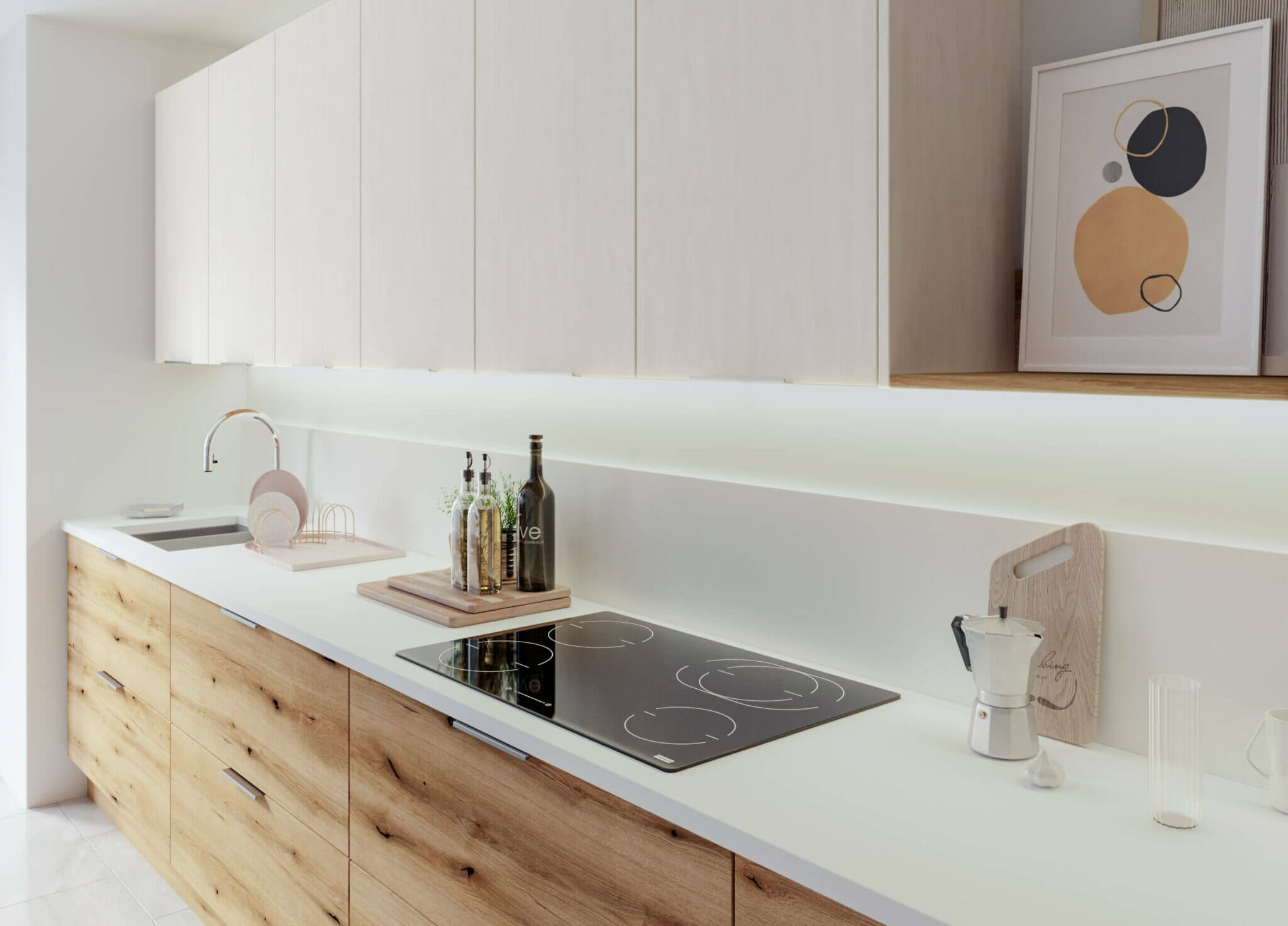
In Scandinavian design, hardware is minimal, tactile, and used very sparingly so it quietly supports the cabinetry instead of becoming a feature in its own right.
Forms:
Simple linear bar pulls, small round or oval knobs, or T-pulls. Avoid ornate shapes, backplates, or anything overly chunky.
Handleless options (true handleless rails, push-to-open, or finger pulls cut into door edge) are very typical and keep elevations visually calm. Handles are slim and proportional (often longer on wide drawers, smaller on doors) and lined up consistently to reinforce clean lines.
Finishes and colours:
Core finishes are matt black, brushed or satin stainless, and warm brushed or brass tones – the most common Scandi choices. Timber pulls or knobs (oak, beech) can tie into wood fronts or floors and add warmth while still feeling minimal. Matt or satin metals are preferred over shiny chrome, which feels harsher and less in keeping with the soft, hygge atmosphere.
Taps, showers, and bathroom hardware:
Simple monobloc kitchen taps and pared-back basin or shower mixers with clean cylindrical or very gently squared bodies. Matt black or brass (often brushed) and stainless or "steel look" are used to add quiet contrast to pale tiles and worktops.
Match or closely coordinate cabinet handles, tapware, shower frames, and small accessories so the room feels coherent rather than bitty.
Tiling
For Scandinavian kitchens and bathrooms, tiling stays light, simple, and textural, with pattern used very sparingly to add interest without visual clutter.
Kitchen tiling:
Warm whites, off-whites, pale greys, and beiges, usually in matte or satin rather than gloss so the surface feels soft and calm. Tile types include simple subway or metro tiles, small rectangles (50×150mm), or plain squares; occasional use of zellige-style or lightly textured tiles for handmade character.
Layout patterns
Straight stacked bond is very clean and reads modern Scandi; classic brick bond is fine but a touch more traditional; herringbone is used as an accent if you want movement (behind hob only, or one wall).
Grout
Low-contrast grout (off-white with white tiles, light grey with pale tiles) keeps the look seamless; darker grout is only used deliberately to outline the pattern, not by default.
Floor
Large-format stone or concrete-look porcelain in light neutrals reduces grout lines and visually enlarges small London kitchens.
Bathroom wall and floor tiling:
Walls and floors in soft white, ivory, beige, or light grey create the calm, spa-like Scandi base. A single herringbone or vertical subway pattern in the shower, or a different shape (like subtle hex) on the floor, is enough contrast without breaking serenity.
Bigger tiles on walls and floors (600×600mm, 600×1200mm) minimise grout and make small bathrooms feel more spacious, which is key in London properties. Pale wood-look porcelain on floors or one wall can give a Nordic timber feel where real wood isn't practical.
Colour Palette
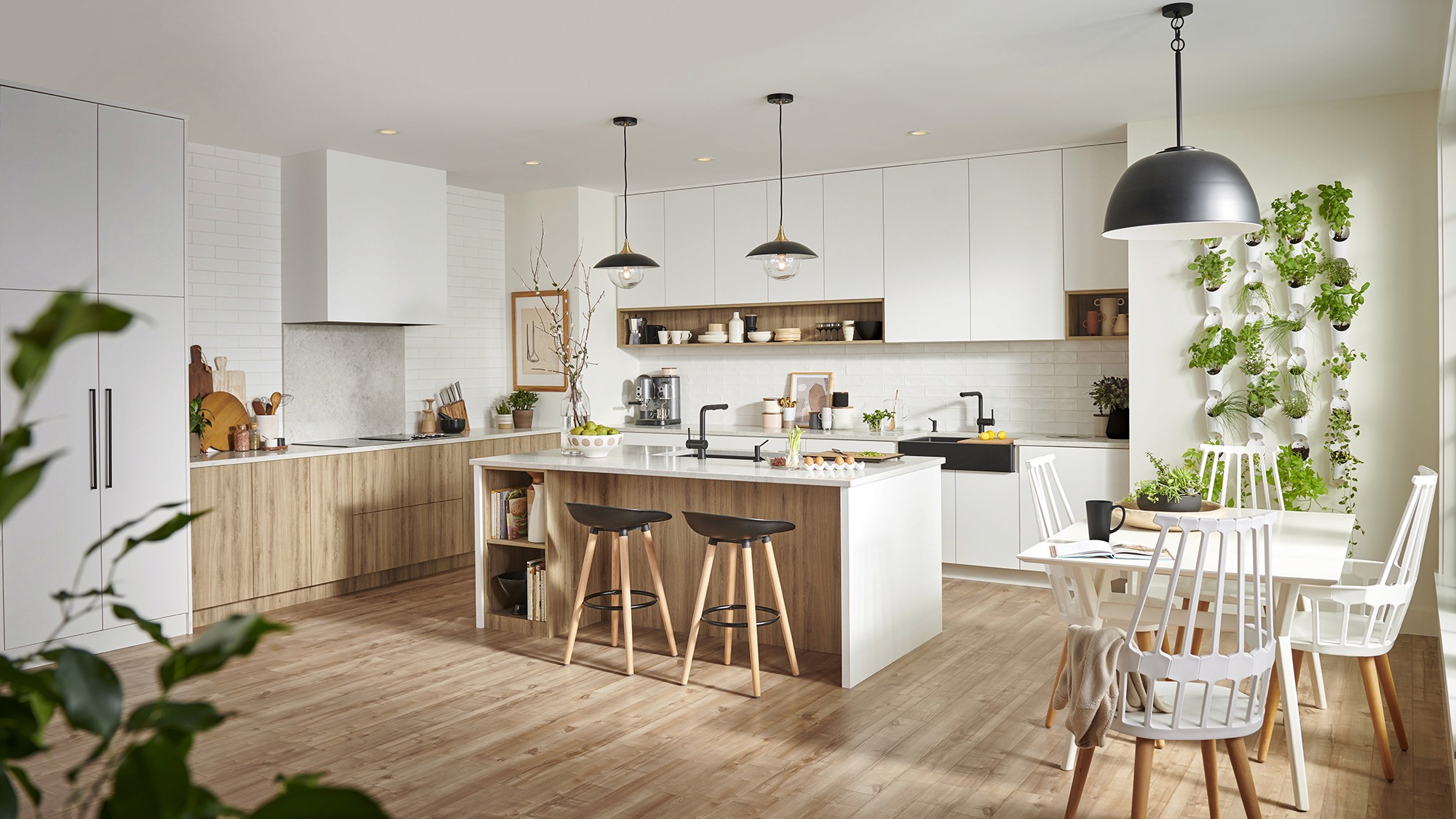
Scandinavian colour palettes are built around light, quiet neutrals with very controlled use of muted accent colours, so spaces feel bright, calm, and tied to nature.
Core Scandi Base Palette:
Whites and off-whites – Soft white, ivory, and cream are main wall colours, chosen to maximise light rather than feel stark
Warm neutrals – Taupe, sand, beige, greige, and stone tones add warmth and stop white schemes feeling clinical
Soft greys – Light to mid greys layer with white and beige for depth, often on cabinetry, furniture, or textiles
Nature-Inspired Accent Colours:
Muted greens and blues – Sage, eucalyptus, dusty olive, soft sky or grey-blue are classic Scandi accent colours, echoing forest and sea tones
Gentle pastels – Very soft blush, powder blue, or muted mint sometimes appear in modern Scandi schemes, always desaturated and used sparingly
Deeper accents (used carefully) – Forest green, navy, charcoal, or single unexpected red moment can be introduced in small doses (chair, rug, artwork)
Light-Dark Balance and Contrast:
Light-dominant – Ratio heavily weighted to light; most large surfaces (walls, ceilings, big cabinets) are white or very light neutral
Soft contrast – Instead of high-contrast black-and-white everywhere, Scandi schemes use subtle shifts (white → warm beige → light grey) for gradient effect
Black as accent – Black and very dark tones appear in thin lines (hardware, frames, lamp bases, chair legs) to sharpen scheme, not as large fields of colour
Typical Scandinavian Schemes:
Light and warm: Soft white walls + pale oak or birch cabinets + warm white or light beige quartz worktop + matt black hardware + sage green accent wall or textiles
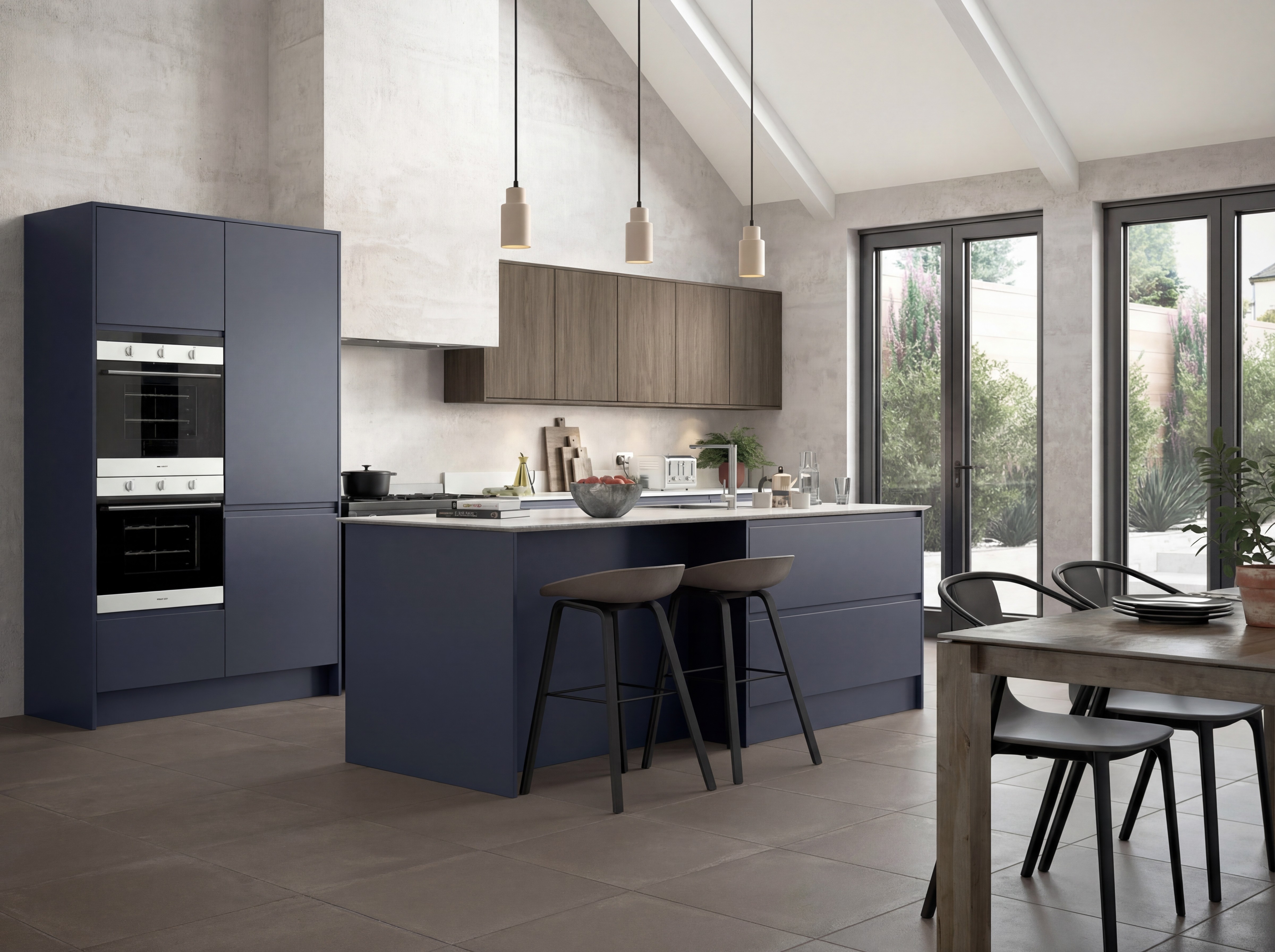
White with contrast: White cabinets + white walls + light grey or warm beige worktop + black or dark bronze hardware + soft blue or dusty olive island or back wall
Natural warmth: Light grey walls + white cabinets + light oak worktop and floors + brushed brass hardware + muted green or terracotta in textiles and accessories
Scandinavian Kitchens & Bathrooms We Design And Install
Kitchen
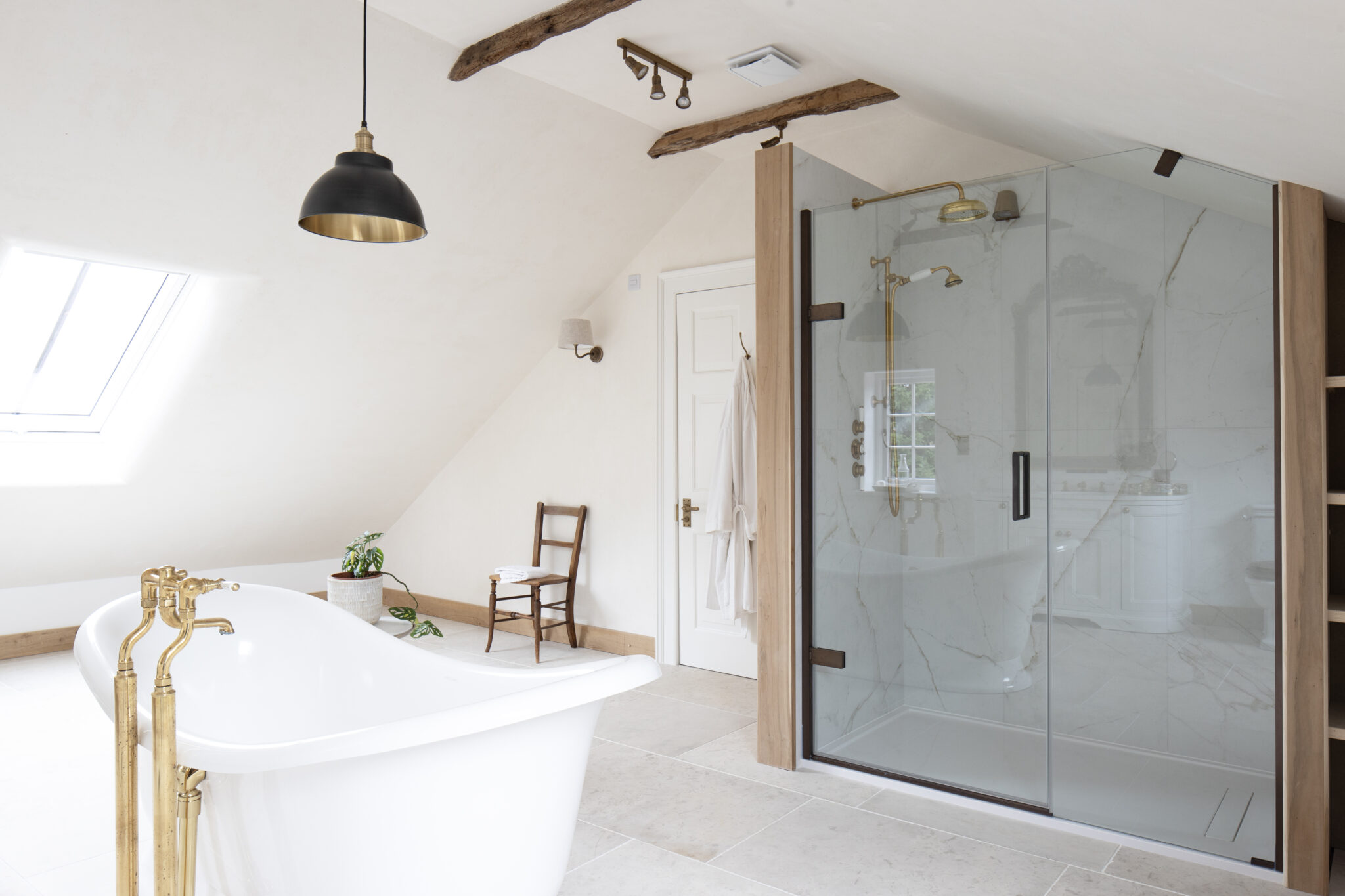
A Scandinavian kitchen works across London property types – Victorian terraces, modern conversions, new-builds. The aesthetic maximises light in compact footprints through pale materials and functional storage.
Light Wood with Pale Stone
Flat-panel or simple Shaker cabinetry in matte white, soft grey, light greige, or light oak or ash veneer with handleless system (push-to-open, J-pull) or minimal bar pulls in matt black, brushed steel, or warm brass. Light quartz, honed marble, or pale wood worktop (12–20mm profile) in warm white, light beige, soft grey. Simple white or off-white metro tiles in straight stack or brick bond with low-contrast grout, or short upstand in worktop material. Large-format stone or concrete-look porcelain floors in light neutrals. Integrated appliances panelled to match cabinetry. Pull-out larders, deep pan drawers, internal organisers. Slim LED under-cabinet lighting, simple pendant over island or table. Muted sage, dusty blue, or soft terracotta accent on island, back wall, or textiles.
Bathroom
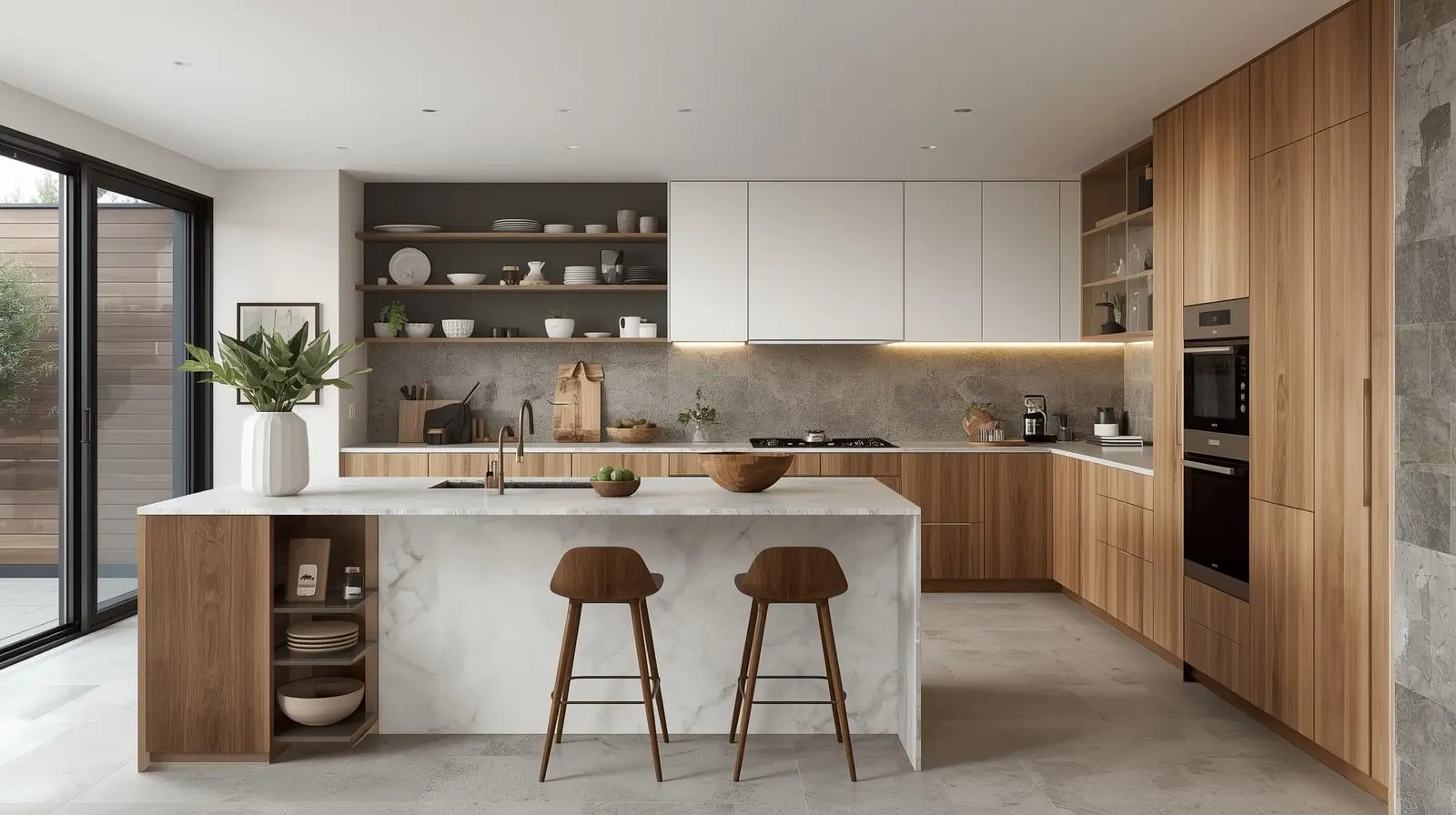
A Scandinavian bathroom uses pale tiles, floating vanities, wall-hung fixtures, and natural materials for bright, spa-like feel in tight London spaces.
White Tiles with Wood Accents
Large-format white, ivory, or light stone-effect porcelain tiles (600×600mm or 600×1200mm) on walls and floors with minimal grout, colour-matched. Walk-in level-access shower with frameless glass screen, simple white or light grey tiles, minimal hardware. Wall-hung WC, wall-hung floating vanity in light oak, ash, white, or soft grey with flat fronts, handleless or minimal pulls. Honed stone, composite, or porcelain vanity top with integrated or undermount basin. Matt black, brushed steel, or brushed brass taps and shower controls. Recessed mirror cabinet above vanity. Soft towels, timber stool or caddy, candles, plants for hygge warmth. Underfloor heating, layered lighting (downlights, wall lights).
Scandinavian Kitchen in London FAQs
What makes a kitchen Scandinavian style?
A Scandinavian kitchen in London is defined by light materials (pale woods like oak, ash, birch; white or soft grey cabinetry), minimal ornamentation, natural textures, and functional layouts that maximise brightness. Flat-panel or simple Shaker fronts, handleless systems or minimal hardware in matt black or brushed metals, pale stone or wood worktops (12–20mm profiles), simple white or off-white tiles, light wood floors.
What's the difference between Scandinavian and minimalist kitchens?
Scandinavian kitchens prioritise warmth and natural materials – light wood cabinetry, pale stone, soft whites, muted accent colours (sage, dusty blue), and hygge details (candles, plants, textiles). Minimalist kitchens focus on visual simplicity and reducing clutter – handleless systems, flat fronts, hidden storage, calm palettes.
Can Scandinavian design work in dark London properties?
Yes, Scandinavian design is specifically suited to low-light spaces. Pale materials (white or light grey cabinets, warm white or beige worktops, light oak floors), large-format light tiles, and minimal window treatments maximise available natural light. Where natural light is poor, layer artificial lighting (recessed spots, under-cabinet LEDs, simple pendants). The pale neutral palette specifically combats London's often dim conditions.
Are Scandinavian kitchens expensive?
Not necessarily. Scandinavian design can be achieved at multiple price points. The common approach is mixing high-street modular carcasses with custom fronts (birch ply, painted MDF) and investing more in flooring, worktops, and good lighting. The style prioritises simplicity and natural materials over expensive ornament.
How do you keep Scandinavian kitchens from feeling cold?
Use warm neutrals (warm white, cream, beige, greige) instead of stark white. Add natural materials (light oak or ash cabinetry or worktops, wood floors). Choose matte or satin finishes over high gloss. Include one soft accent colour (sage, dusty blue, soft terracotta) in textiles, paint, or cabinetry. Layer lighting with warm colour temperature (2700–3000K). Add hygge touches (wooden boards, ceramics, linen textiles, plants, candles, woven baskets, soft towels).