Styles /
minimalist
Minimalist Kitchen in London: Less, But Better
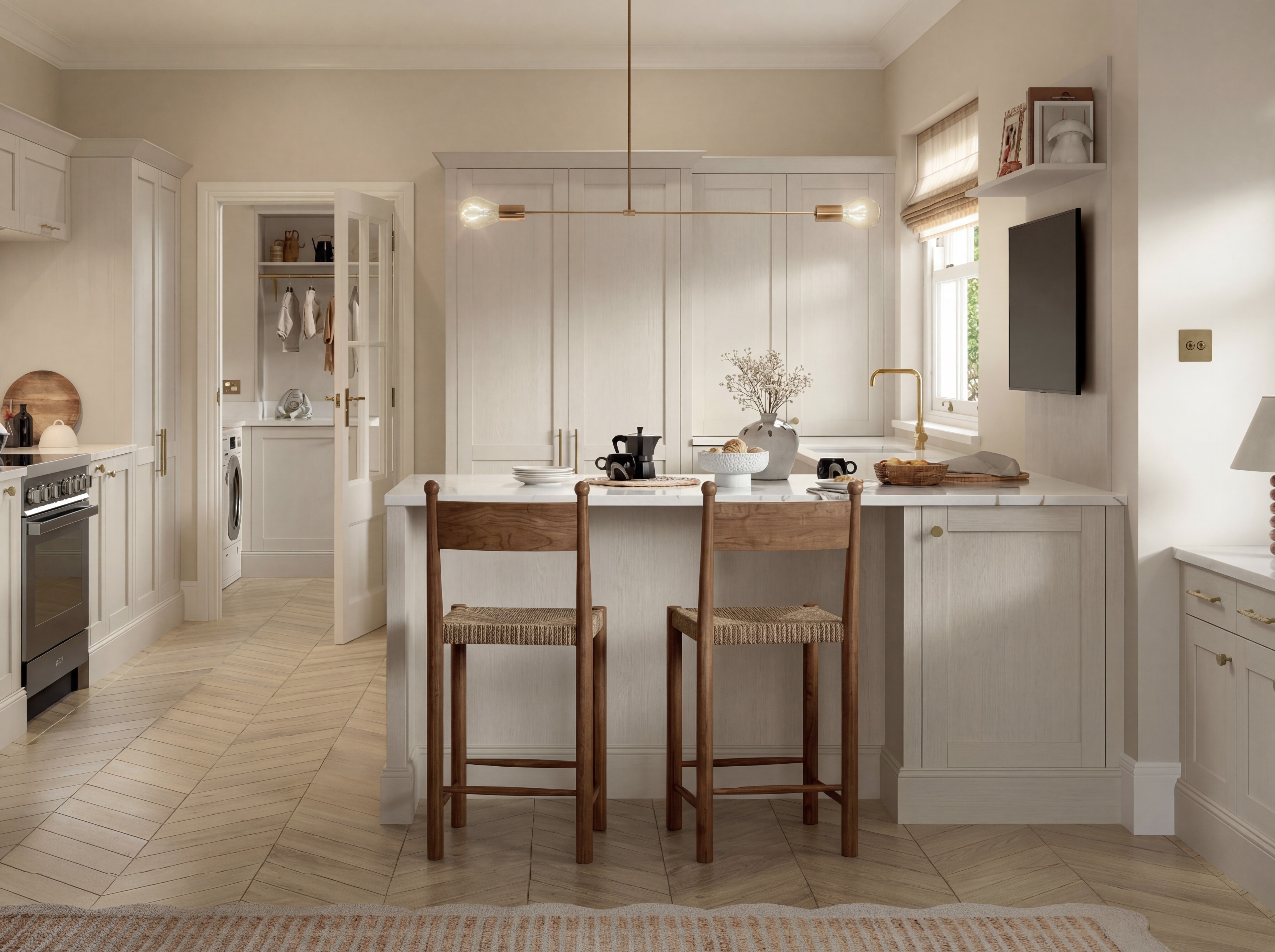
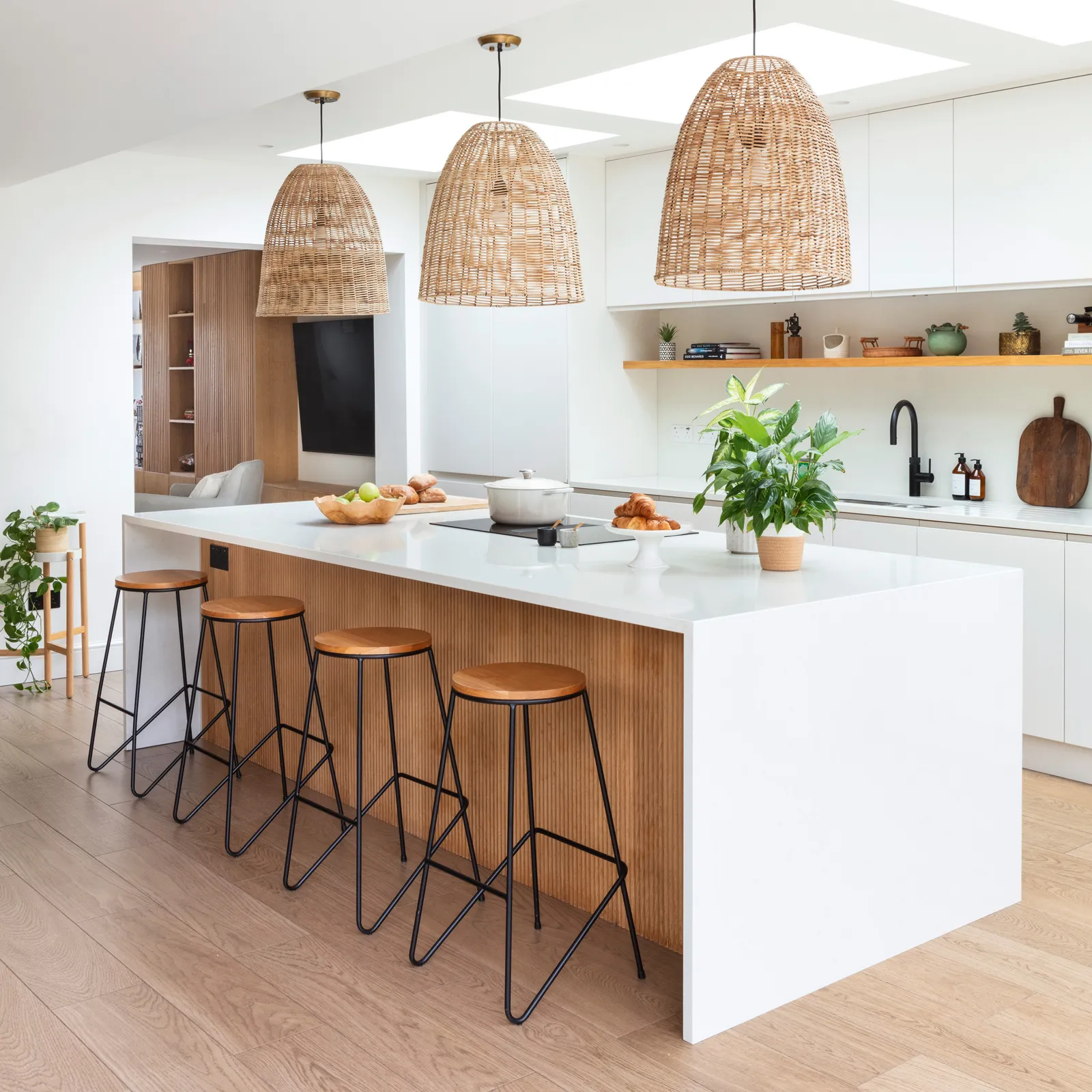
Flat-front cabinetry, integrated handles, warm neutrals, and surfaces kept clear. Minimalist design is about reducing visual clutter while maximising function.
What Defines A Minimalist Kitchen?
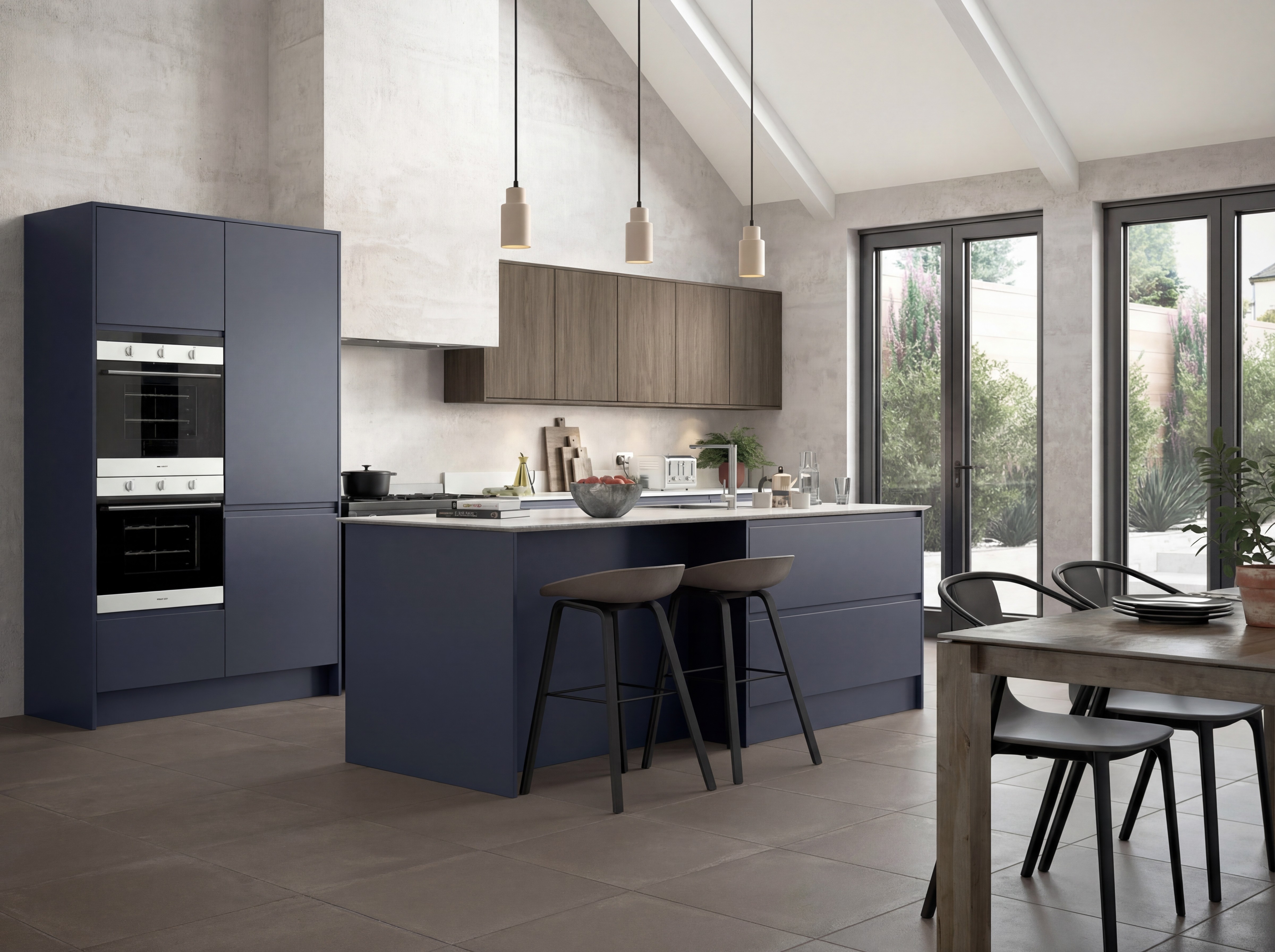
A minimalist kitchen is defined by clean lines, hidden storage, warm neutrals, and space-maximising layouts that work with compact London footprints.
Core principles:
Flat, uninterrupted surfaces – Slab doors, handleless or integrated grips, no visible hardware
Simple, calm palettes – Soft whites, beige, greige, taupe, muted greens or woods
Hidden functionality – Built-in bins, integrated appliances, recessed niches keep worktops clear
Strong horizontal and vertical lines – Aligned cabinet reveals, continuous plinths, stacked tiles emphasise order
Everything has a place – Deep drawers, pull-out larders, internal organisers support the rule that nothing stays on surfaces
Handleless cabinetry in matt finishes. Thin quartz or porcelain worktops with minimal pattern. Large-format tiles with matching grout. Integrated appliances, recessed storage, simple lighting.
These aren't about stark white rooms; they're about deliberate reduction, warm neutrals, and making small London spaces feel calm, organised, and larger than they are.
Materials That Define Minimalist Design
Cabintery
Minimalist cabinetry is about flat, uninterrupted planes, integrated access rather than decorative handles, and very deliberate proportions so cabinets read as architecture rather than furniture.
Flat or slab doors are the baseline
No frames, bevels, or panel routing, which keeps shadows and visual noise to a minimum.
Frameless carcasses (full-overlay or European-style) let doors sit very close together, creating tight gaps and a continuous surface. MDF is common for minimalist doors because it has a smooth, uniform surface ideal for sprayed matt, gloss, or laminate finishes without grain interruptions.
Handle solutions are key to minimalism
J-pull and recessed grips have a J-shaped groove routed into the top or side so you grip the door itself, not a separate handle. These give a clean front, a strong horizontal line across a run of units, and avoid protrusions.
True handleless where a metal or colour-matched rail is built into the cabinet behind the door to create an uninterrupted band line (often in aluminium or contrast colour) running along the top of base units. More expensive and demands specific carcass systems, but yields the calmest, most architectural look.
Push-to-open – doors and drawers open with concealed push-latch so fronts are completely blank. Fantastic on wall units or low-traffic panels; in heavy-use base units can lead to accidental openings and more fingerprints.
Proportions, lines, and layout:
Aim for aligned reveals – keep vertical gaps between doors consistent, line up drawer breaks across a run, align wall unit heights with tall cabinet tops. Fewer breaks in the grid (wide pan drawers instead of lots of narrow ones) make cabinetry calmer.
Use long, continuous runs where possible – an uninterrupted bank of tall units or full-length base run with single worktop looks more minimal than lots of short, stepped sections.
Materials and finishes:
Matt finishes (laminate, lacquer, or super-matt acrylic) are now favoured over gloss because they reduce reflections and keep forms quiet. Textured or wood-effect laminates can still be minimalist if the grain is straight, relatively subtle, and runs consistently (all vertical or all horizontal).
Stick to 1–2 front finishes across kitchen or bathroom cabinetry; introducing a third door colour or texture pushes the scheme away from minimalism.
Function and interior organisation:
Deep, wide drawers (rather than shelves) support minimalism by letting you store more at low level and keep worktops clear. Internal dividers, pull-out pantries, and corner mechanisms allow you to "hide the chaos" so doors can safely stay unadorned and closed.
Worktops
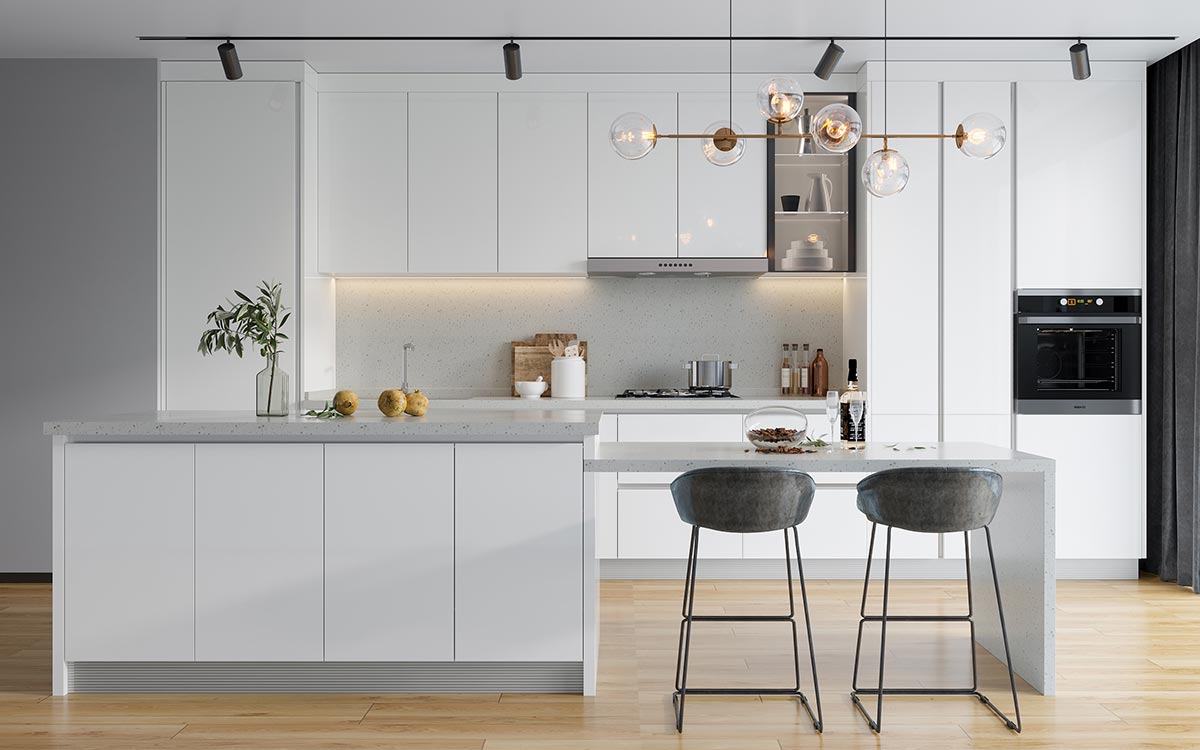
For minimalist kitchens in London, worktops should read as a thin, quiet, continuous plane that visually supports cabinetry rather than competing with it.
Quartz is the go-to minimalist option – durable, low-maintenance, available in solid colours or very subtle veining, can be fabricated thin with crisp edges.
Porcelain or sintered stone (like Dekton) is very slim, hard-wearing, heat and stain-resistant, ideal for super-streamlined contemporary kitchens.
Compact laminate – 12mm solid laminate that mimics stone or concrete – reads very minimal and is cost-effective versus stone while allowing undermount sinks.
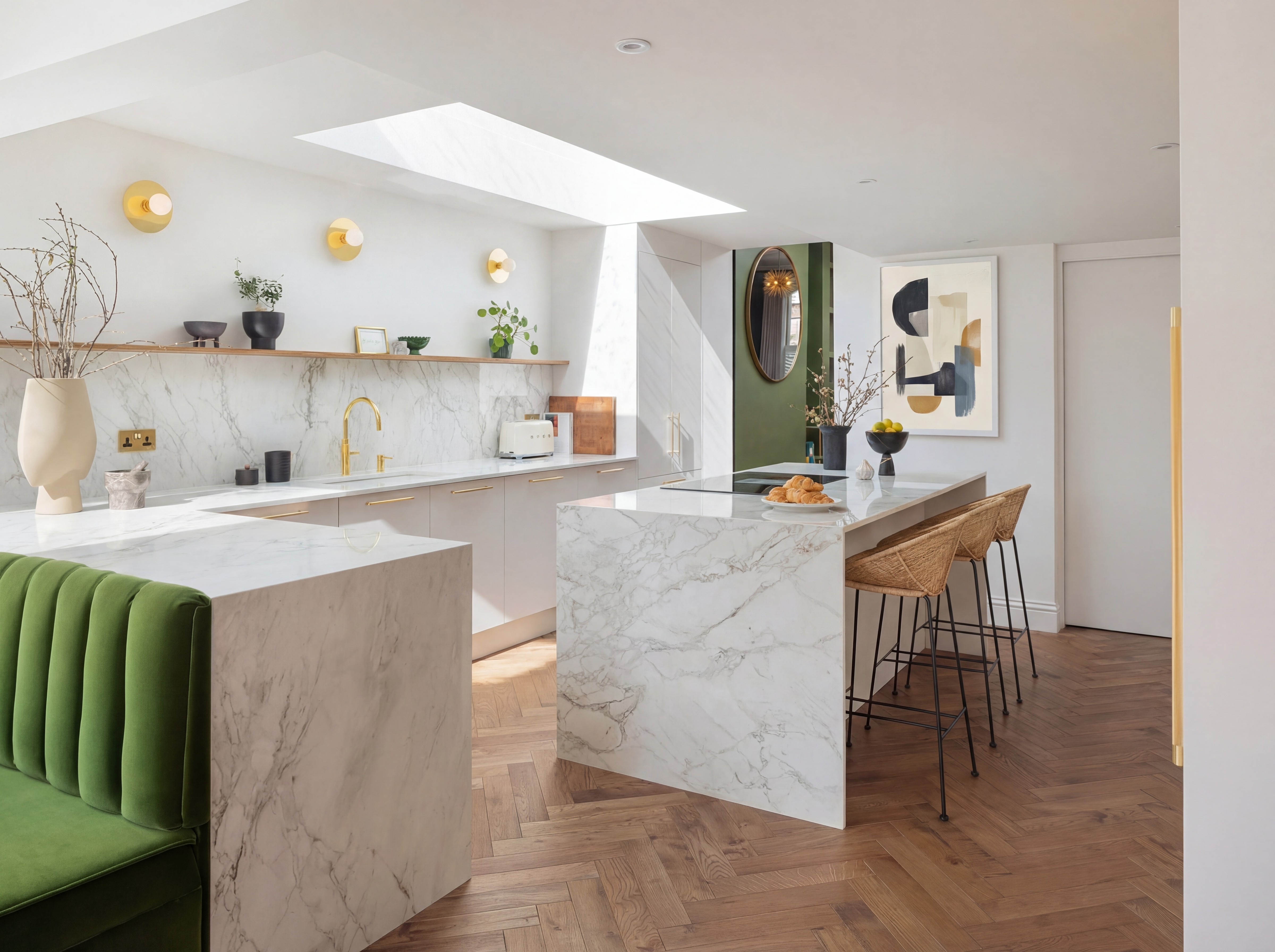
Natural stone (granite or matt marble) works in "warm minimalism" when you pick calm, low-contrast patterns and honed finishes rather than glossy, heavy-vein slabs.
Thickness and edges:
20mm slabs are now the standard minimalist look in UK kitchens, giving a slim, linear profile that pairs well with handleless cabinetry and small spaces. Ultra-thin 12mm porcelain or compact laminate can push the aesthetic further, reading almost like a sheet floating on cabinets.
Edges should be simple square or very slightly eased; ornate bevels, bullnoses, and chunky built-up edges fight the minimal language.
Colour and pattern:
Stick to light neutrals (white, off-white, light beige, pale grey) with either solid colour or very gentle marble-style veining to keep surfaces visually calm.
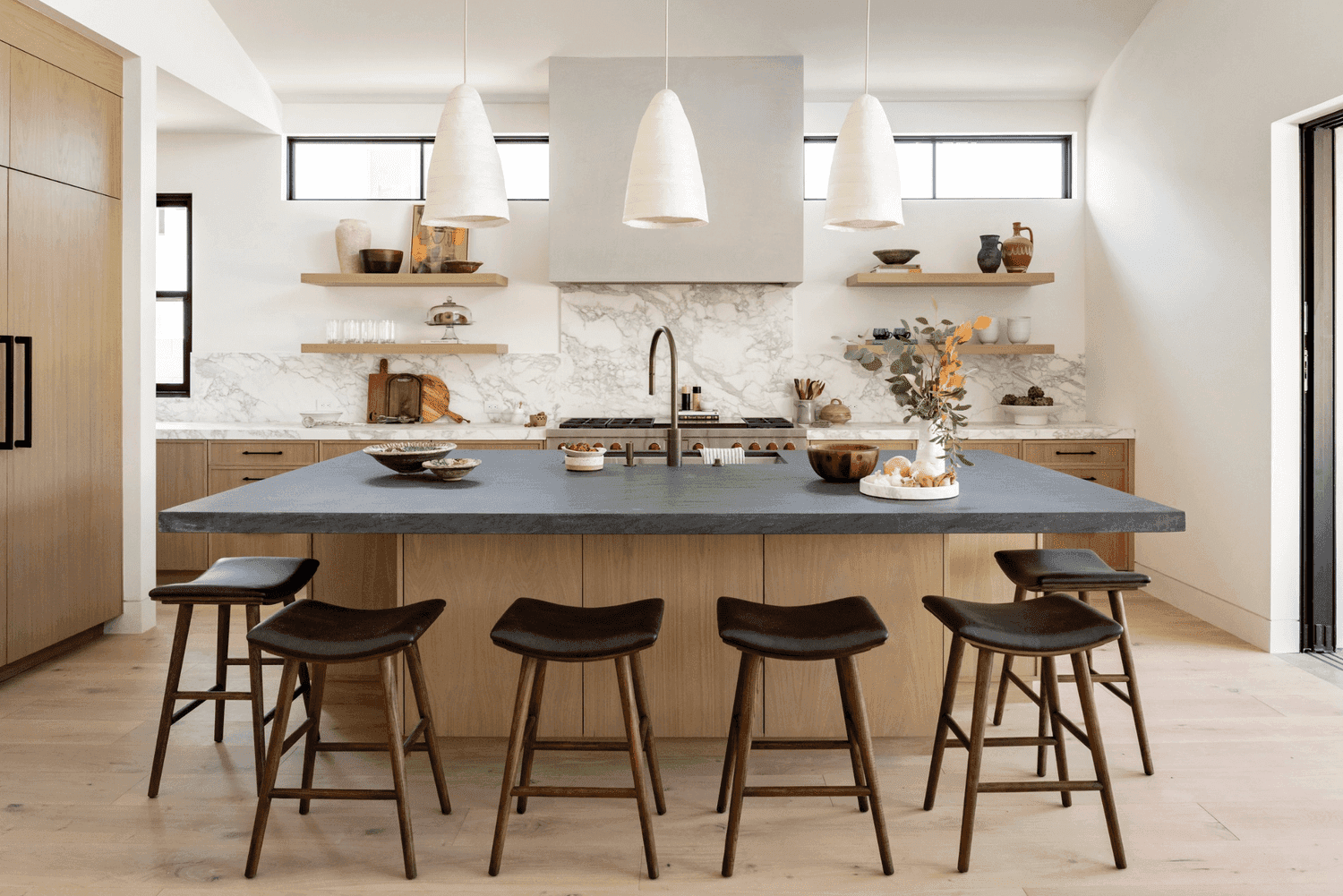
Dark worktops (charcoal, black) can be minimalist if they are matt and plain, but work best against very light, clean cabinets and good lighting.
Avoid busy speckles and high-contrast patterns – they add noise and make small London kitchens feel visually cluttered.
Hardware
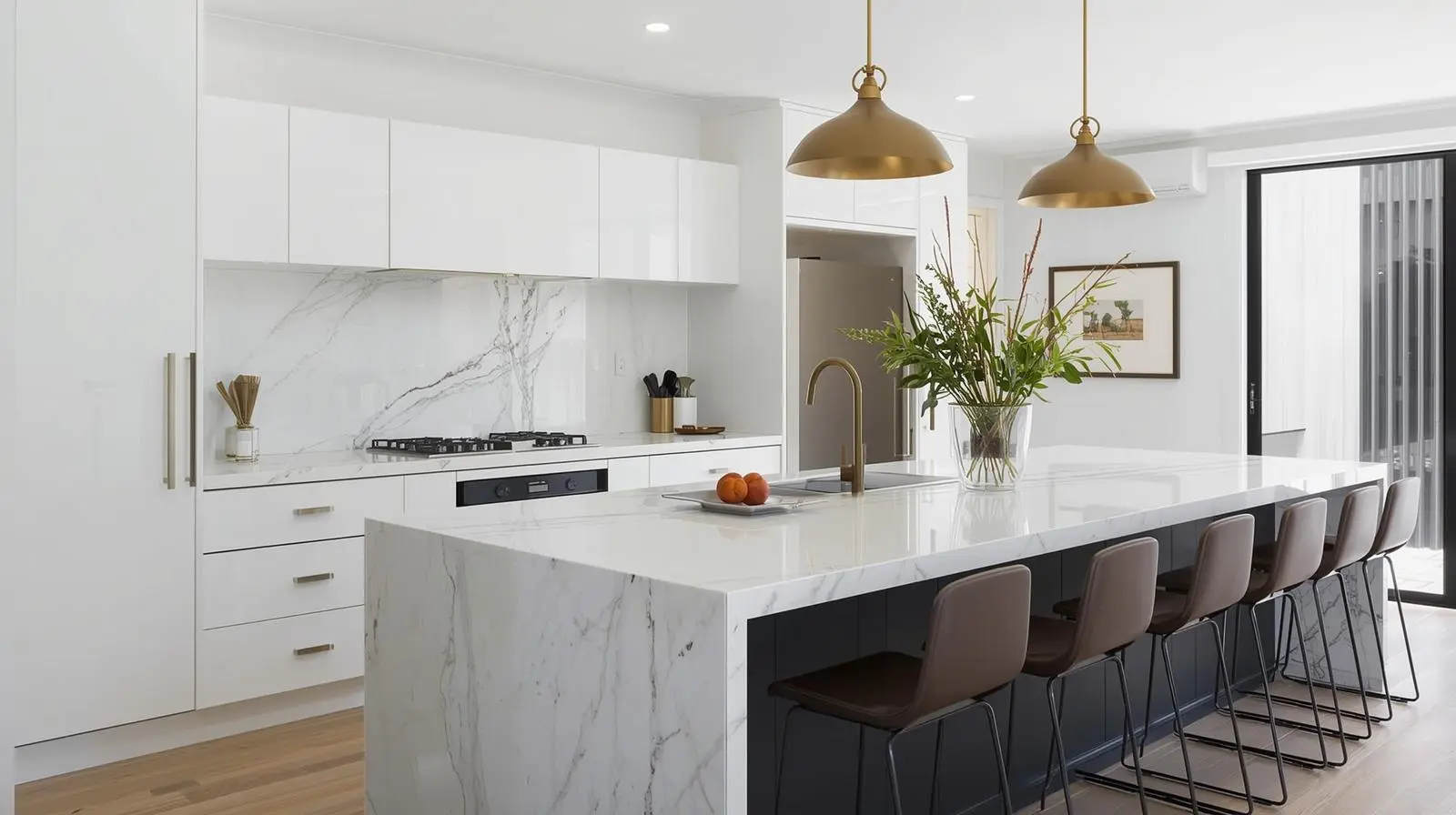
In a minimalist kitchen or bathroom, hardware should almost disappear – simple geometry, few lines, and 1–2 durable finishes repeated consistently.
Do you even need visible hardware?
Handleless options (true handleless, J-pull, or edge pulls) give the cleanest look, using integrated grips instead of separate handles. If you add hardware, keep it deliberately understated so it reads as a fine detail on top of an already minimal cabinet grid.
Shapes that suit minimalism:
Slim bar or T-bar pulls – straight cylinders or flat bars with minimal rosettes, used horizontally on drawers and vertically on doors.
Simple D-pulls – thin, rectangular or gently curved pulls with sharp edges and no ornament.
Small round or cylindrical knobs – clean discs or cylinders work well on smaller doors where you want maximum simplicity.
Think: one very simple shape repeated everywhere, rather than mixing cups, knobs, and ornate pulls.
Finishes that work:
Core minimalist finishes are matt black, brushed stainless or steel, and brushed nickel – they read quiet and contemporary and are among the most durable. For warm minimalism, brushed brass or champagne bronze bring warmth but still feel refined when in brushed or matt texture rather than shiny.
Consistency rule:
Stick to one, max two finishes across all cabinet hardware, plumbing, and door handles; repeat each finish several times so it feels intentional.
Placement and visual order:
Align handles with the cabinet grid – same height on all doors in a run, same orientation (all horizontal on drawers, all vertical on doors).
On wide pan drawers, use longer pulls so proportions look balanced.
On narrow doors, keep handles shorter or use knobs so they don't dominate.
Tiling
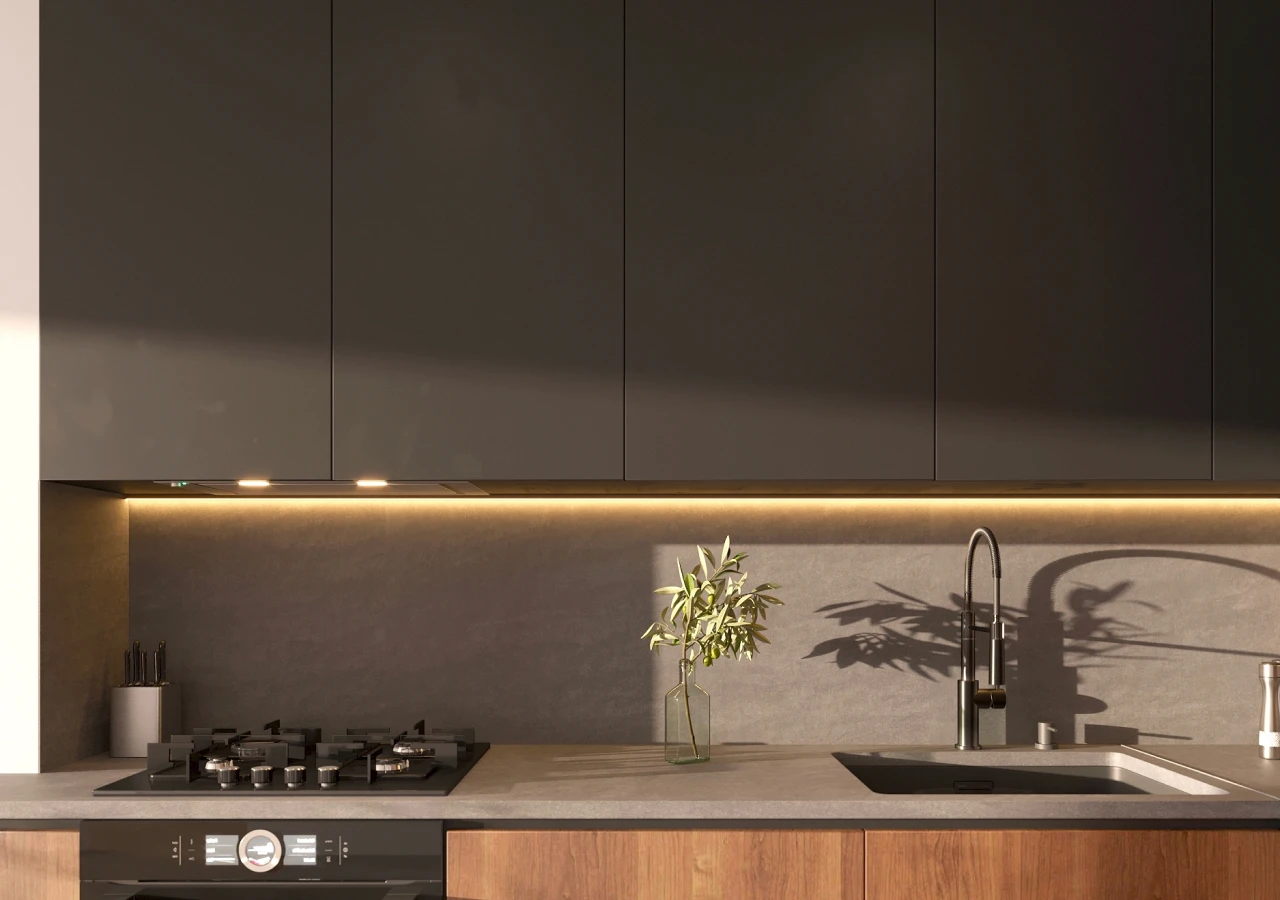
In minimalist kitchens and bathrooms, tiling should feel simple, calm, and continuous, with grout lines and pattern kept under tight control.
Kitchen tiling:
Splashback approach often uses either a short upstand plus painted wall, a simple stacked or subway tile, or a full slab in the same material as the worktop for maximum continuity.
Patterns that work include straight stacked rectangles, classic subway in simple running bond, or very gentle geometric patterns (hexagon, small square) in light tones.
Colour and finish are typically whites, beiges, greys and other soft neutrals, usually matt or soft satin. Floors use large-format porcelain or ceramic (60×60cm or planks) in stone, concrete, or wood-effect to keep the floor visually calm and easy to clean.
Bathroom wall and floor tiling:
In small London bathrooms, large formats (around 30–60cm) on walls and floors reduce grout lines and make the room feel bigger. Simple stacked or brick-bond layouts keep things calm; you can introduce a single feature area (shower wall or floor) with slightly different tile or pattern.
Grout, edges, and transitions:
Match grout closely to the tile for a minimal look; strong contrast grout (dark on white subway) reads much more graphic and less minimalist. Line tile joints up with key elements (edge of vanity, shower screen, window reveals) and avoid small sliver cuts at edges.
Colour Palette
For minimalist kitchens and bathrooms, think "quiet, limited, layered" rather than "all white" – 1 main neutral, 1 supporting neutral, and at most 1–2 soft accents.
Core Neutrals (the base):
Whites and off-whites – Soft white, ivory, cloud and other warm whites keep spaces bright but less clinical
Greige, beige, cream – Warm pale taupes and creams feel calm, timeless, and forgiving of wear
Pale greys – Light, slightly warm greys work well with stainless appliances and black or steel hardware
Supporting Tones and Accents:
Soft greens and blues – Sage, olive, dusty blue, muted teal can still be minimalist if grayed-down, used in large blocks (cabinets), and balanced with lots of neutral
Earthy hues – Terracotta, muted coral, warm beige in small ways (feature wall, floor tile, or island) to add warmth
Dark anchors – Charcoal, deep navy, or black work best as 10–30% accent (island, hardware, slim frames) rather than dominating every surface
Typical Minimalist Schemes:
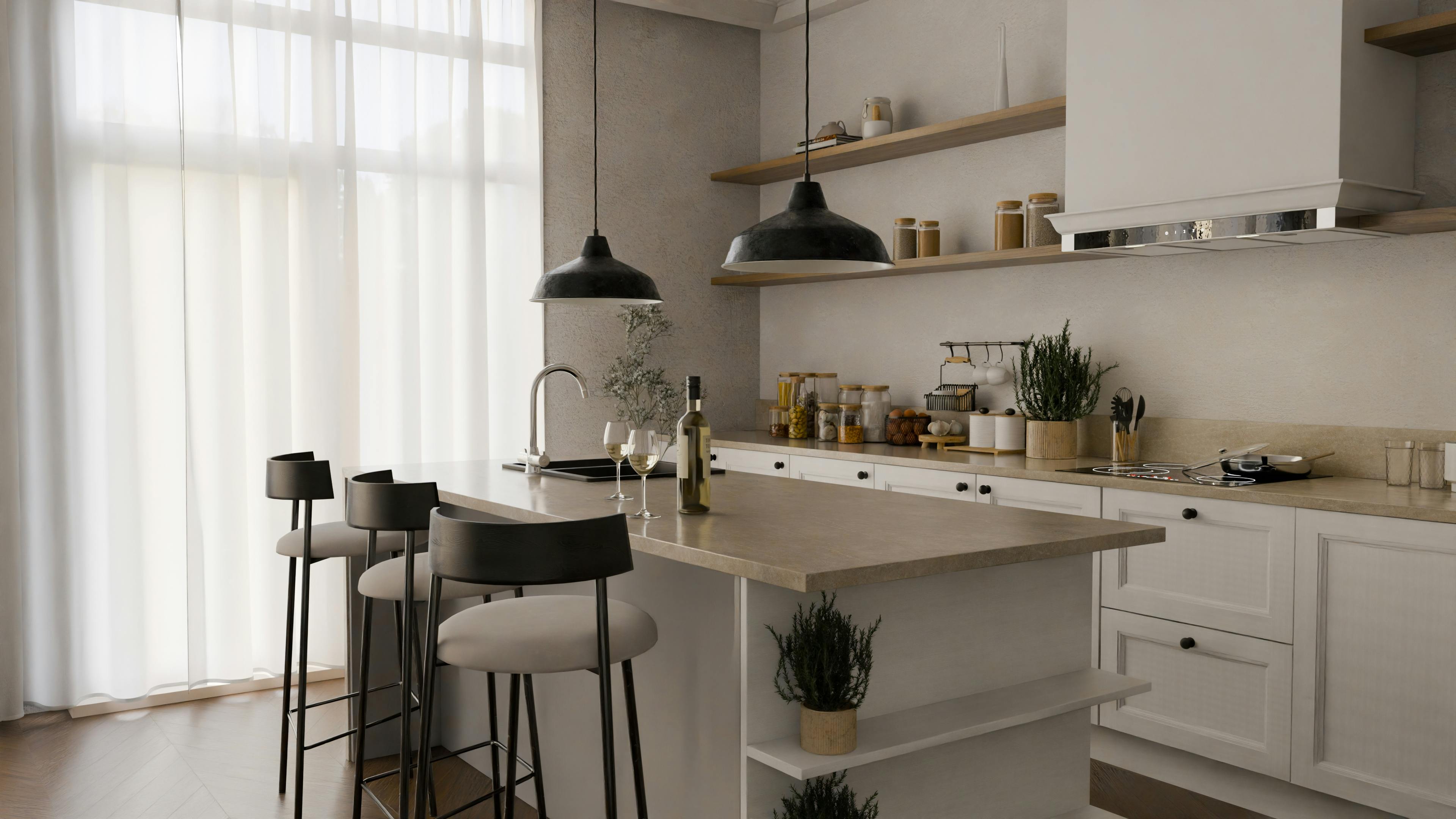
Calm warm neutral: Warm white walls + cream or greige cabinets + light beige stone-look worktop + very soft beige tiles + brushed brass or black details
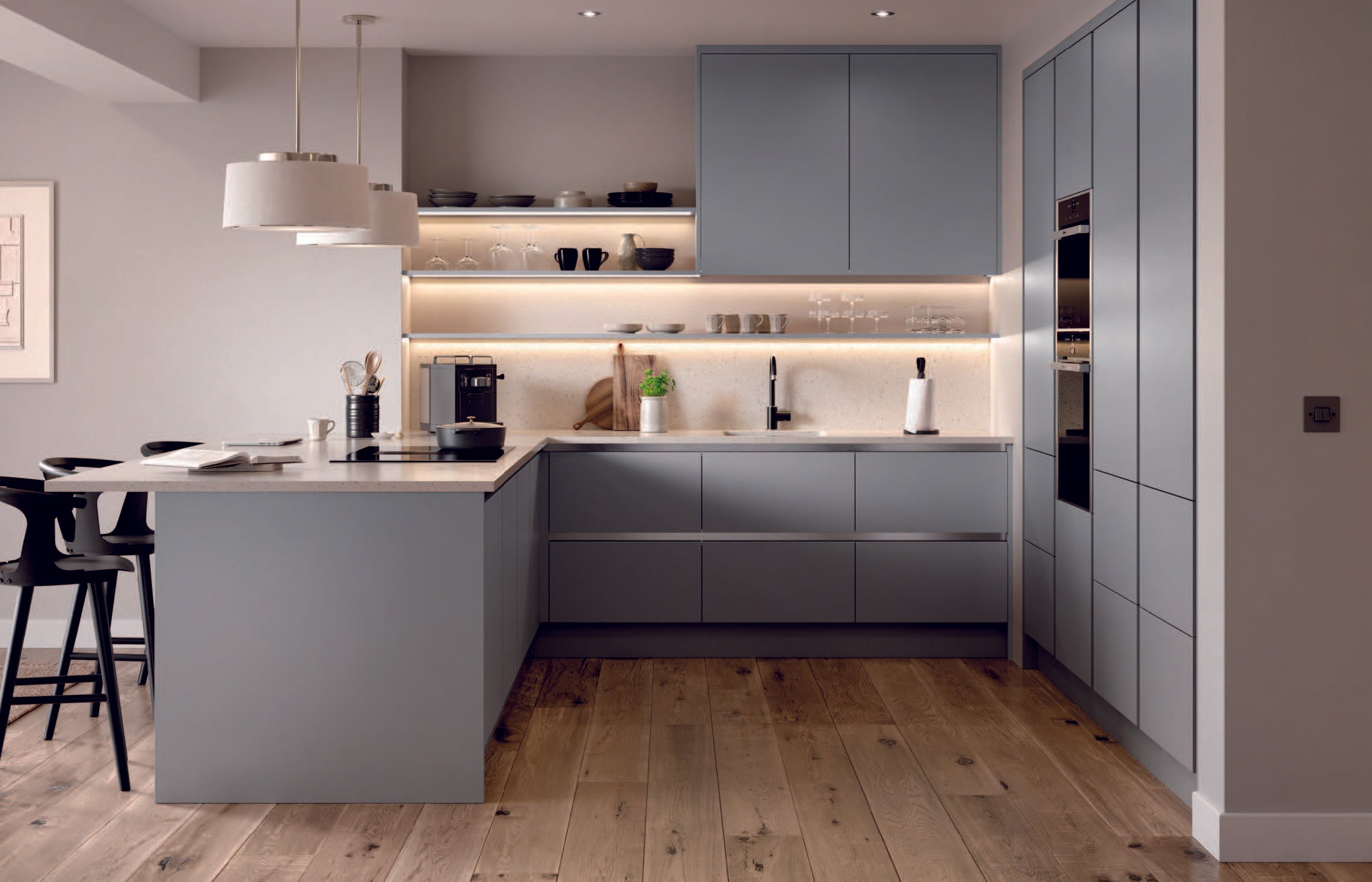
Cool minimal: Soft grey cabinets + white walls + pale grey worktop + white tiles + black hardware and dark accents for definition
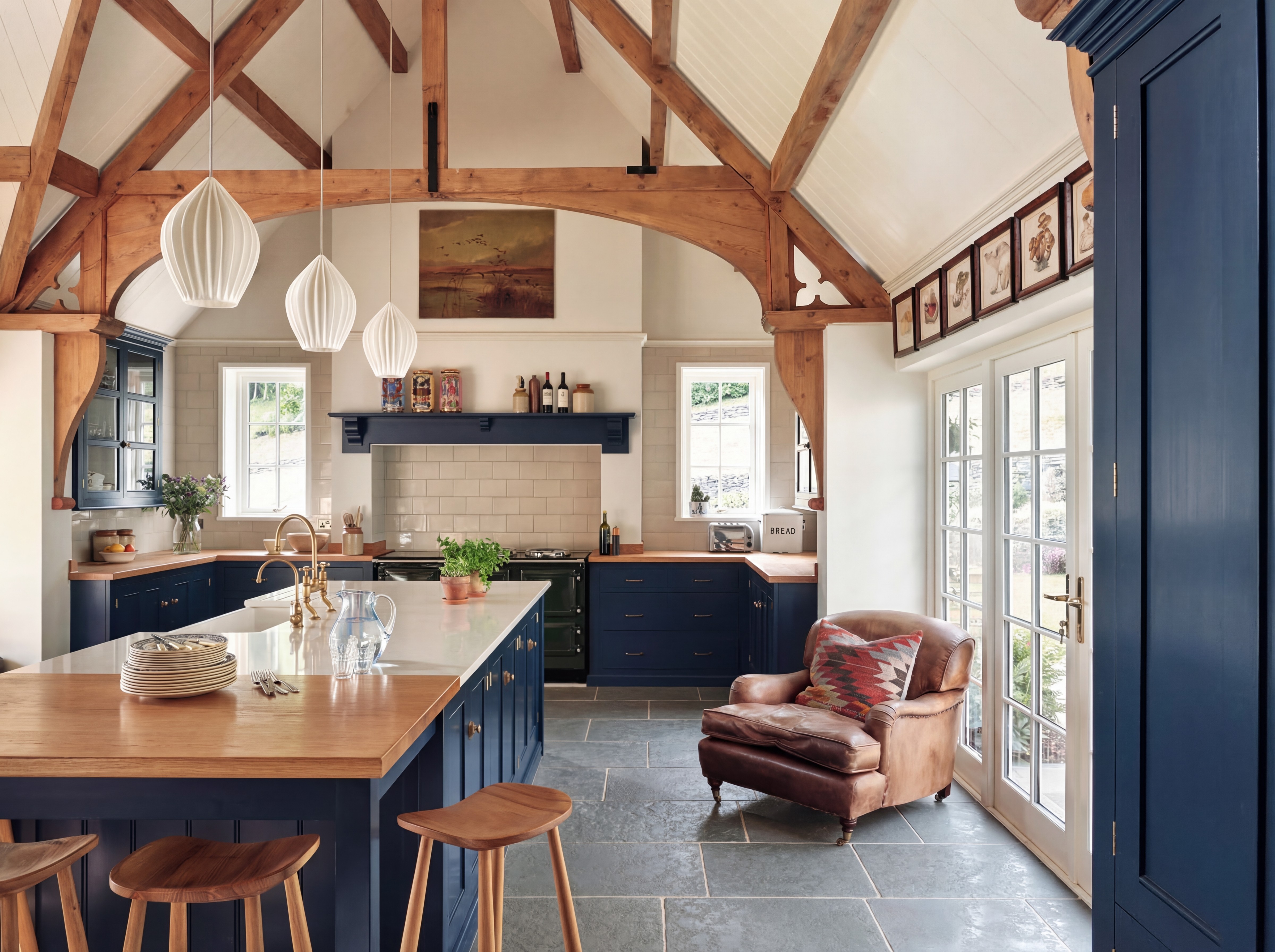
Nature-led: White walls + sage or olive cabinets + warm oak or beige stone + off-white tiles + brass or bronze fixtures
Minimalist Kitchens & Bathrooms We Design And Install
Kitchen
A minimalist kitchen works across London property types – compact flats, Victorian conversions, new-builds. The aesthetic thrives in small spaces through smart storage and visual calm.
Handleless with Warm Neutrals
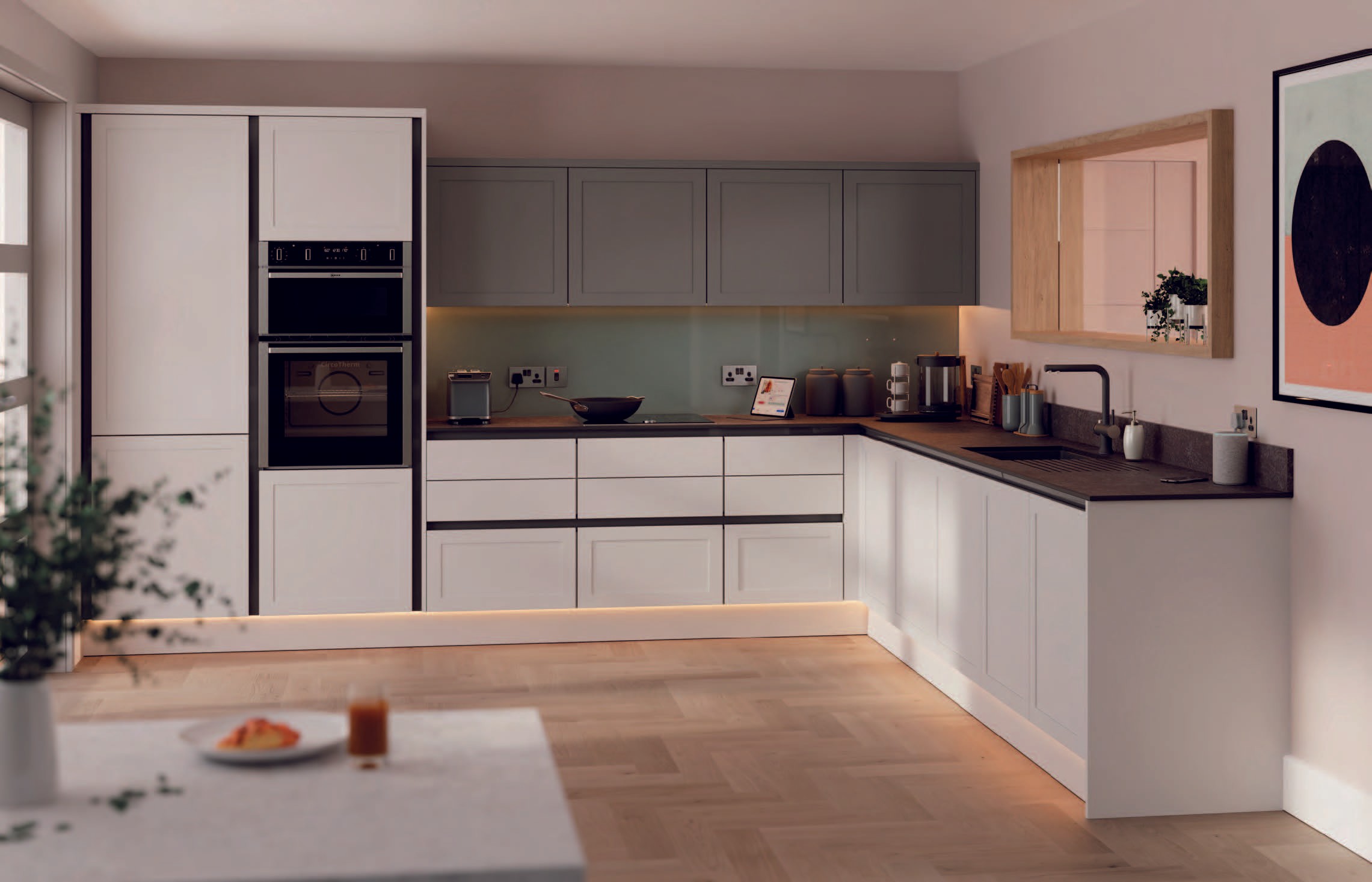
Flat-front handleless cabinetry in warm white, cream, greige, or soft grey with J-pull or true handleless system. Integrated appliances behind matching fronts. Thin 20mm quartz or porcelain worktop in light, low-pattern finish with undermount sink and routed drainer grooves. Short upstand or full-height slab splashback in same material, or simple stacked white or beige tiles with matching grout. Large-format stone-effect or wood-effect porcelain floors in muted tones. Floor-to-ceiling tall units, pull-out larders, deep pan drawers with internal organisers. Recessed ceiling spots, under-cabinet LEDs, simple linear pendant over island or table. Matt black, brushed steel, or brushed brass minimal hardware and taps where needed.
Bathroom
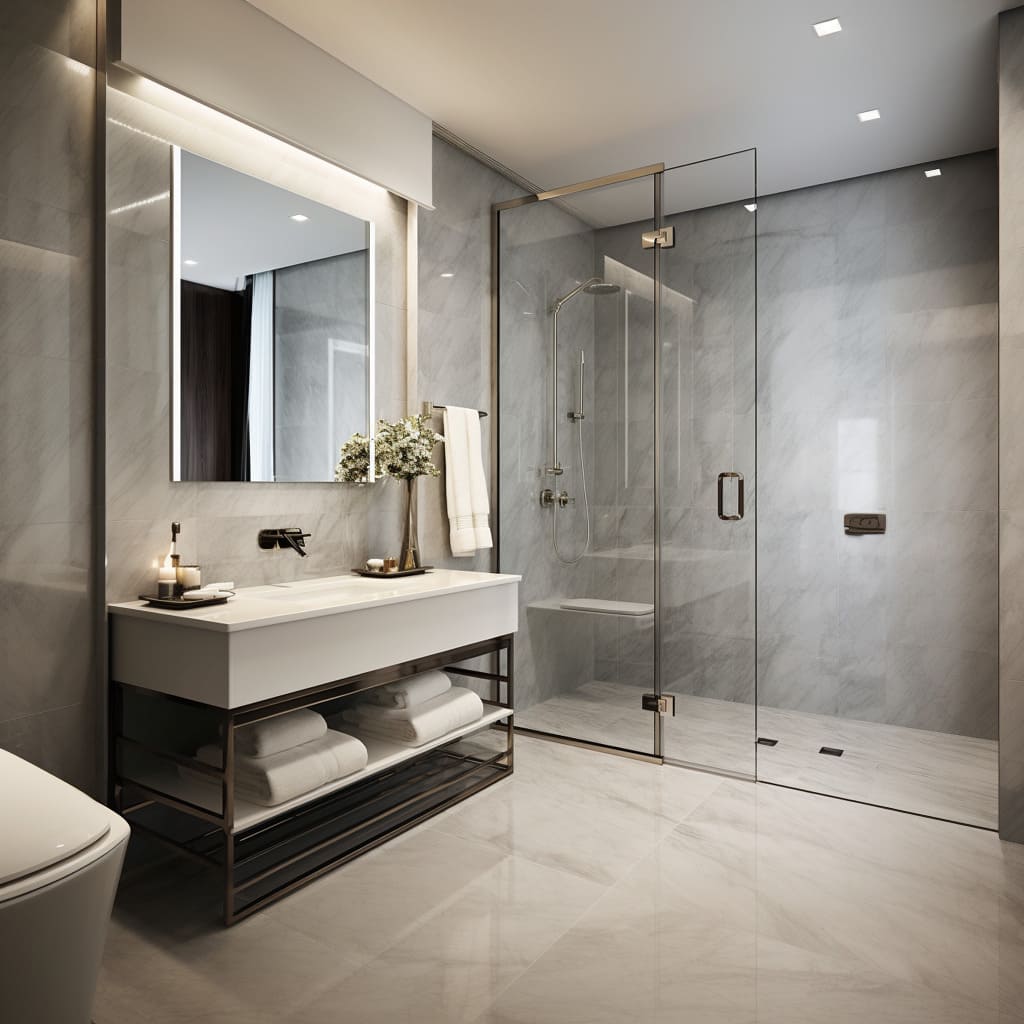
A minimalist bathroom uses wall-hung fixtures, large-format tiles, recessed storage, and frameless glass to create calm, spacious feel in tight London footprints.
Walk-In with Seamless Surfaces
Large-format matt porcelain tiles in white, beige, light grey, or greige on walls and floors with matching grout for continuous surface. Walk-in shower or wet room with frameless glass screen, minimal hardware, level-access tray. Wall-hung WC and wall-hung vanity with integrated basin or undermount basin in handleless or minimal-grip fronts. Recessed storage niches in shower and above WC. Mirrored cabinet above vanity for concealed storage. Matt black, brushed steel, or brushed brass taps and shower controls. Strong mirror lighting, recessed spots, layered task and ambient lighting.
Minimalist Kitchen in London FAQs
What makes a kitchen minimalist?
A minimalist kitchen in London is defined by flat-front handleless cabinetry, clean lines, hidden storage, and warm neutral palettes. Everything has a place off the worktop – integrated appliances, pull-out larders, deep drawers with internal organisers. Simple materials (matt finishes, thin quartz worktops, large-format tiles with matching grout) create visual calm. It's about deliberate reduction and making small spaces feel larger and more organised.
Is minimalist design the same as Japanese design?
They overlap visually but aren't the same. Japanese design is a culturally rooted aesthetic tied to Zen, wabi-sabi (beauty in imperfection), and concepts like ma (meaningful empty space) – using natural materials, accepting ageing and irregularity, and connecting to nature. Minimalism is a broader Western movement focused on "less is more" – clean geometry, precision, sometimes gallery-like austere spaces.
Can minimalist kitchens work in small London flats?
Yes, minimalist design thrives in small spaces. Handleless cabinetry, floor-to-ceiling storage, integrated appliances, and thin worktops maximise every centimetre. Large-format tiles, matching grout, and warm neutral palettes make rooms feel larger and calmer. Hidden storage (pull-out larders, deep drawers, corner solutions) means surfaces stay clear while still being practical. The visual simplicity makes compact London kitchens feel more spacious and less cluttered.
Are handleless kitchens more expensive?
Not necessarily. J-pull and recessed grip systems are widely available at multiple price points in the UK. True handleless (with integrated aluminium rails) costs more and requires specific carcass systems, but well-executed J-pull or push-to-open in quality MDF with matt finishes can create authentic minimalist aesthetics without premium pricing. Cost depends on specification, materials, and finish quality rather than the handleless feature itself.
How do you keep minimalist kitchens warm?
Use warm neutrals (cream, greige, beige, warm white) instead of stark white or cold grey. Add natural materials (wood-effect cabinets or floors, honed stone worktops). Choose matt finishes over gloss. Include one soft accent colour (sage, olive, dusty blue) in large blocks. Layer lighting (recessed spots, under-cabinet LEDs, simple pendants) to create depth.