Styles /
modern
Modern Kitchens in London: Clean Lines, Warm Minimalism
Sleek cabinetry, natural materials, and hidden storage that works for how you live. Modern design is about calm, functional spaces built around warm neutrals, stone, and subtle texture.
What Defines A Modern Kitchen?
A modern kitchen is built around clean lines, integrated appliances, and materials that feel real – natural wood, stone, textured surfaces that create calm, functional spaces.
Core principles:
Clean lines and minimal detailing – Handleless runs, slab fronts, slim Shaker with thin rails
Integrated appliances – Hidden behind matching cabinet fronts, seamless transitions
Natural materials and texture – Wood, stone-look porcelain, fluted details without busy pattern
Warm, earthy palettes – Greige, taupe, sage, olive replacing cold greys
Smart storage and zoning – Tall walls, pocket doors, islands that define open-plan spaces
Slab cabinetry or slim Shaker. Stone-look quartz or porcelain worktops. Brass or black hardware. Large-format tiling with minimal grout lines. These aren't trends that date quickly. They're foundations of modern design that work in Victorian terraces, new-build flats, and conversions across London.
Materials That Define Modern Design
Cabintery
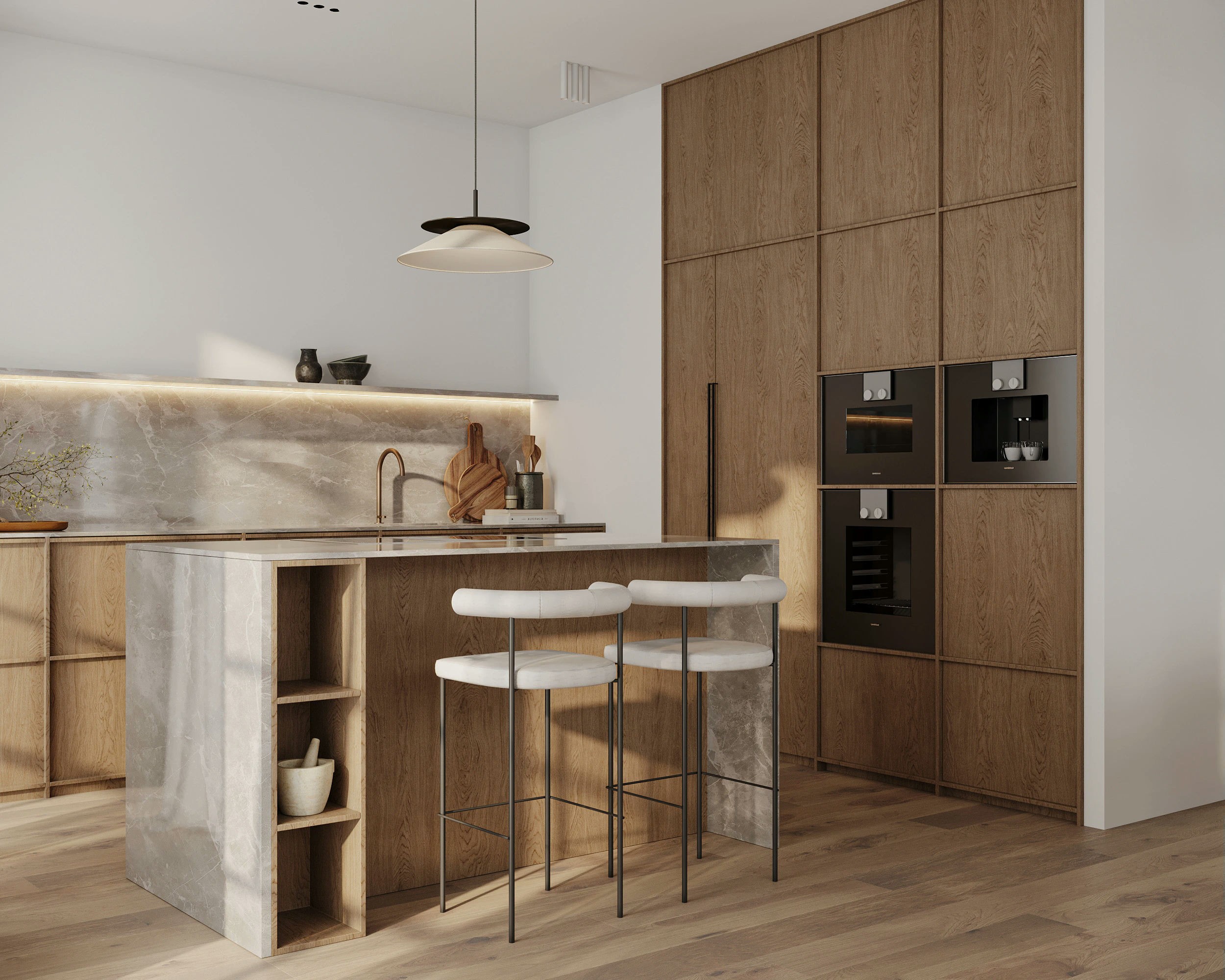
Modern cabinetry is about proportion, clean lines, and construction quality over decorative detail.
Slab fronts
The most minimal option – completely flat doors and drawer fronts in matte lacquer, wood veneer, or high-quality laminate. They work especially well on tall units and islands where you want visual calm. Slab fronts pair with handleless systems (integrated aluminium rails or J-pull grooves) to keep surfaces uninterrupted.
Slim Shaker
Brings classic proportions into modern kitchens with much thinner rails and stiles (30–50mm instead of traditional 70–80mm). This profile reads lighter and more contemporary while still offering the warmth and familiarity of frame-and-panel construction.
Slim Shaker works particularly well in London period properties where you want modern function without losing character.
Fluted and ribbed details
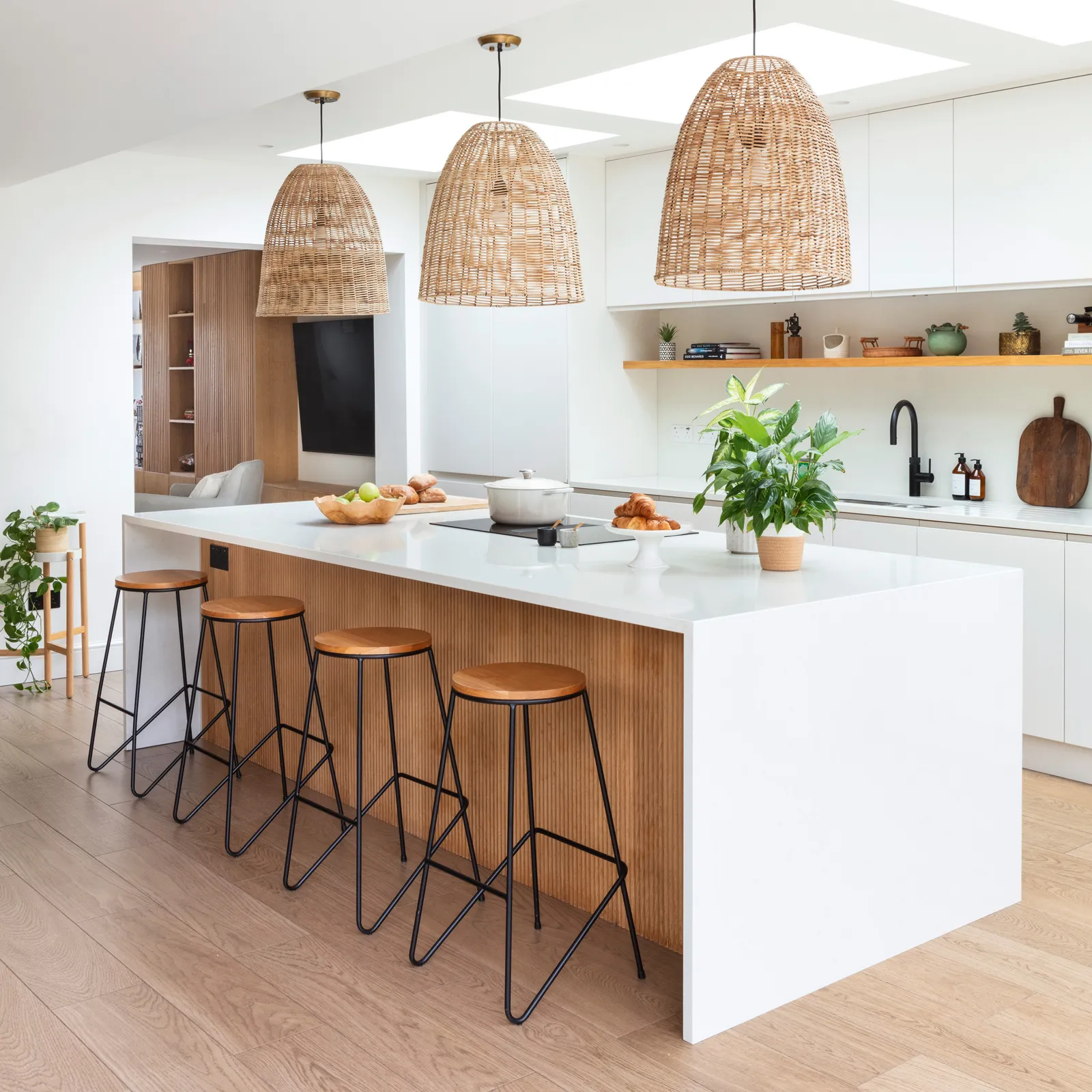
Adds texture to otherwise plain fronts. Vertical grooves in timber, MDF, or glass are used on island fronts, feature doors, or vanity units to catch light and create visual interest without busy patterns. This detail works across both slab and Shaker styles.
Mixed cabinet styles
Common in modern London kitchens – slab tall units with slim Shaker base cabinets, or handleless perimeter runs with a fluted island front. This layering prevents the space feeling one-dimensional.
Finishes & Colours:
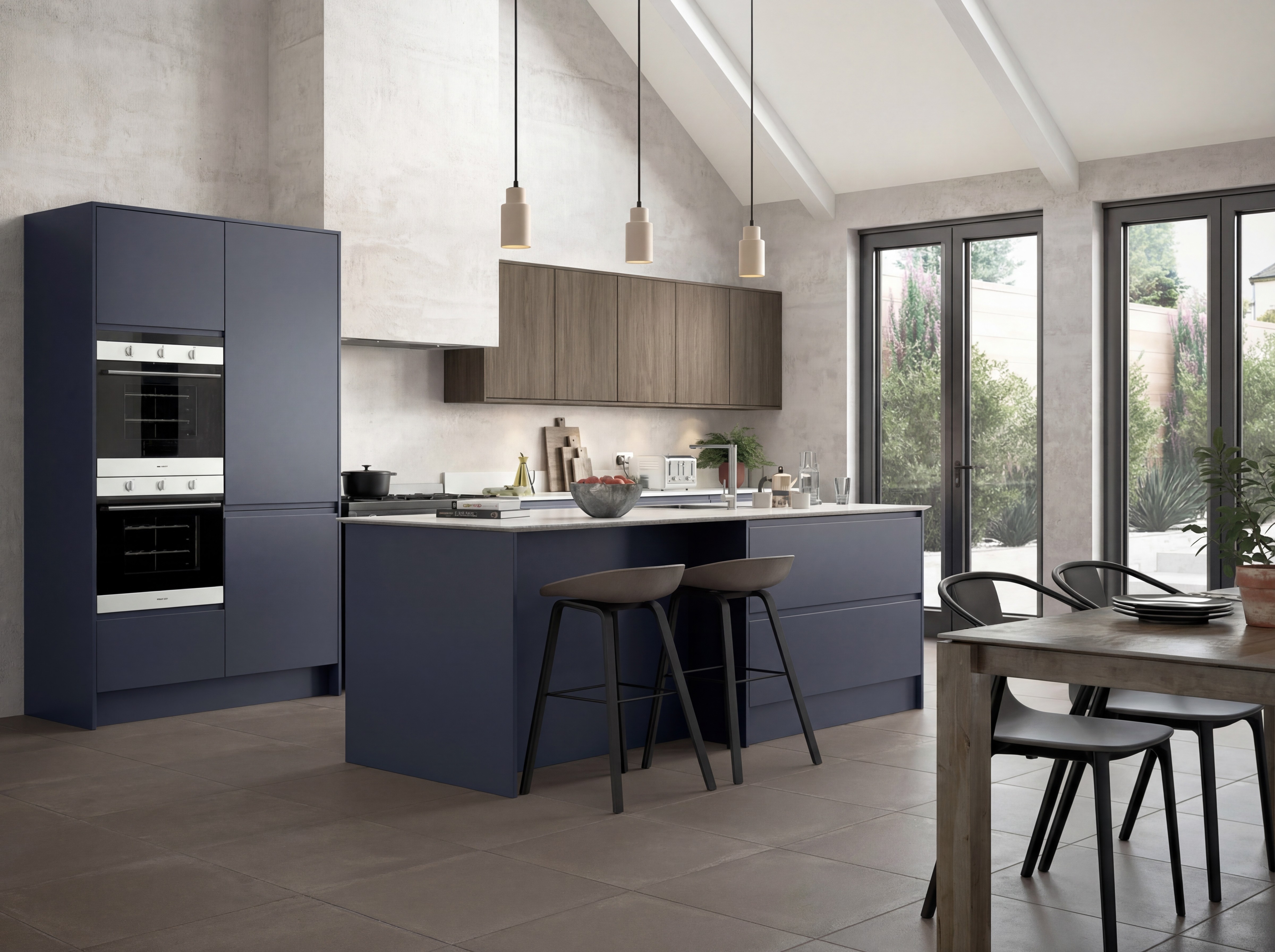
Earthy greens (sage, olive, forest), deep blues (navy, Hague blue), warm neutrals (greige, mushroom, taupe), and warm whites dominate modern schemes. Two-tone combinations – darker base units or island with lighter tall units – help ground small spaces without making them feel heavy. Matte and soft-touch finishes are preferred over high gloss.
Construction:
Quality modern cabinetry uses solid construction with soft-close drawers, internal organisers, and consistent shadow gaps (2–3mm) between doors. Vertical alignment matters – door breaks line up with appliance heights and tile courses so everything reads as an intentional grid rather than random boxes.
Worktops
Modern worktops lean toward slim profiles, durable stone or stone-look surfaces, and subtle warmth rather than stark white everywhere.
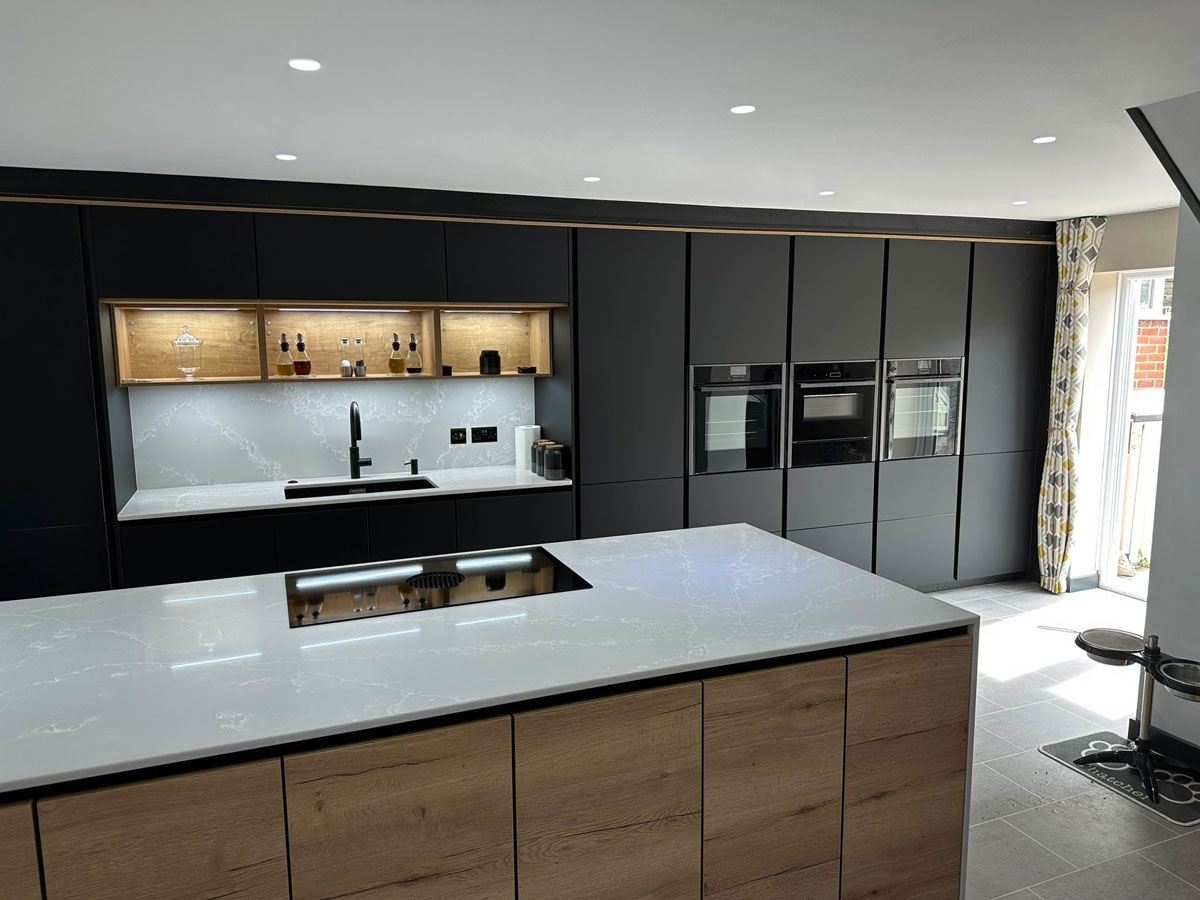
Quartz (engineered stone) is the default in London kitchens – non-porous, stain and scratch-resistant, low-maintenance. Modern quartz mimics natural marble veining, concrete textures, or solid warm neutrals. It works for busy family kitchens where durability and easy upkeep matter as much as aesthetics.
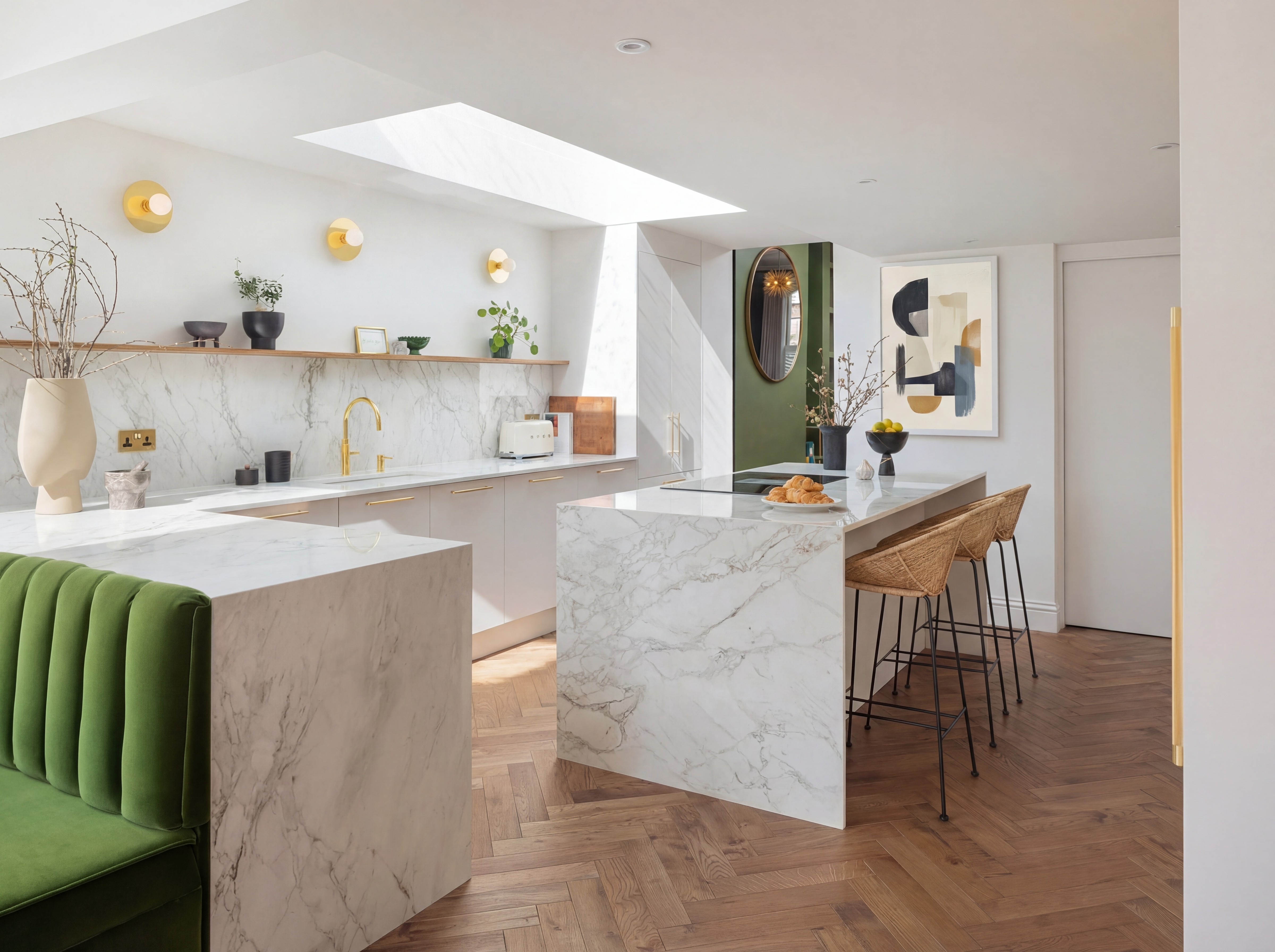
Porcelain and ultra-compact surfaces offer very thin profiles (12–20mm), high heat resistance, and seamless indoor-outdoor capability. They're often used in stone or concrete-effect finishes for that architectural, minimal look. Porcelain can be extended down island sides as waterfall edges for a continuous, sculptural effect.
Natural stone – granite and quartzite for durability, marble for clients who embrace patina – remains the luxury choice. In modern schemes, stone is chosen in quieter patterns with soft, warm veining rather than busy speckled granite. Honed or matte finishes feel more contemporary and architectural than high polish.
Thickness and edges:
20mm worktops suit handleless, minimal kitchens and read as more continental and refined. 30mm feels more substantial and works on large islands or heavy prep zones. Edges are kept simple – square, micro-bevel, or small chamfer – rather than decorative ogee or bullnose profiles.
Colour direction:
Warm whites, creams, soft greys, and beiges with gentle veining. Marble-effect quartz in Carrara or Calacatta styles gives classic luxury without the upkeep. Dark and dramatic surfaces (charcoal, black, rich brown) are used on islands or lower runs for moodier, townhouse schemes, often in matte or honed finishes.
Integration:
Slim 20mm worktops pair with matching upstands or full-height stone splashbacks for a seamless look. Undermount sinks are standard, with drainer grooves machined into the stone. In bathrooms, integrated quartz basins eliminate silicone joints and give that clean, spa-like aesthetic.
Hardware
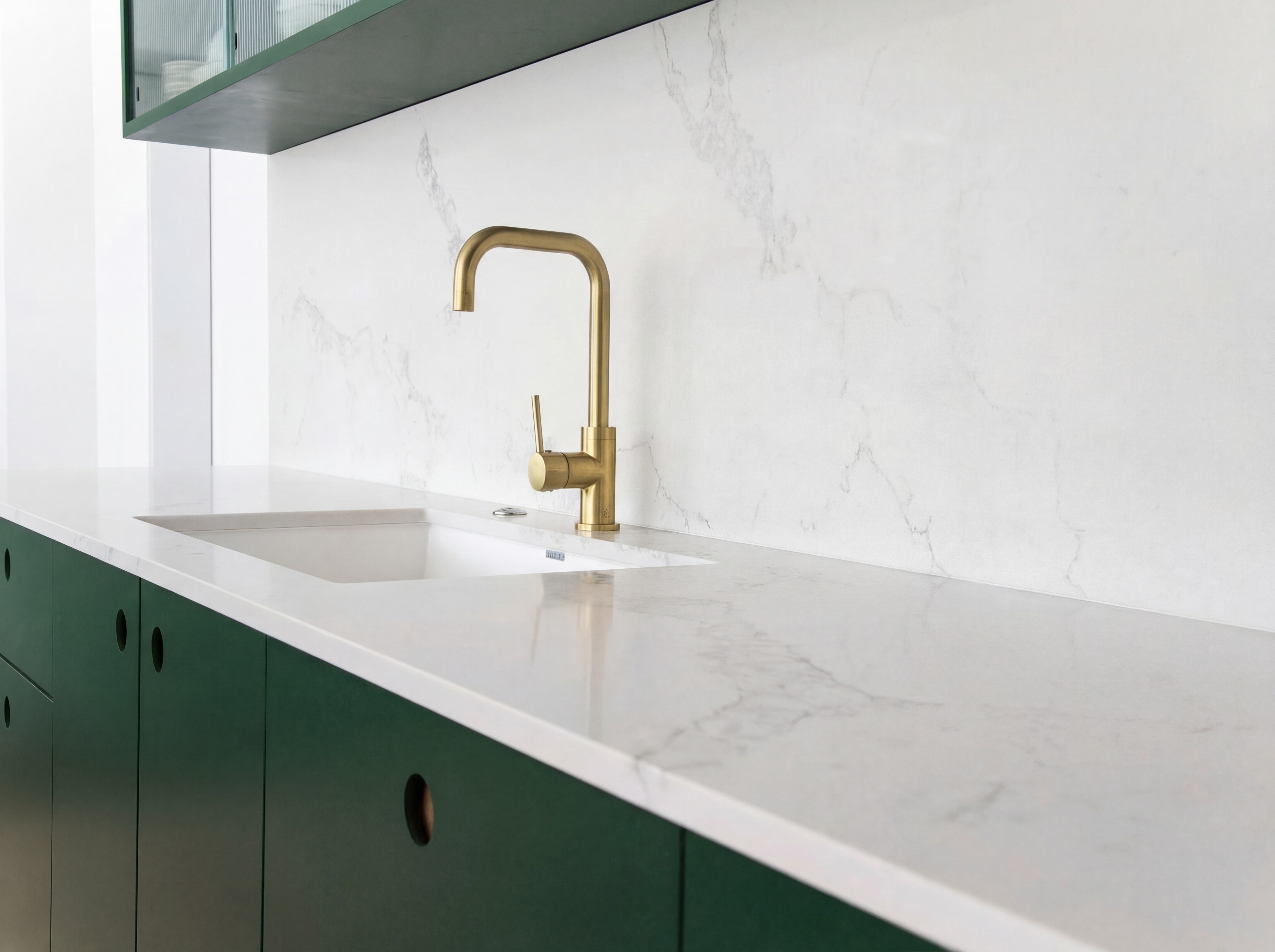
Modern hardware acts like jewellery for the space – simple shapes, tactile finishes, coordinated metals across handles, taps, and lighting.
Warm metals dominate:
Brushed brass, aged brass, bronze, and copper are the go-to choices, especially against green, blue, or dark cabinetry. These finishes add warmth and a handcrafted feel to otherwise minimal fronts. Matte black remains strong for sharper, more graphic schemes, often mixed with brass rather than used exclusively.
Bar pulls are the main modern choice – straight or gently curved bars in round or square section, sized to span one-third to two-thirds of drawer width. Oversized pulls on tall pantry doors and large pan drawers make them comfortable to use and visually intentional.
Minimal or no handles:
True handleless systems (integrated aluminium rails or J-pull grooves routed into door edges) keep fronts completely clean. Recessed finger pulls work on very minimal slab kitchens where you want zero visual interruption.
Mixed hardware:
Modern classic schemes combine knobs on doors with bar or cup pulls on drawers. Cup pulls (semi-circular, vintage-inspired) work well in slim Shaker kitchens for a furniture-like, townhouse feel.
Coordination with taps:
A key modern move is matching or deliberately coordinating cabinet hardware with kitchen taps and bathroom mixers – same finish, same design language – for a cohesive, planned look rather than random elements.
Quality and feel:
Heavier, solid metal pieces with smooth edges and pleasant grip are preferred over lightweight, hollow handles. Textured finishes (hammered, knurled, hand-cast) add subtle crafted character.
Tiling
Modern tiling uses larger formats, textured finishes, and bolder feature areas while keeping the overall palette calm and grounded.
Kitchen splashbacks:
Large stone-look slabs (porcelain or quartz) create seamless, minimal backsplashes with no grout lines. Updated metro tiles are used in stack-bond, vertical stack, or herringbone rather than traditional brick-bond. Geometric tiles (hexagon, chevron, Moroccan-inspired) work as single feature walls behind hobs or in alcoves.
Colour and character:
Earthy tones, greens, inky blues, and soft neutrals replace all-white schemes. Statement splashbacks in richer tones or patterned tiles are balanced against quieter cabinetry and worktops.
Kitchen floors:
Large-format porcelain in stone, concrete, or wood-look is standard in London for durability and minimal grout. Terrazzo-effect tiles are rising for a more tactile, textured feel. Slip-resistant finishes are used in high-traffic zones and work with underfloor heating.
Bathroom walls:
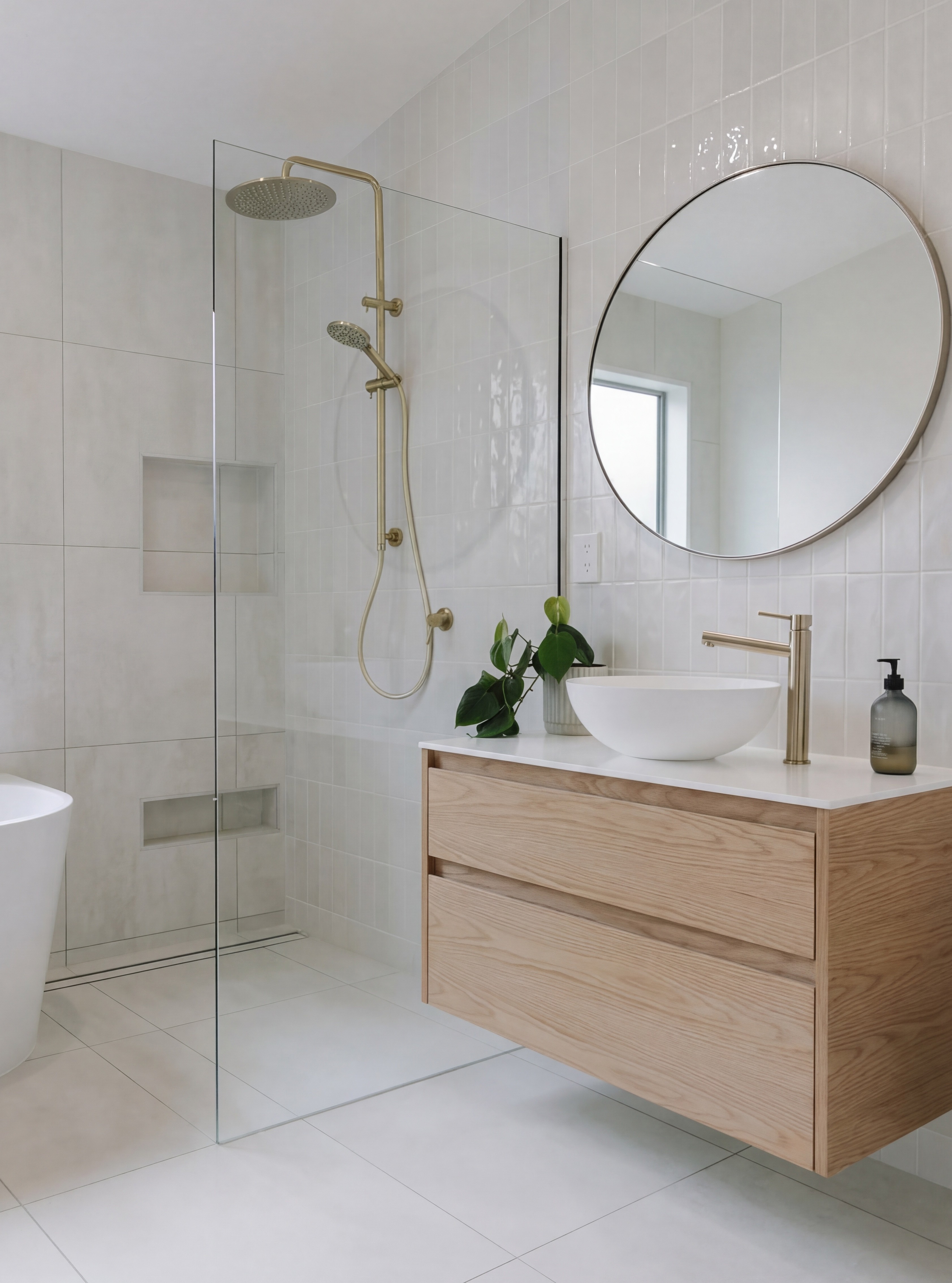
Large-format porcelain creates sleek, spa-like spaces with fewer grout lines – especially important in walk-in showers and wet rooms. Textured tiles (subtle 3D relief, fluted ribs, gentle geometric embossing) add depth without loud pattern. Bolder geometric or patterned tiles are used to zone showers or vanity walls.
Bathroom floors:
Terrazzo (real or porcelain-effect) is heavily used on floors and shower areas, often paired with brass or black hardware. Soft stone shades and warm neutrals keep bathrooms modern without feeling clinical.
Layout and grout:
Vertical stacking, large-format slabs, and continuous floor-to-wall tiling in showers are key modern cues. Colour-matched grout creates seamless stone or concrete looks. Slightly contrasting grout emphasises patterns like herringbone or geometric mosaics.
Colour Palette
Modern palettes are warm, nature-inspired, and slightly moodier than the stark whites and greys of previous years.
Core Base Colours:
Warm neutrals – Greige, taupe, mushroom, warm off-white create calm, flexible backdrops
Stone and clay – Natural earth tones that add warmth without reading as trend colours
Soft whites – Warm whites and creams replace cold blue-whites
Modern Accent Colours:
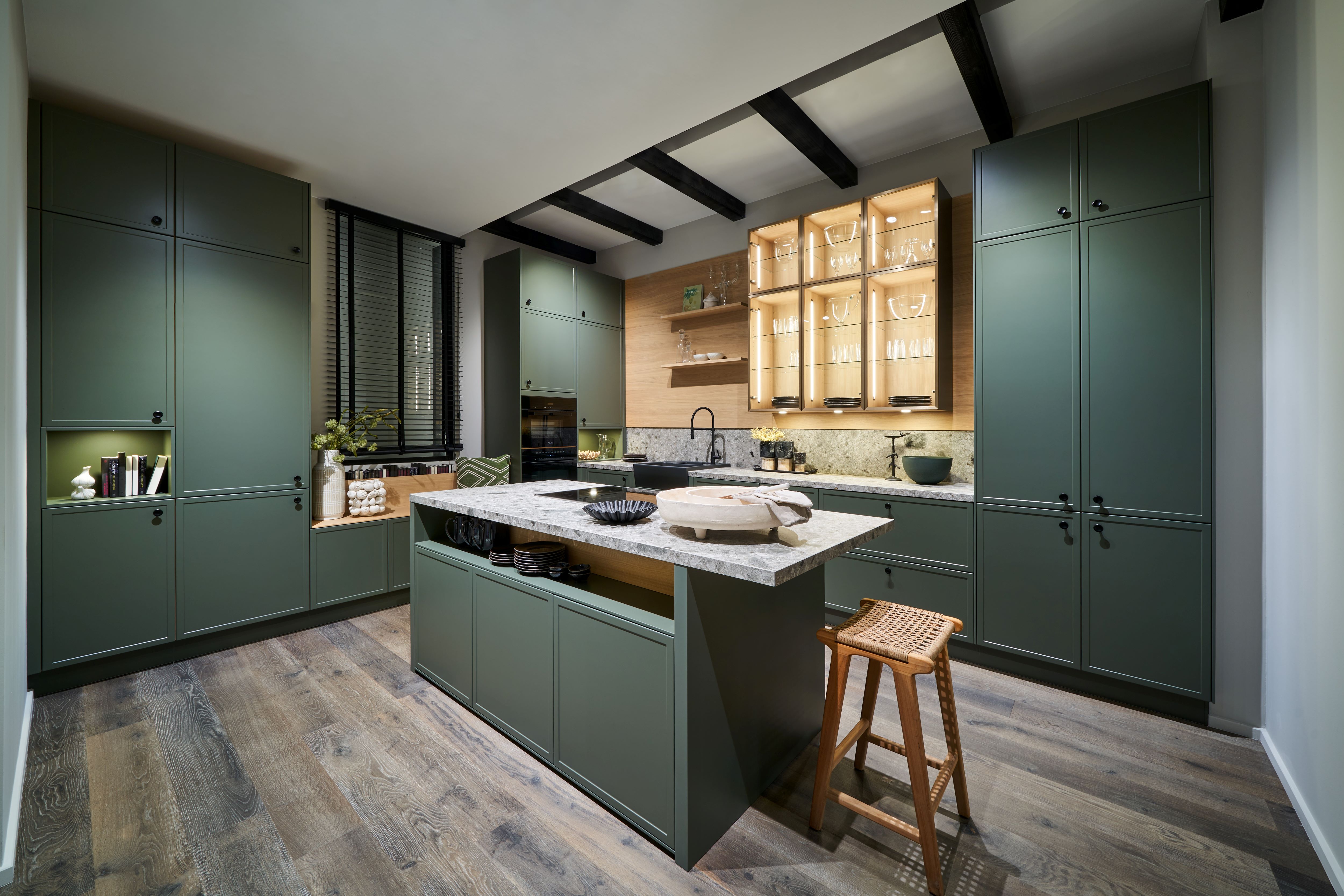
Greens – Sage, olive, forest, and deep verdant greens are leading choices for cabinetry, especially with brass hardware and light stone worktops
Blues – Deep blues and inky navies for islands or full kitchen runs, often paired with marble-look worktops
Warm reds/browns – Burgundy, oxblood, and warm brown emerging as statement cabinet colours
Charcoal and black – Used for sharper, graphic schemes or as grounding elements
Typical Modern Schemes:
Warm minimal: Greige or taupe base cabinets + warm white walls/tall units + light stone worktops + brass hardware
Green and neutral: Sage or olive cabinets + warm off-white walls + marble-effect quartz + brushed brass details
Dark and moody: Navy or charcoal base units + lighter tall units + warm stone worktops + mixed brass and black hardware
Modern bathroom palettes follow similar principles: spa-calm soft beiges, greiges, warm stone, and muted sage for walls and tiles. Bold but controlled use of emerald, deep blue, or charcoal on vanities or feature walls, balanced by warm neutrals everywhere else.
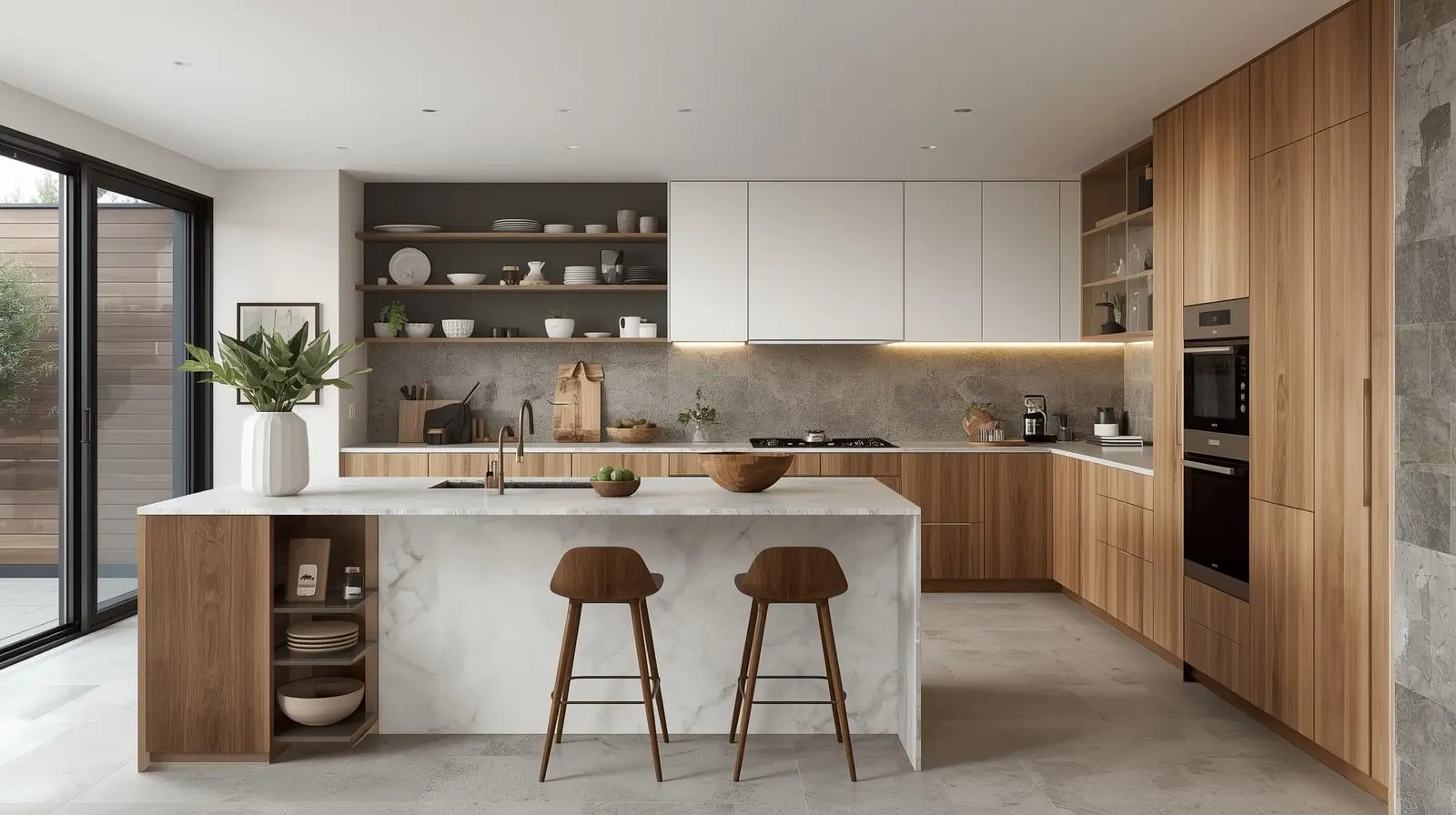
Modern Kitchens & Bathrooms We Design And Install
Kitchen
A modern kitchen in London works in any property type – Victorian terrace, new-build flat, warehouse conversion. The aesthetic adapts to the space through material choice and detailing rather than fighting against it.
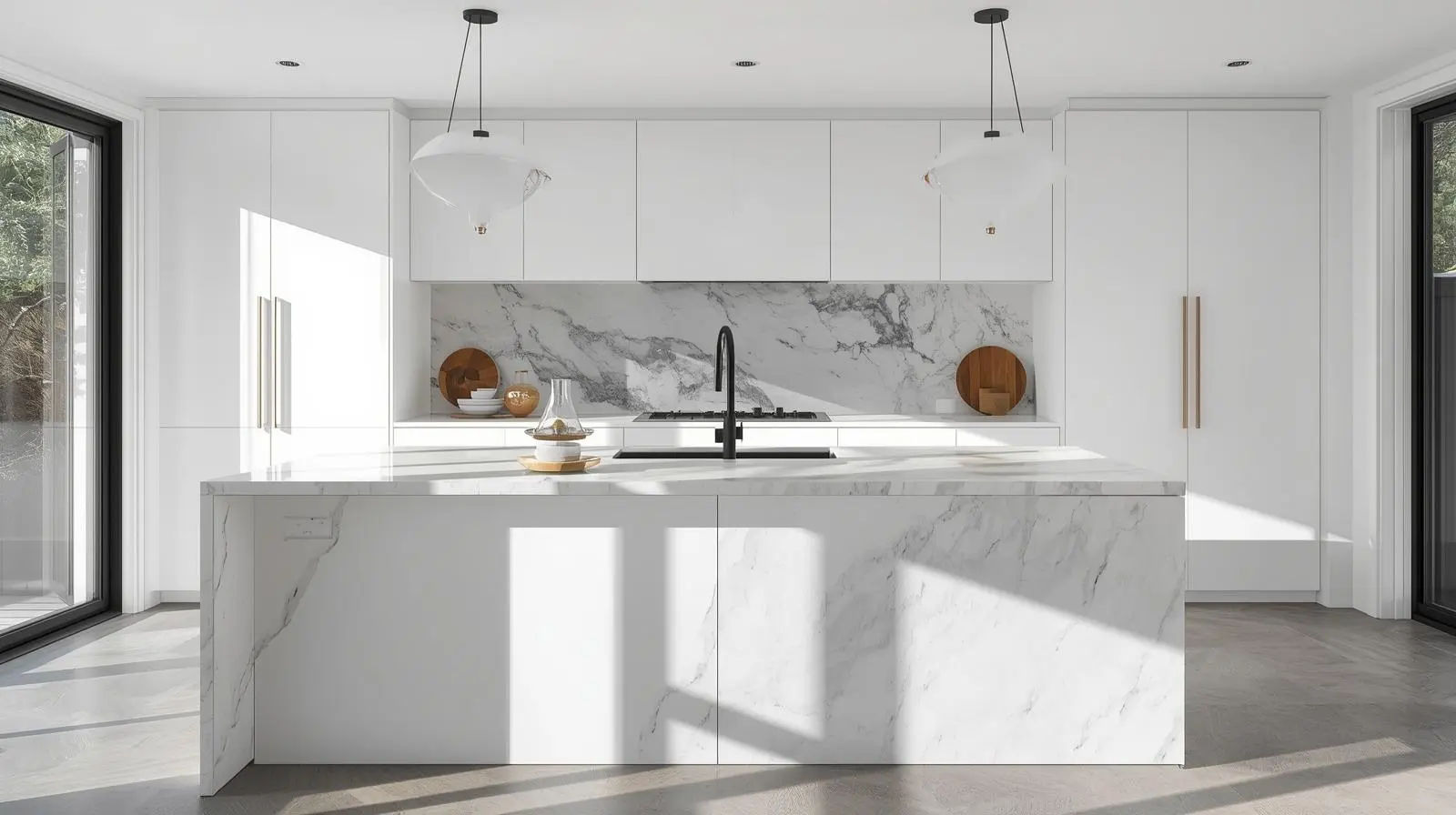
Handleless Slab with Stone Splashback
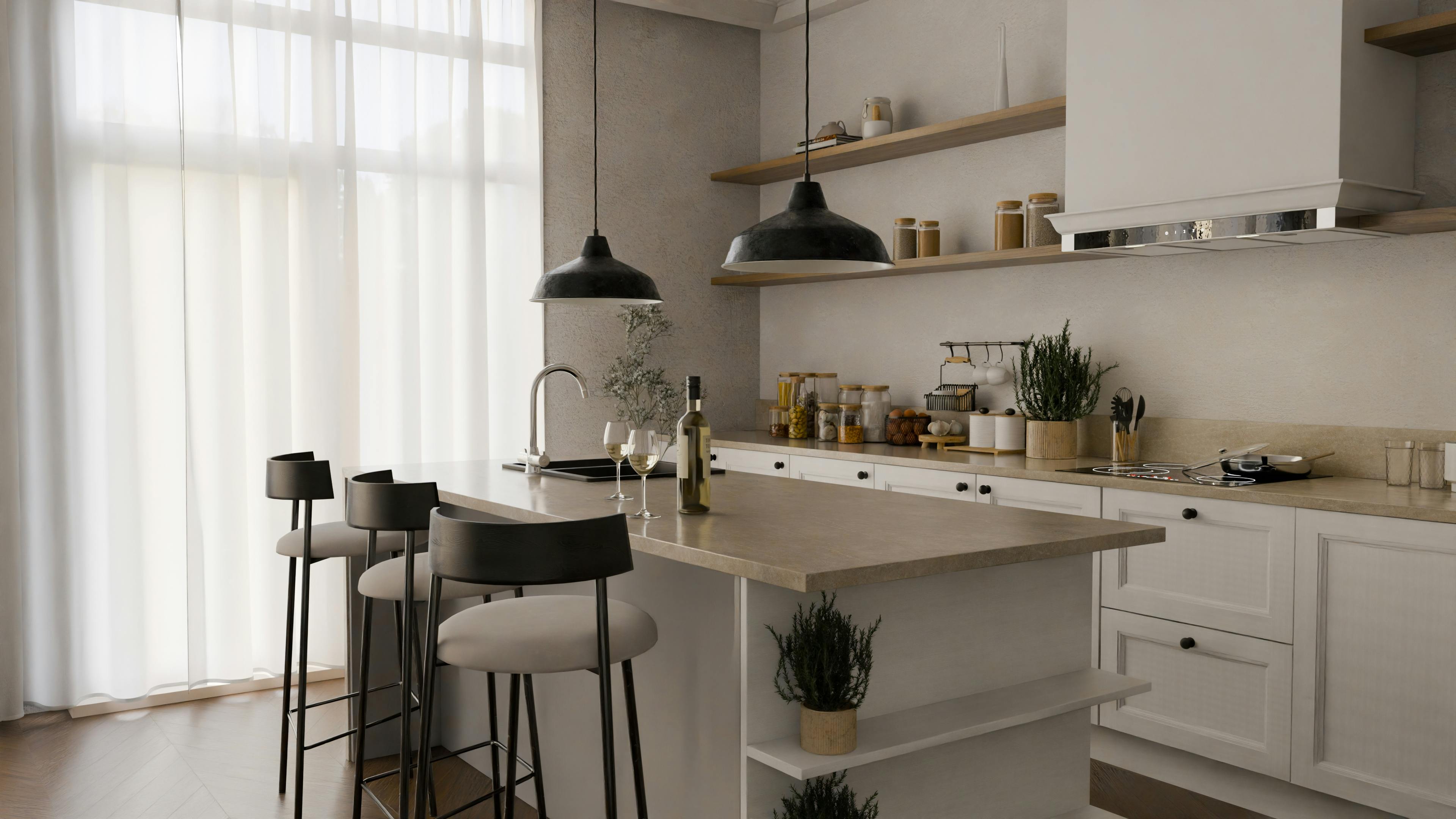
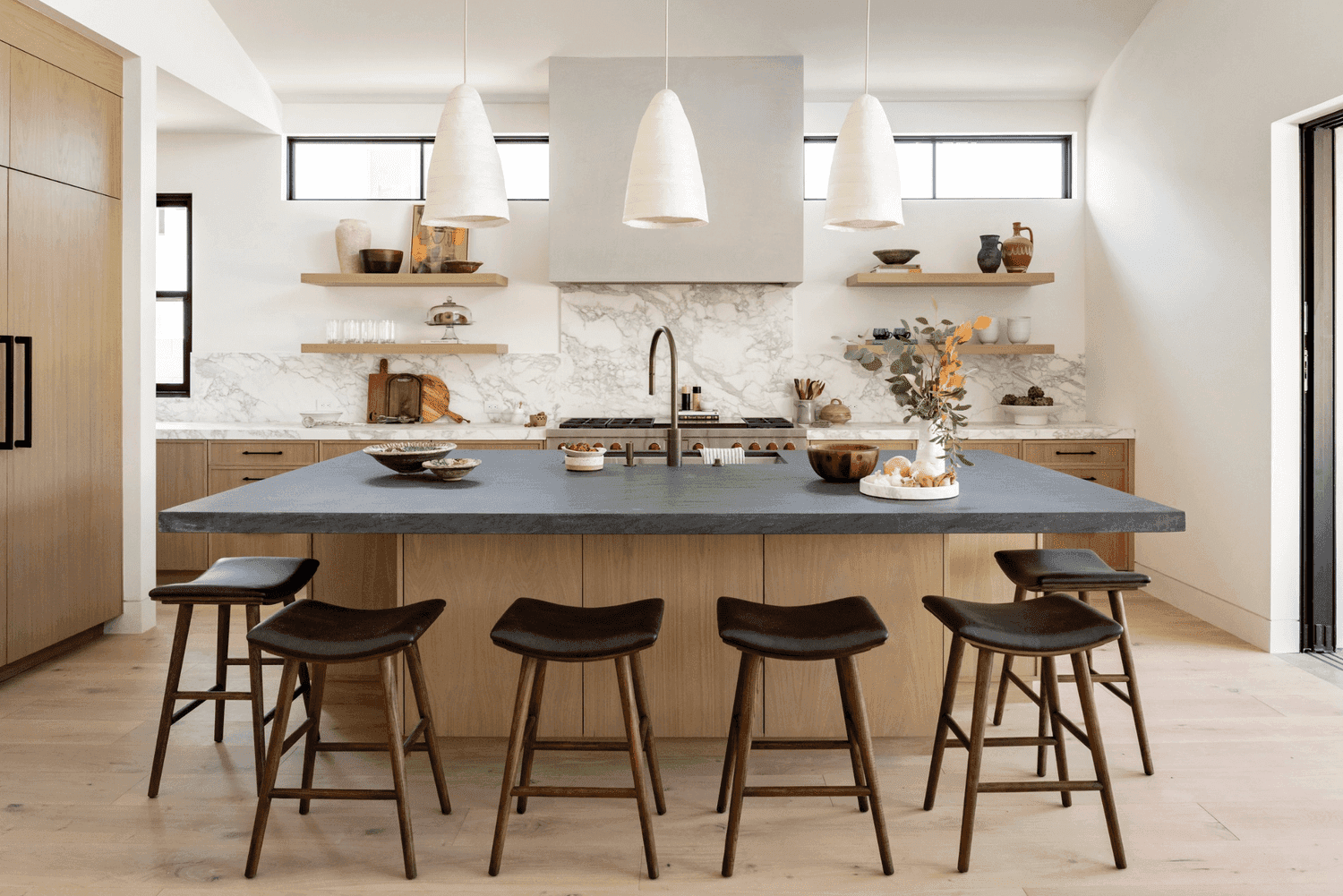
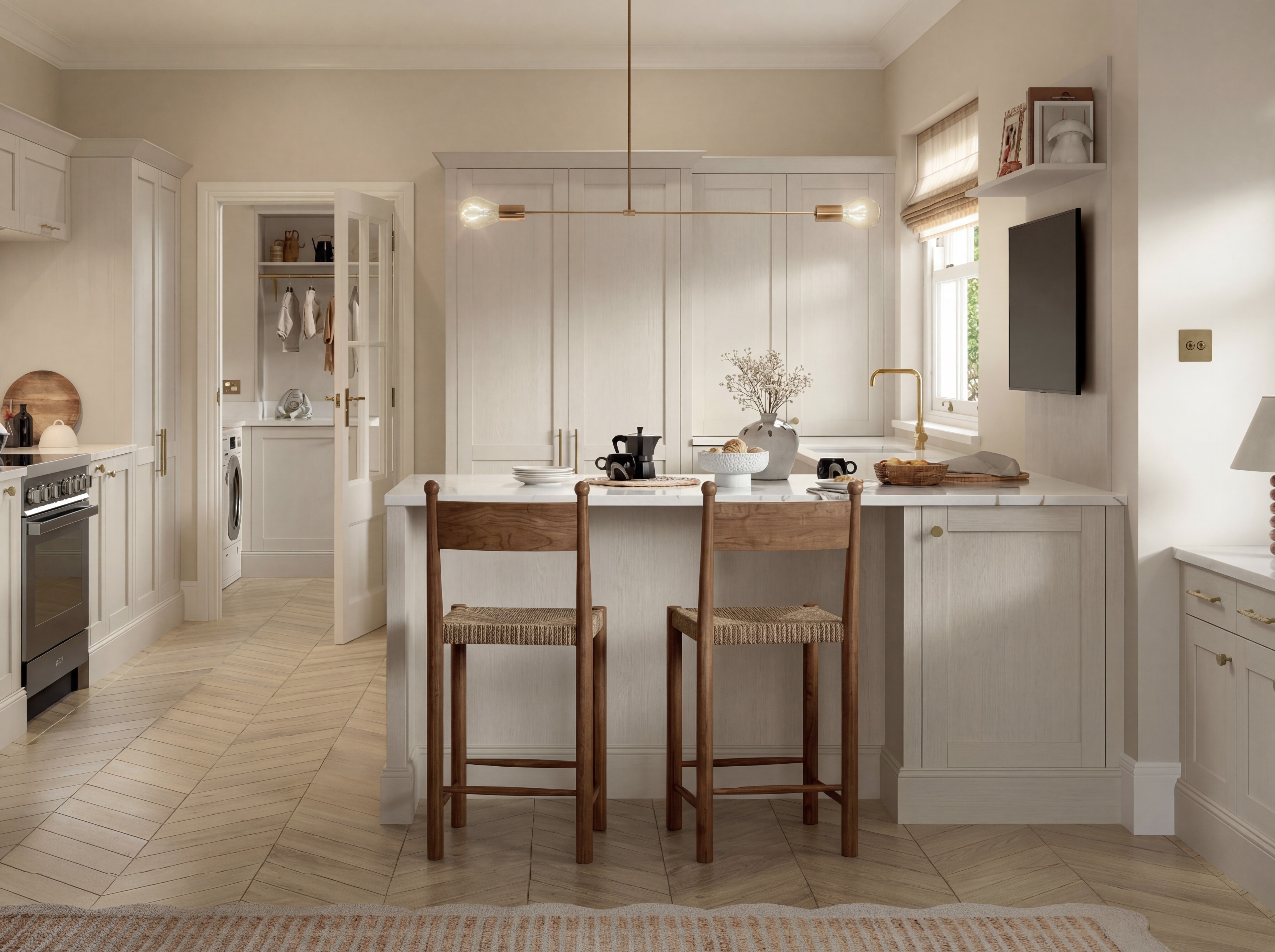
Flat-front cabinetry in warm greige or taupe with integrated handles, quartz or porcelain worktop in soft marble-effect or subtle stone pattern. Island in deeper sage green, navy, or charcoal with brushed brass or black bar pulls, undermount sink with drainer grooves. Large-format stone-look porcelain floor tiles in warm neutral tones. Integrated appliances behind matching cabinet fronts, tall storage wall with clean lines and hidden prep zones.
Bathroom
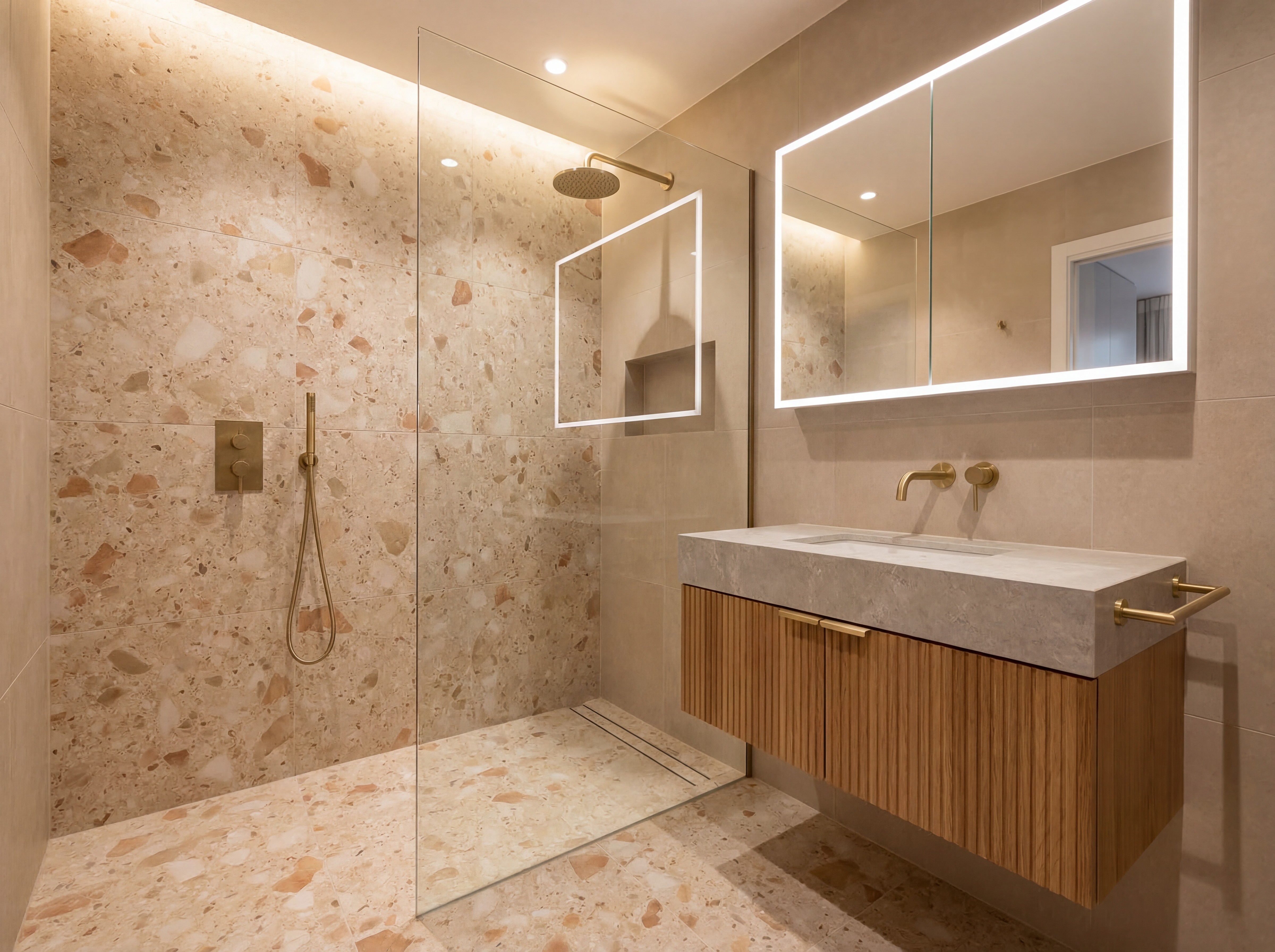
A modern bathroom follows the same principles – clean lines, natural materials, layered lighting, and smart storage fitted into tight London footprints.
Walk-In Shower with Terrazzo and Brass
Large-format terrazzo-effect or stone-look tiles on floors and shower walls, paired with warm neutral porcelain or subtle geometric patterns elsewhere. Wall-hung vanity in fluted timber, warm-toned wood, or textured finish with integrated quartz or stone-effect top and undermount basin. Brushed brass, matte black, or bronze taps and shower controls coordinating with minimal bar pulls. Frameless glass screen, heated mirror with integrated lighting, recessed storage niches, level-access surfaces for a seamless, spa-like feel.
Modern Kitchen in London FAQs
What makes a kitchen modern?
A modern kitchen in London is designed around clean lines, integrated appliances, and warm, natural materials. Slab or slim Shaker cabinetry, handleless systems, stone-look worktops, and earthy colour palettes (greige, sage, warm whites) rather than stark white. It's about calm, functional spaces with hidden storage and minimal visual clutter.
Can modern kitchens work in period properties?
Yes. Modern kitchen design adapts to any property type – Victorian terrace, conversion, or new-build flat. Slim Shaker profiles, natural materials, and warm neutrals feel appropriate in period spaces while delivering modern function. The key is choosing details (brass hardware, stone worktops, textured tiles) that complement original features rather than fighting them.
What's the difference between modern and contemporary kitchens?
Modern kitchens focus on clean lines, minimal detailing, and warm neutrals with natural materials. Contemporary kitchens are bolder – statement islands, mixed materials, graphic tile patterns, and design-led choices. Modern leans toward timeless simplicity; contemporary embraces current trends and more expressive design.
Do modern luxury kitchens in London cost more?
Not necessarily more than other high-spec kitchens. Modern design often uses premium materials (quartz, porcelain, solid wood veneers, brass hardware) and quality construction (soft-close mechanisms, handleless systems, integrated appliances), but the clean aesthetic can actually reduce costs by eliminating decorative detailing. The investment is in materials and function, not ornament.
How do you make a modern kitchen feel warm, not sterile?
Warm materials and layered texture. Natural wood (oak, walnut veneers), stone or stone-look surfaces with gentle veining, warm neutrals (greige, taupe, sage) instead of cold greys, and brass or bronze hardware. Fluted details, textured tiles, and layered lighting (recessed ceiling spots, pendant lights, LED strips) add depth without busy patterns.