Kitchen & Bath
What Defines A Traditional Bathroom?
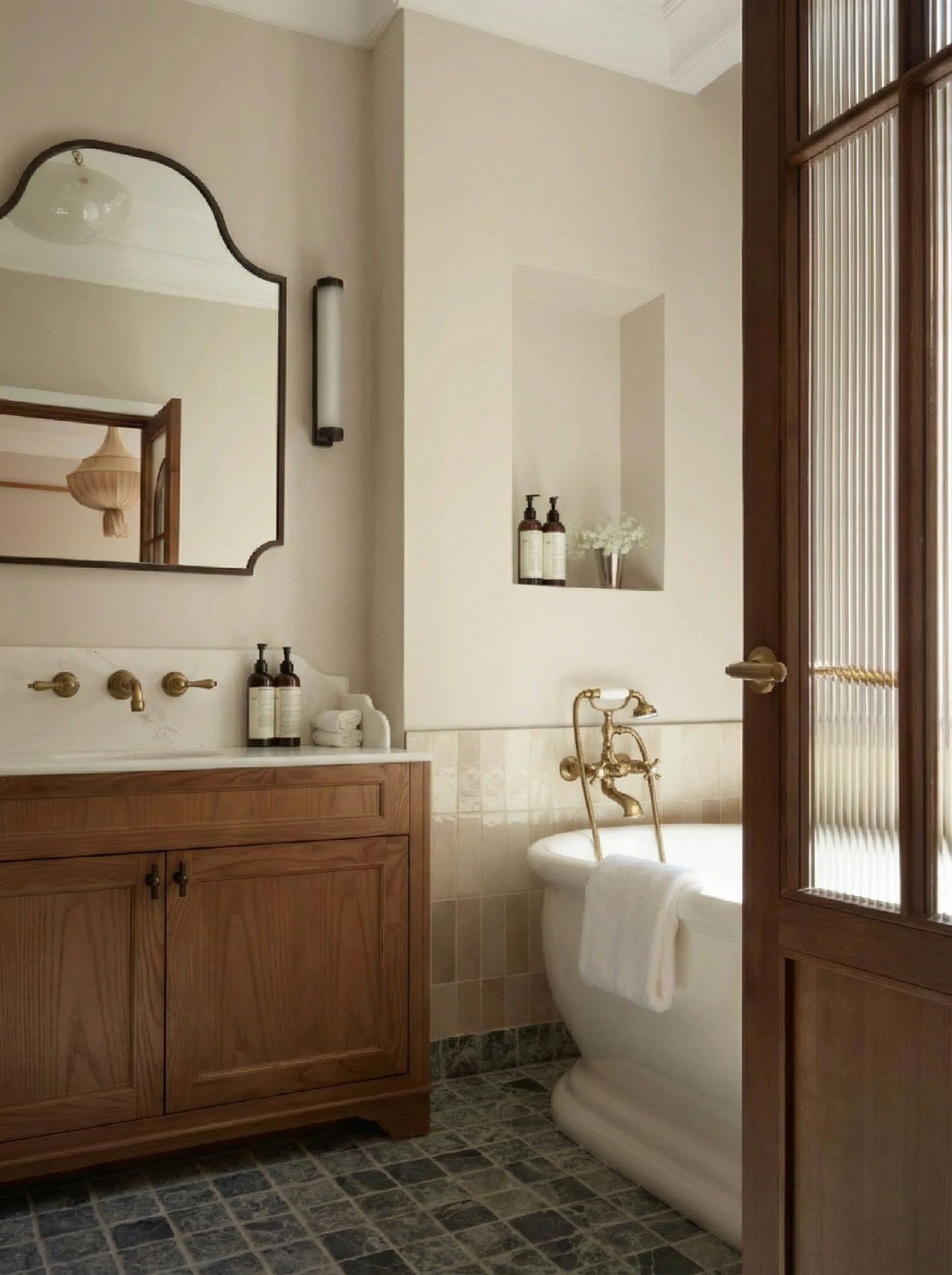
A traditional bathroom balances historical character with modern function – decorative detail, furniture-style cabinetry, and fixtures that feel as though they could belong in an older townhouse, even with contemporary plumbing behind them.
The mood is calm, symmetrical, and comfortable.
Four Principles Guide Every Traditional Scheme:
Symmetry and balance. Mirrored basins, centred baths, aligned sconces – a composed, ordered layout.
Classic fixtures. Pedestal or console basins, roll-top or clawfoot baths, high- or mid-level cistern WCs.
Furniture-style joinery. Vanities with raised-panel or framed fronts, shaped plinths, or turned legs.
Architectural detail. Coving, panelled walls, cornices, and sometimes dado or picture rails.
In a period home, the bones of the property (ceiling heights, sash windows, original cornices) guide how much ornamentation and formality the room can carry.
Layout
In a period home, a traditional layout leans on symmetry and the architecture itself – mirrored elements, a centred bath, fixtures arranged so the room feels composed rather than purely practical.
A Few Choices Carry The Period Feel:
A freestanding bath as the centrepiece – roll-top or clawfoot where space allows, or a back-to-wall version where it's tight.
Pedestal or console basins – often mirrored as a pair in a larger room, for balance.
High- or mid-level cistern WCs – exposed flush pipes and a traditional ceramic form.
Where the room is narrow, we work with alcoves and chimney breasts (recessing cabinetry or a WC into them).
Colour Palette
Traditional bathroom palettes are soft, restful, and understated. Occasional richer accents for depth (calm and enduring) which suits period homes where bold contemporary schemes fight the original detailing.
Soft neutrals. Off-whites, creams, beiges, taupes, dove greys, and warm putty, letting the sanitaryware and brassware stand out.
Heritage greens. Sage, soft olive, and muted mid-greens against white porcelain and brass for a country-house-in-the-city feel.
Pale blues and blue-greys. Misty, powdery tones that read clean but not clinical, especially with marble or white metro tile.
Dusky pinks and blush. Warm, aged tones inspired by old plaster, lovely in a cloakroom or small en-suite.
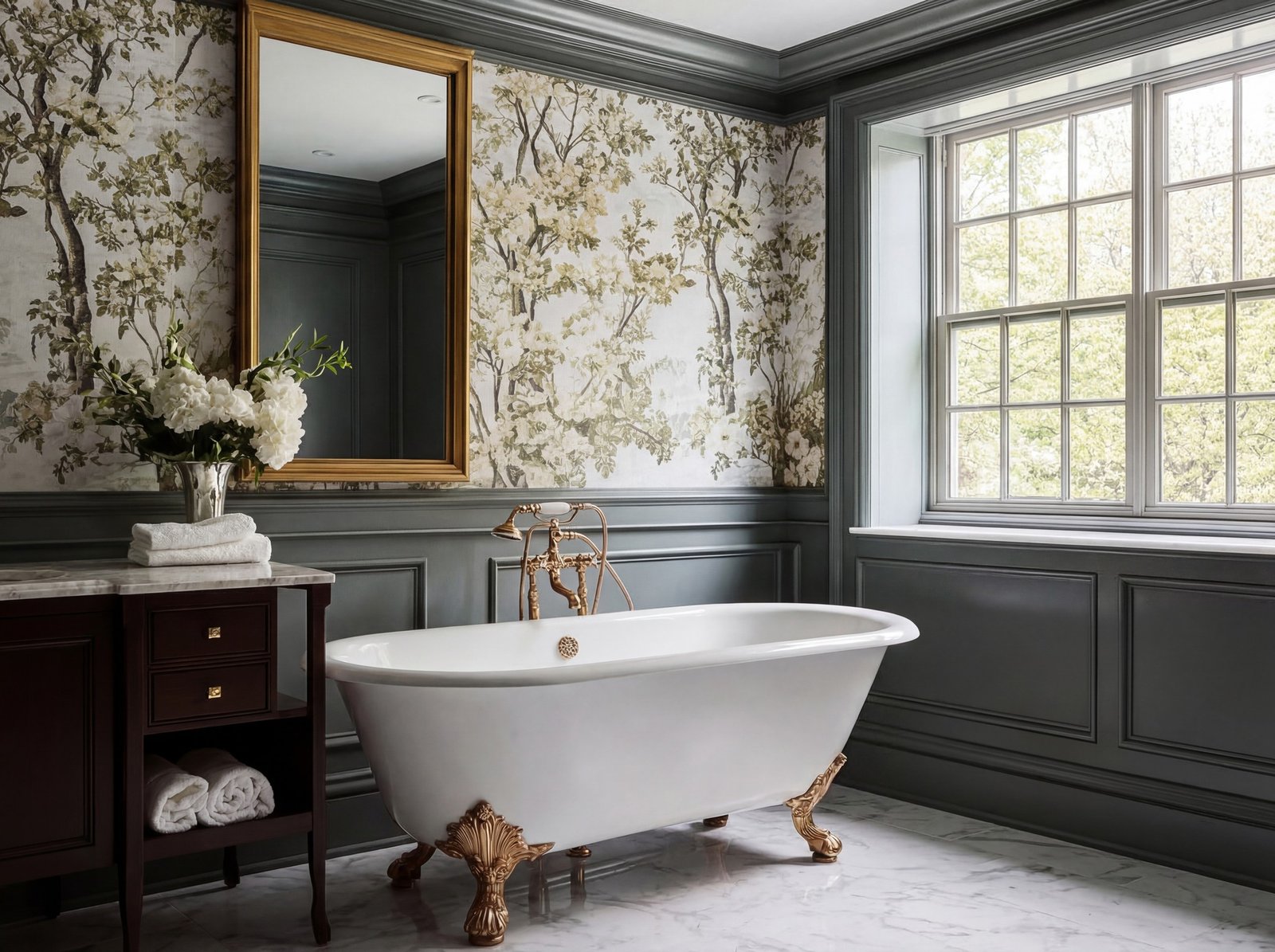
Rich accents. Navy, charcoal, chocolate, or deep green on cabinetry or panelling, offset by lighter walls and ceilings.
In Practice:
Keep walls and ceilings lighter to maximise reflected light (important in narrow or north-facing rooms) and introduce colour through vanities, panelling, radiators, or floors.
Classic white trims and cornices frame deeper wall colours while keeping the effect elegant rather than heavy.
Materials
Traditional bathrooms rely on materials that feel substantial, tactile, and time-tested – quiet luxury that ages gracefully and looks like it belongs in an older home.
Stone and stone-look. Marble (especially Carrara-style), limestone, and light granite for vanity tops, floors, and feature walls. High-quality engineered quartz in classic patterns for easier maintenance.
Ceramic and porcelain. Bevelled metro tiles, small mosaics, hexagons, and black-and-white checkerboard floors; porcelain where you want the stone look with better practicality.
Timber. Painted or stained Shaker and raised-panel joinery for vanities and panelling, in heritage colours or warm stains.
Metal. Unlacquered or aged brass, polished nickel, chrome, and oil-rubbed bronze for taps, valves, towel rails, and lighting.
Glass. Framed or crittall-style shower screens and classic glass light shades, nodding to early-20th-century detailing.
For Our Conditions…
We balance authenticity with practicality – stone-effect porcelain to handle heavy use and humidity, moisture-resistant timber joinery with quality paint systems, and metal finishes suited to hard water. Retaining or recreating tongue-and-groove panelling, skirtings, and cornices ties modern waterproof construction back into the original fabric of the building.
Lighting
Traditional bathroom lighting looks like it could belong to another era while meeting modern safety and IP ratings – layered task, ambient, and accent light in classic forms and warmer colour temperatures.
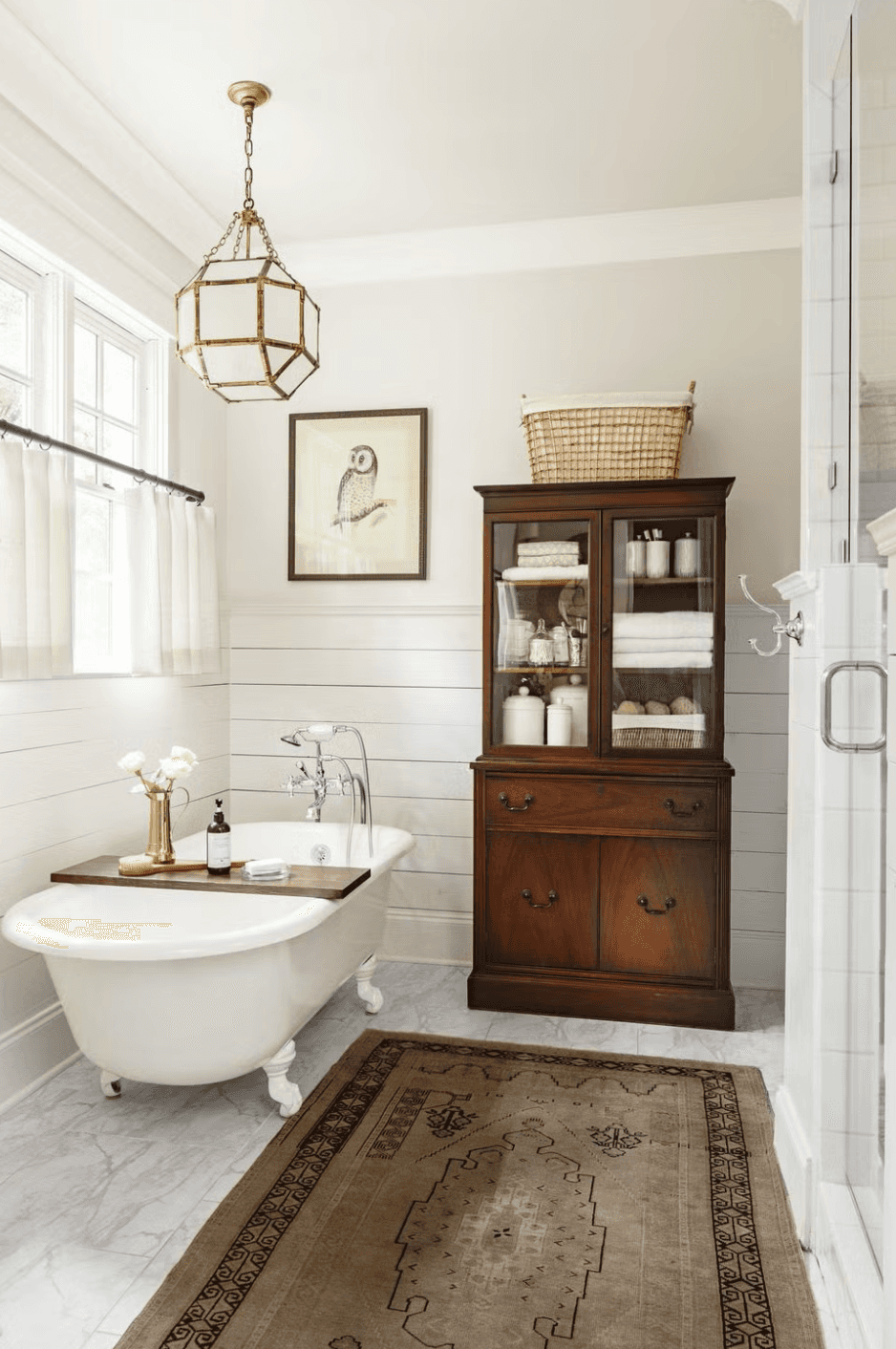
Ceiling. Small chandeliers, semi-flush fittings, lanterns, or globe pendants that echo period hall and drawing-room lighting, rated for bathroom zones (IP44+ where needed).
Wall sconces. Candelabra- or globe-style sconces flanking the mirror, often with metal backplates, emphasising symmetry and softening facial light.
Mirror and vanity. Picture-light-inspired fittings or twin vertical sconces, in a finish matching the taps for a cohesive look.
Accent. Concealed LED under vanity skirting or in niches for a subtle glow that doesn't read as modern-hotel.
Given The Limited Natural Light In A Lot Of Period Bathrooms…
Prioritise good mirror lighting and a generous main fitting in warm white, around 2700–3000K, to keep the room flattering. A mini chandelier or lantern over a roll-top bath makes a natural focal point.
Storage
Traditional storage is built into furniture-like pieces rather than sleek built-ins, reinforcing the sense of a room furnished over time – clutter concealed, with a few curated pieces on display.
Furniture-style vanities. Framed doors, panelled fronts, profiled plinths or turned legs, often standing slightly off the floor; drawers for small items, cupboards for the bulkier ones.
Linen cupboards and armoires. Freestanding or built-in, sometimes with glazed upper doors for display over solid lower storage.
Built-in niches. Tiled recesses trimmed with traditional profiles or stone, avoiding modern chrome baskets while staying practical.
Painted timber shelves. Bracketed with decorative metal or carved supports, for folded towels, glass jars, and decorative pieces.
In Tight London Footprints…
Adapt alcoves and chimney breasts for recessed cabinetry, use over-cistern shelves, and shape vanities to awkward walls – keeping the door and drawer fronts traditionally detailed throughout.
Signature Hardware
Hardware is one of the strongest signals that a bathroom is traditional, even where the rest of the room is fairly simple – taps, shower sets, handles, and accessories drawing on historical forms and finishes.
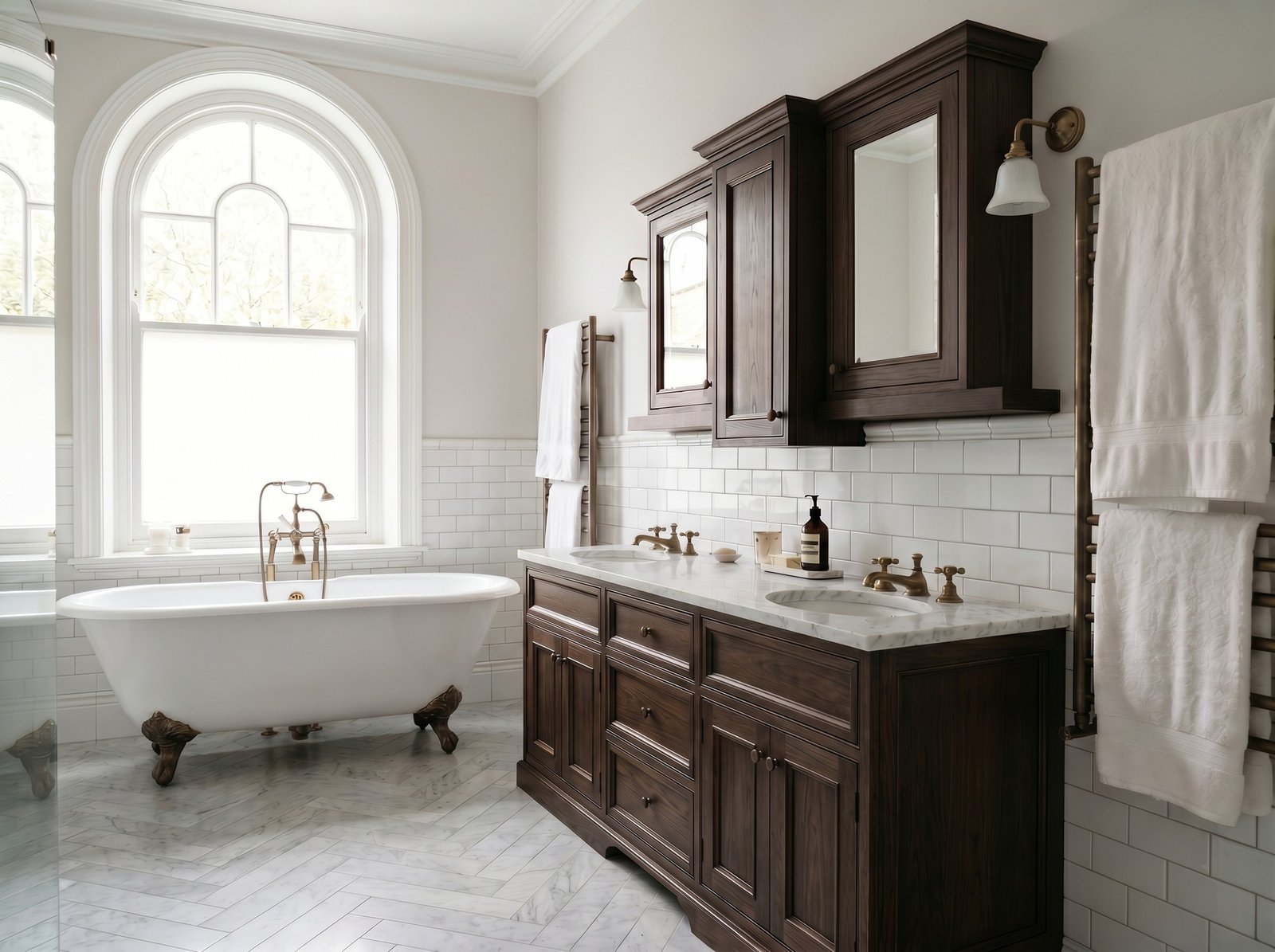
Classic taps and valves. Crosshead or lever handles, curved spouts, and exposed shower valves, in styles inspired by Victorian and Edwardian brassware.
Period-appropriate finishes. Polished or brushed nickel, chrome, unlacquered brass, and oil-rubbed bronze – finishes that age gracefully and read more period than stark black.
Sculpted sanitaryware. Basins and WCs with shaped rims, ogee edges, and decorative pedestals, paired with high-level or close-coupled cisterns and ceramic flush handles.
Accessories. Ladder-style or radiator-towel rails, robe hooks, glass-and-metal shelves, and roll holders with turned or fluted detail.
Aligning the finish across brassware, lighting, door handles, and even window furniture is what pulls a traditional bathroom together – mixed metals quickly feel noisy in a period room.
We usually choose one or two hero pieces (an exposed shower set, a statement heated towel rail) to anchor the look, even when the rest of the space is restrained.
How We Deliver Traditional Bathrooms
A bathroom is the most trade-dense room in the house – plumbing, electrics, tiling, waterproofing, joinery, and decoration all stacked into a small space and a tight sequence.
With traditional detailing layered on top, there's even less room for things to go wrong, which is exactly why coordination matters.
With us:
The same team designs and installs your bathroom, with one project manager from the first call to the final walkthrough.
Every trade is vetted and sequenced in the right order so the watertight detailing is done properly and on time.
Pricing is agreed before work begins.
And the traditional-style bathroom you envision is what gets delivered.